





Jeans button
Custom Tack Buttons for Jeans, Denim and Workwear
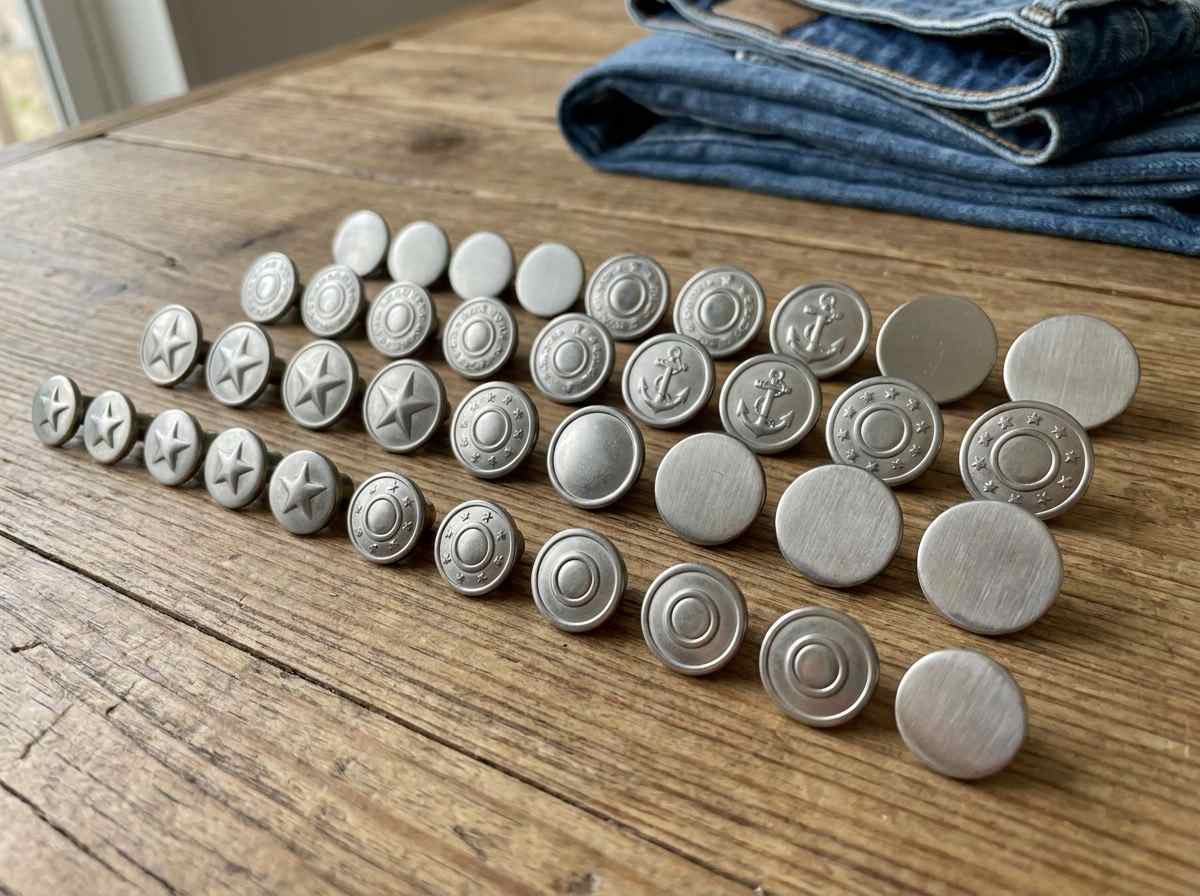
Baocheng supplies custom tack buttons for jeans, denim jackets, skirts, shorts, overalls, uniforms and workwear. A tack button is installed by driving a separate tack through the back of the fabric and locking it into the visible button body. Unlike a snap fastener, it is used together with a buttonhole and does not separate into male and female snap components during opening and closing.
Materials, button diameters, tack lengths, structures, surface finishes, colors, patterns and logos can be selected according to the garment design and performance requirements. We can also help match the tack button to the fabric weight, number of fabric layers, reinforcement method and intended washing process so that the finished closure is secure, visually consistent and suitable for bulk garment production.
Available Sizes
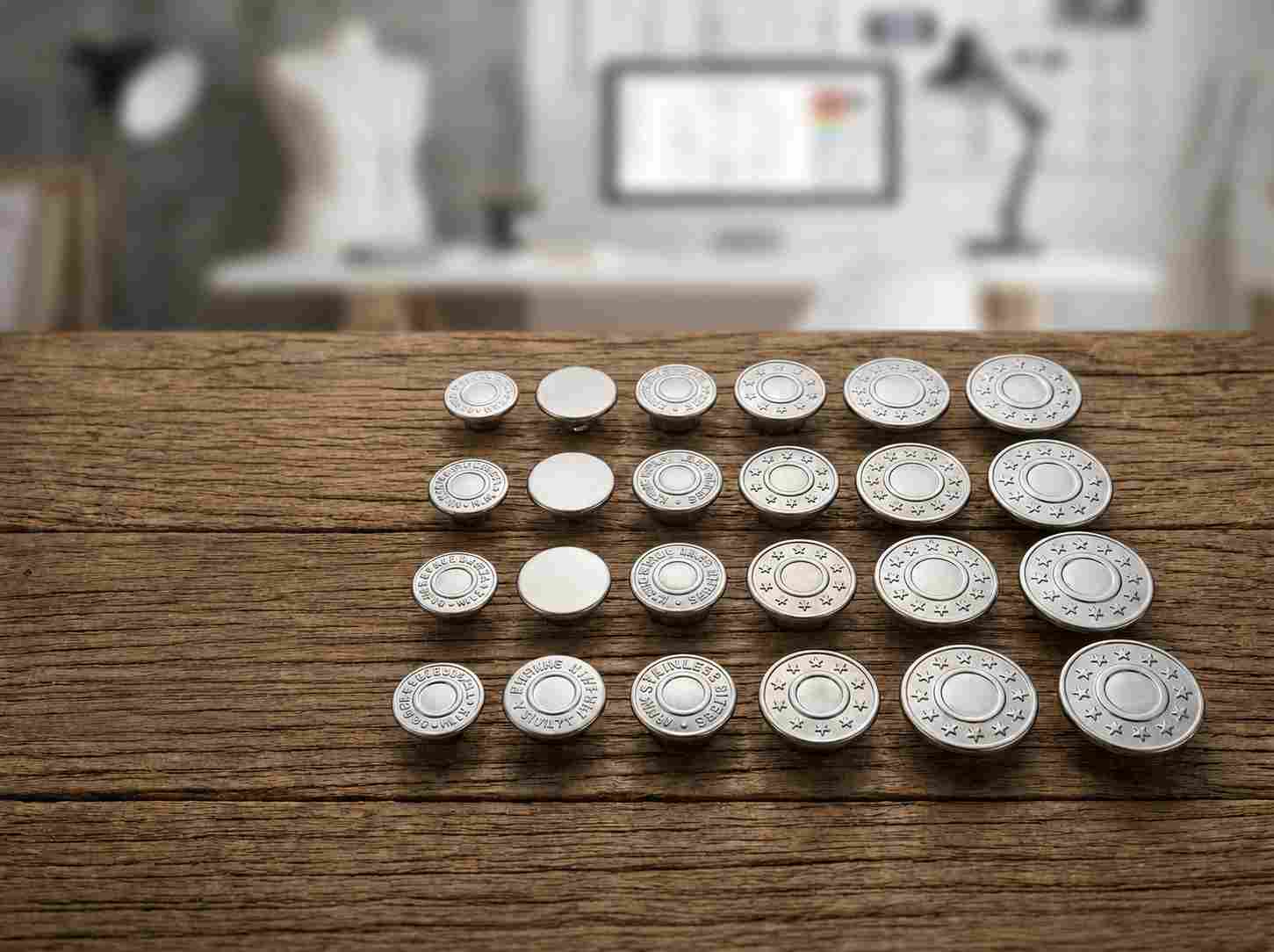
Tack button size is normally measured across the visible button face. For jeans buttons, 15 mm, 16 mm and 17 mm are the regular diameter options. The most suitable size depends on the garment design, buttonhole proportion, denim weight, number of fabric layers and desired visual effect.
| Button Diameter | Approximate Ligne Size | Typical Applications |
|---|---|---|
| 15 mm | 24 L | Lightweight and fashion denim, denim skirts, shorts and compact waistband closures |
| 16 mm | 25 L | General jeans, casual denim trousers and medium-weight denim garments |
| 17 mm | 27 L | Standard jeans waistbands, heavier denim, overalls and everyday workwear |
Note: Ligne values are approximate. Although 15–17 mm represents the regular jeans button size range, the final diameter should be confirmed together with the buttonhole size, fabric construction and selected tack button structure. Samples should be tested on the customer’s production fabric before bulk approval.
Choosing the Correct Tack Length
The visible button diameter and the tack length should be selected separately. Tack length is determined by the compressed thickness of all material layers at the installation point, including denim, interlining, folded seams, waistband layers, reinforcement patches and leather trims.
A tack that is too short may not enter the button post deeply enough to create a secure lock. A tack that is too long may bottom out inside the button, deform the visible face, leave the button loose or damage the surrounding fabric. For this reason, Baocheng recommends testing the complete button-and-tack combination on the actual garment construction rather than choosing the tack only from the nominal fabric weight.
- Provide the total layer structure or a finished fabric swatch when requesting samples.
- Check installation pressure and tooling alignment during the trial stage.
- Evaluate pull-off resistance, rotation, fabric distortion and button-face deformation.
- Repeat the check after the intended garment washing or finishing process.
Tack Button Structure Options
Different tack button structures produce different appearances, installation behavior and levels of movement. Baocheng can help select a structure according to the garment position, fabric thickness, button design and target price.
Fixed Tack Buttons
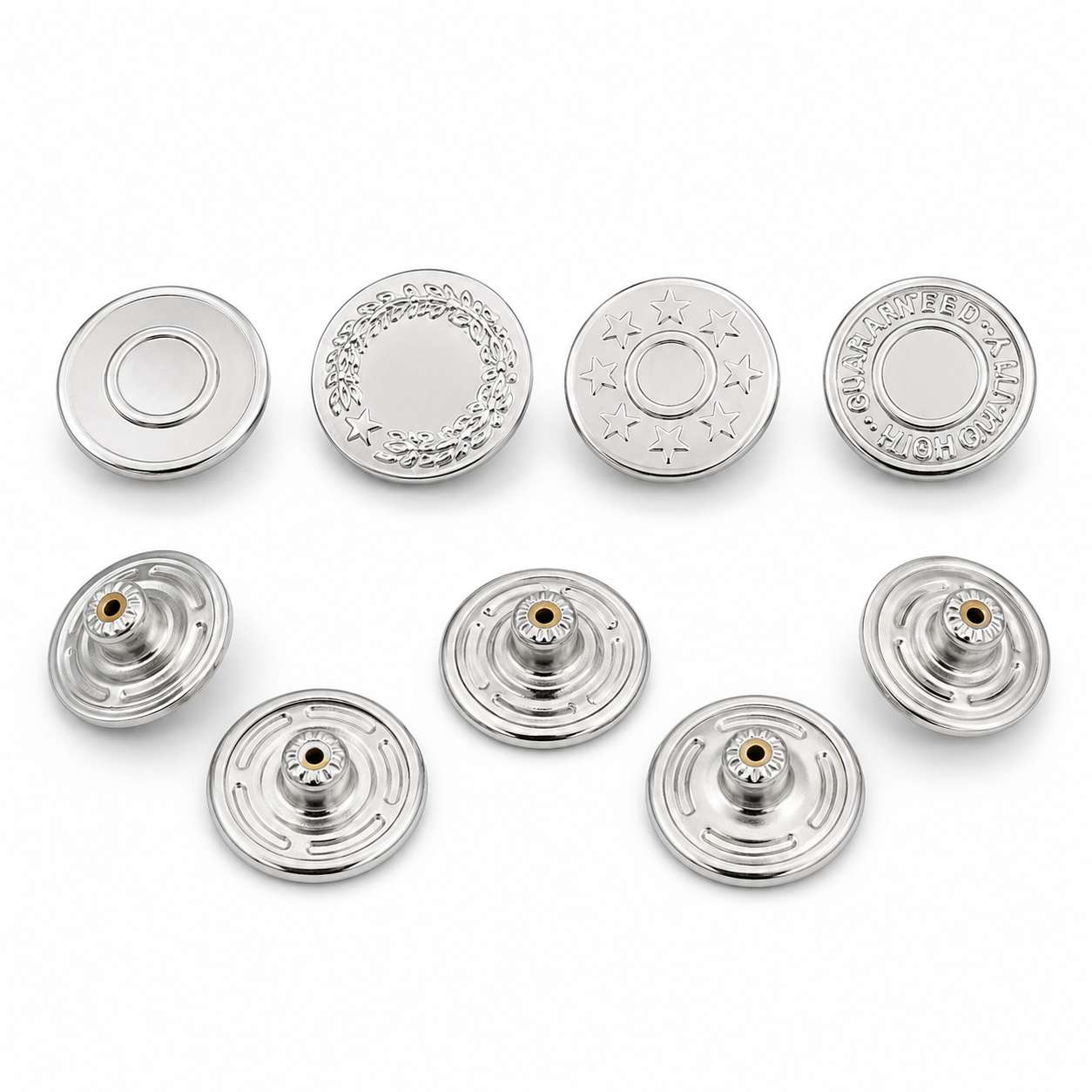
A fixed tack button has a rigid connection between the visible button body and its internal post. It provides a stable feel and is widely used for jeans waistbands, denim skirts, shorts, uniforms and workwear. Fixed structures are available with closed-top, open-top and decorative face designs.
Swivel Tack Buttons
A swivel tack button allows a controlled degree of movement between the button face and the shank. This movement can make the button easier to align with a thick buttonhole and can reduce concentrated stress when heavy or multi-layer denim bends during wear. The exact movement and component structure should be confirmed during sample development.
Donut and Open-Top Buttons
Donut buttons have a visible central opening or recessed ring structure. They are commonly selected for vintage denim, workwear and brand-led designs because the open center creates a recognizable industrial appearance. Logo details, ring proportions, edge profiles and metal finishes can be customized according to the selected construction.
Closed-Top and One-Piece-Look Buttons
Closed-top tack buttons provide a continuous visible face that is suitable for embossed, debossed or engraved branding. Depending on the design, the button may use multiple assembled components while presenting a clean one-piece appearance from the front. These structures are suitable for both minimal designs and detailed brand patterns.
Custom Logo and Surface Finish Options
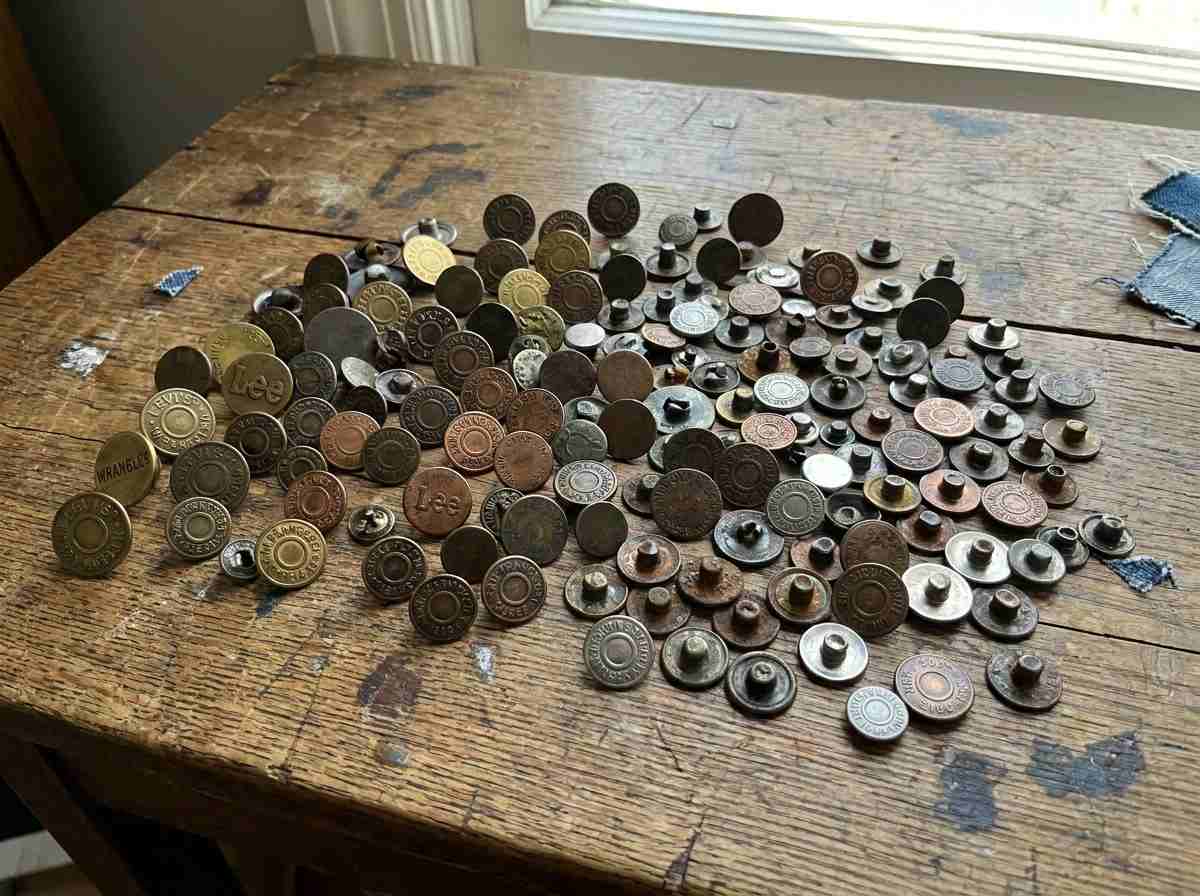
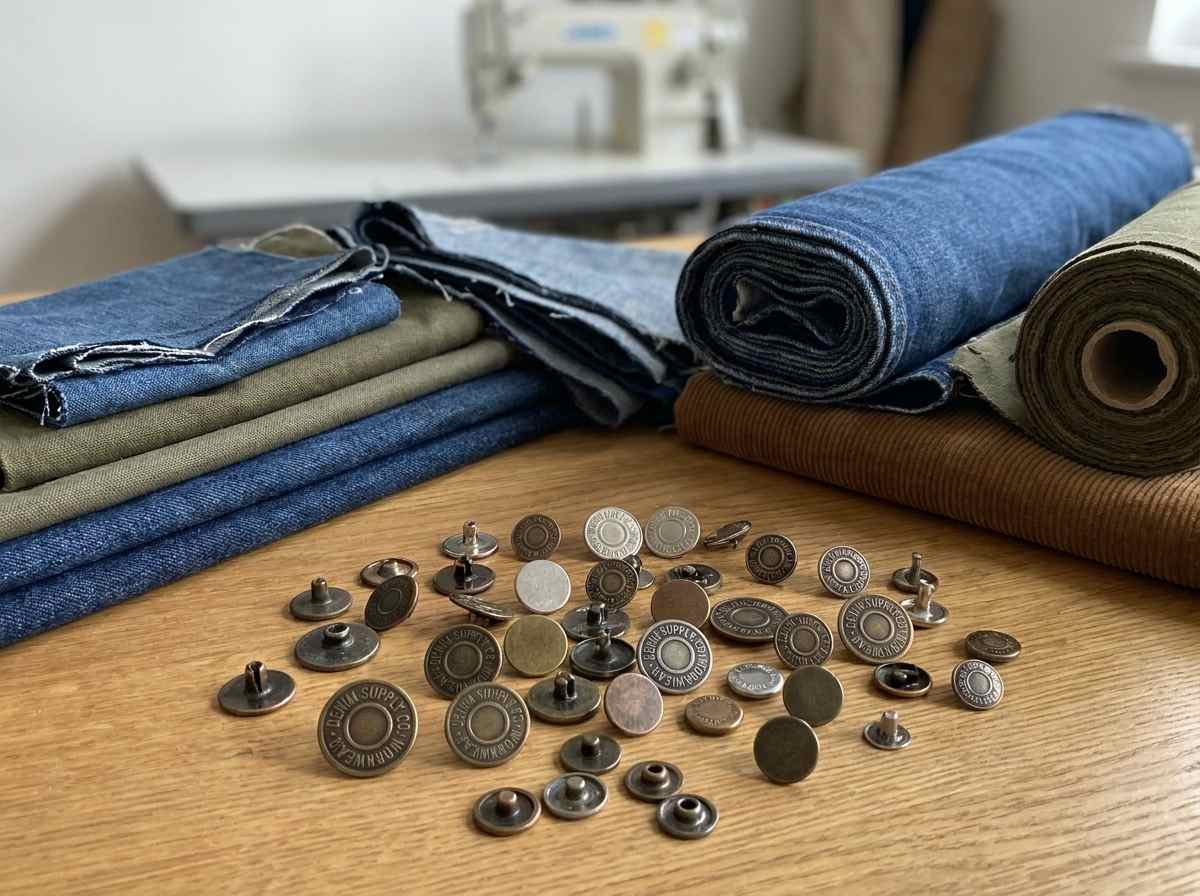
The visible face of a jeans button is an important branding position. Baocheng can develop custom tack buttons with letters, logos, symbols, border patterns, textures or plain faces. Depending on the button structure and material, branding can be created through embossing, debossing, engraving or custom tooling.
Common appearance options include bright silver, matte silver, black, gunmetal, antique brass, bright gold, antique gold, copper, antique copper, rose gold, brushed effects, polished effects and painted colors. Two-tone, vintage and intentionally aged appearances can also be evaluated for suitable designs.
- Custom logo, lettering and decorative pattern development
- Bright, matte, brushed, polished, antique and vintage effects
- Color matching based on an approved physical reference sample
- Coordinated finishes for tack buttons, rivets, eyelets and other apparel hardware
- Sample approval before bulk production
Finish samples are recommended because the final color can be affected by the base material, plating process, surface texture, lighting and garment washing conditions. Minor differences between batches should be managed through approved color standards and production inspection.
Material Options
A complete tack button may contain more than one metal component. The visible cap, internal body, shank and tack can therefore use different materials to balance appearance, forming performance, fastening strength, corrosion resistance, magnetic response and cost. The final material combination should be confirmed rather than assuming that every component is made from the same metal.
Brass
Brass offers good formability, corrosion resistance and a premium metal feel. It is suitable for many classic denim buttons and works well with a broad range of plated, polished and antique finishes. Brass is also a useful option when a non-ferrous material is preferred, although the magnetic response of the complete assembled button must still be verified component by component.
Zinc Alloy
Zinc alloy is often selected for decorative faces that require deeper relief, complex logos or dimensional patterns. It supports detailed molding and a wide variety of surface effects. Because zinc-alloy components and stamped components behave differently during assembly, the complete structure should be evaluated for weight, impact resistance and garment-washing conditions.
Stainless Steel
Stainless steel provides a clean appearance, good mechanical strength and resistance to moisture and everyday corrosion. It is suitable for workwear, uniforms, outdoor garments and projects requiring durable metal hardware. The exact stainless-steel grade should be selected according to forming difficulty, surface requirements, corrosion conditions and magnetic specifications.
Iron or Steel
Iron or conventional steel can provide a cost-effective and mechanically strong solution for many standard tack button designs. Because these materials normally depend on plating or coating for appearance and corrosion protection, the surface-treatment specification and garment-washing environment should be considered during development.
JSW20 Ultra-Low Magnetic Permeability Stainless Steel
For projects concerned about magnetic response, Baocheng can evaluate its patented JSW20 ultra-low magnetic permeability stainless steel for applicable stamped components. JSW20 is designed to maintain a very low magnetic response after cold-working processes such as stamping and forming. This can be valuable for garments that pass through needle-detection procedures or for applications with stricter magnetic-control requirements.
Needle-detector compatibility must be evaluated on the complete assembled tack button, not on the cap material alone. The tack, internal locking parts, surface treatment, assembly process, product size and detector sensitivity can all influence the final result. Baocheng can provide samples for customer testing, but approval should be based on the customer’s own detector settings, garment construction and acceptance standard.
Typical Applications
- Waistband and top closures for jeans and denim trousers
- Fly closures for jeans, shorts and denim skirts
- Denim jackets, shirts and vests
- Overalls, bib pants and utility garments
- Uniforms, workwear and heavy-duty apparel
- Selected bags, leather goods and decorative craft applications
The same tack button is not automatically suitable for every application. Button diameter, shank clearance, tack length, internal locking structure and surface finish should be matched to the actual buttonhole, material stack and use conditions.
Custom Development and Quality Control
Design Review
Before sampling, Baocheng can review the required button diameter, face profile, logo artwork, edge detail, buttonhole size, garment position, fabric layers, tack length, material and surface finish. If the original design is not suitable for stable forming or assembly, practical adjustments can be discussed before tooling begins.
Sample Development
Samples allow the customer to evaluate appearance and installation on the intended garment. Important checks include logo clarity, finish color, button height, shank clearance, tack engagement, installation pressure, rotation, pull-off resistance and fabric distortion. Washed or treated garments should be tested after the relevant production process because chemicals, abrasion, heat and residual substances can affect the hardware.
Bulk Production Control
During production, inspection can focus on dimensions, component fit, surface defects, burrs, plating consistency, color consistency, logo definition and assembly performance. Approved samples or agreed specifications can be used as the production reference. Packaging can also be discussed according to the customer’s assembly line, storage method and export requirements.
About Baocheng

Founded in 2013, JiaShan BaoCheng Clothing Accessories Co., Ltd. is a factory-trading integrated B2B supplier specializing in metal buttons and apparel hardware. Tack buttons, snap fasteners, rivets, eyelets and related stamped components form an important part of our product experience, allowing us to understand how hardware appearance, material selection and garment assembly must work together.
For custom tack button projects, Baocheng supports communication from the initial concept through material and structure selection, logo development, sampling, production and packaging. Our goal is not only to supply a decorative button, but also to help customers obtain a fastening component that matches the fabric, buttonhole, washing process, installation equipment and end-use requirements.
We work with garment brands, apparel factories, trim importers, sourcing companies and distributors. Whether a project requires a classic 17 mm jeans button, a branded donut button, a swivel structure, an oversized decorative face or a material solution with controlled magnetic response, the specification can be developed around the customer’s actual application.
Compliance and Documentation Support
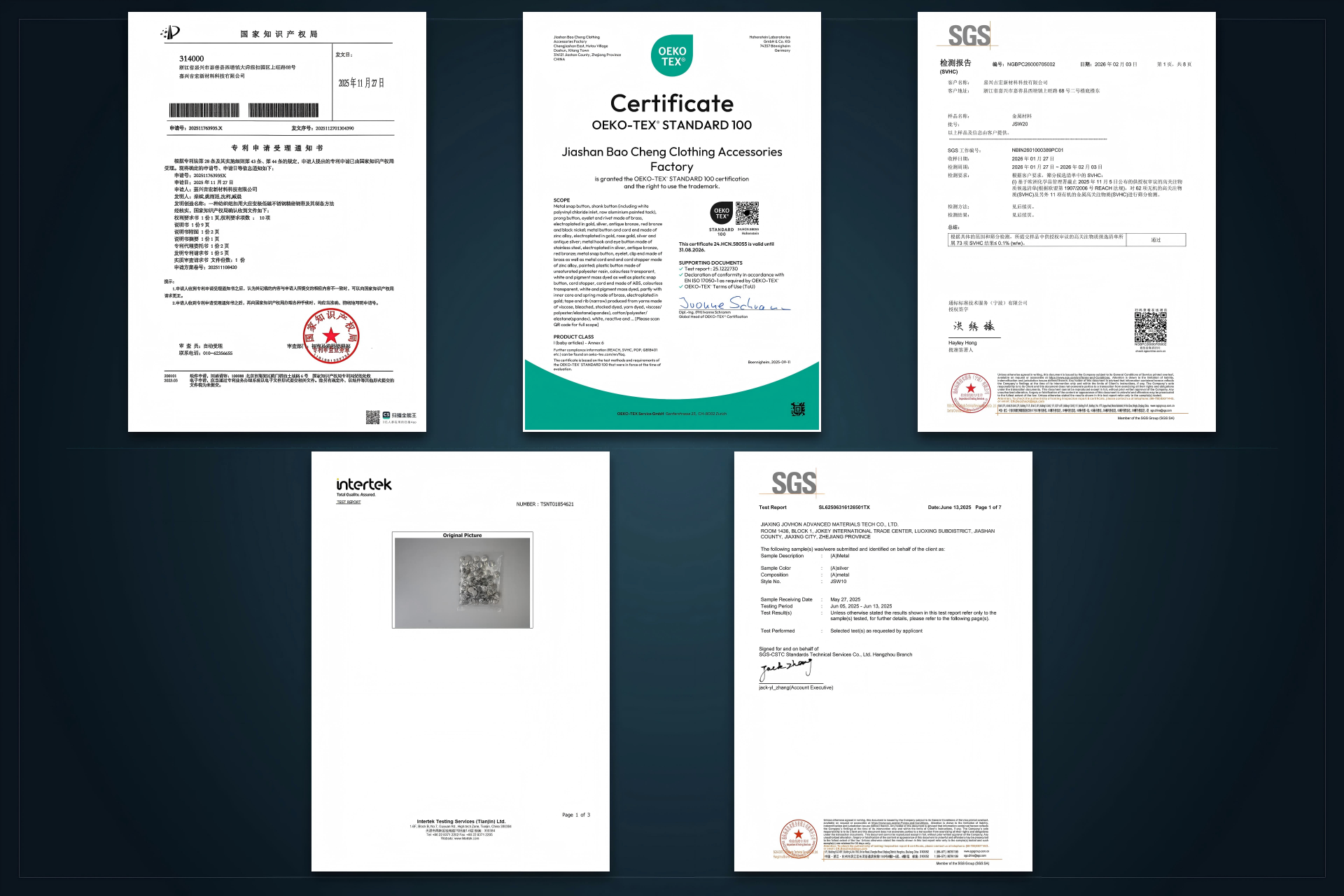
Supporting documents such as the JSW20 patent certificate, OEKO-TEX documentation, RoHS and REACH reports, Intertek reports and nickel-release test information may be provided for relevant materials or projects. Document availability and scope should be confirmed before ordering because a report may apply only to a specified material, finish, product construction or test batch.
If the finished tack button must meet a particular brand standard, market regulation or restricted-substance requirement, please provide the exact specification during the inquiry stage. Baocheng can then review material and finish options, arrange appropriate samples and discuss any project-specific testing required before mass production.
Focused FAQ
1. What is a tack button?
A tack button, also called a jeans button, consists of a visible button body and a separate tack. The tack passes through the fabric from the back and locks into the button body. The garment is opened and closed through a buttonhole, so a tack button should not be confused with a snap fastener.
2. What tack button sizes are available?
The regular jeans button diameters are 15 mm, 16 mm and 17 mm. A 15 mm button provides a more compact appearance for lightweight or fashion denim, 16 mm offers a balanced size for general jeans, and 17 mm is commonly selected for standard waistbands, heavier denim and workwear. The final size should be confirmed with the buttonhole, fabric layers and garment design.
3. How do I choose the correct tack length?
Choose the tack according to the compressed thickness of all fabric, seam, interlining and reinforcement layers at the installation point. The best method is to provide the actual fabric stack or finished garment panel for sample testing. Nominal fabric weight alone is not enough to determine the correct tack.
4. Can the logo and button-face design be customized?
Yes. Logos, letters, border patterns, textures and symbols can be customized through suitable forming, embossing, debossing, engraving or tooling methods. Artwork should be reviewed for line thickness, relief depth, edge clearance and forming feasibility before the mold is produced.
5. Which surface finishes can I choose?
Options may include silver, matte silver, black, gunmetal, gold, antique gold, brass, antique brass, copper, antique copper, rose gold, polished, brushed, painted and vintage effects. Availability depends on the base material and button structure. A physical finish sample is recommended for final color approval.
6. Which materials are suitable for tack buttons?
Common options include brass, zinc alloy, stainless steel and iron or steel. Different parts of the same button may use different materials. Baocheng can recommend a combination based on appearance, forming requirements, strength, corrosion conditions, magnetic response, target price and order quantity.
7. Which tack button structure should I choose?
Fixed tack buttons provide a stable and traditional feel. Swivel structures allow controlled movement and may be useful with thick buttonholes or flexible garments. Donut and open-top designs create a vintage industrial appearance, while closed-top designs provide more face area for logos and patterns. The final choice should match the garment construction and brand style.
8. Are Baocheng tack buttons suitable for needle detection?
Needle-detector performance depends on the complete assembled button, including the cap, internal body, tack, surface treatment and product size. JSW20 may be evaluated for applicable low-magnetic stamped components, but no tack button should be approved from the raw material name alone. Customers should test assembled samples using their actual detector sensitivity and production standard.
9. Can tack buttons withstand garment washing?
A suitable material and finish can be selected for normal garment production, but performance depends on the exact washing chemicals, temperature, abrasion, bleaching process, residual chlorine and drying conditions. Please provide the intended wash process so that representative samples can be tested before bulk production.
10. Can Baocheng support a fully custom tack button project?
Yes. Baocheng can support size and structure selection, material matching, custom logo development, finish sampling, tack-length evaluation, trial installation, bulk production and packaging. Providing artwork, target dimensions, fabric construction, application details, finish references, test requirements and estimated order quantity will help us prepare a more accurate proposal.
RELATED NEWS
MESSAGE ONLINE
CONTACT US
No. 68, Dashun Shangwang Road, Jiashan County, Jiaxing City, Zhejiang Province, China

+86 13706836444

+86 13706836444

jack-shen@longyao-sh.com


Premium Engineered Wood Products for Global Excellence
Crafted with precision and certified to meet international standards, our engineered wood solutions deliver unmatched quality and reliability for diverse applications worldwide.
Internationally Recognized Certifications
KEY RESPONSIBILITIES
Identify, develop and manage all business opportunities. Map by identifying all buyers and influencers to create a constant string of revenues, achieving/exceeding the targets. Establish long term relationship with the senior exec staff and get support from ADI senior management in leveraging that constant relationship.
In collaboration with marketing, build a specific value proposition for the account.
Maintain accurate monthly forecast and sales opportunity pipeline Creation and execution of detailed sales plan to achieve revenue objectives.
Duties and responsibilities include developing and executing business partnership strategies
Responsibilities will cover all facets of strategic key account business development, identifying new market opportunities for partnerships, identifying partners, initiating conversations, enumerating requirements, negotiating terms, closing deals and support account receivables collection.
Focus on the development of national accounts with annual purchases of $....
Develop and maintain close working relationships with appropriate internal and external resources and partners.
Participate in account planning and strategy activity Understand and appropriately leverage sales and support resources
Maintain high level of knowledge of our product offerings, roadmaps, competition, pricing, market share, and key product differentiation
Work to increase awareness and interest in our products and solutions
Superior Material & Advanced Manufacturing
KEY RESPONSIBILITIES
Identify, develop and manage all business opportunities. Map by identifying all buyers and influencers to create a constant string of revenues, achieving/exceeding the targets. Establish long term relationship with the senior exec staff and get support from ADI senior management in leveraging that constant relationship.
In collaboration with marketing, build a specific value proposition for the account.
Maintain accurate monthly forecast and sales opportunity pipeline Creation and execution of detailed sales plan to achieve revenue objectives.
Duties and responsibilities include developing and executing business partnership strategies
Responsibilities will cover all facets of strategic key account business development, identifying new market opportunities for partnerships, identifying partners, initiating conversations, enumerating requirements, negotiating terms, closing deals and support account receivables collection.
Focus on the development of national accounts with annual purchases of $....
Develop and maintain close working relationships with appropriate internal and external resources and partners.
Participate in account planning and strategy activity Understand and appropriately leverage sales and support resources
Maintain high level of knowledge of our product offerings, roadmaps, competition, pricing, market share, and key product differentiation
Work to increase awareness and interest in our products and solutions
Versatile Applications Across Industries
KEY RESPONSIBILITIES
Identify, develop and manage all business opportunities. Map by identifying all buyers and influencers to create a constant string of revenues, achieving/exceeding the targets. Establish long term relationship with the senior exec staff and get support from ADI senior management in leveraging that constant relationship.
In collaboration with marketing, build a specific value proposition for the account.
Maintain accurate monthly forecast and sales opportunity pipeline Creation and execution of detailed sales plan to achieve revenue objectives.
Duties and responsibilities include developing and executing business partnership strategies
Responsibilities will cover all facets of strategic key account business development, identifying new market opportunities for partnerships, identifying partners, initiating conversations, enumerating requirements, negotiating terms, closing deals and support account receivables collection.
Focus on the development of national accounts with annual purchases of $....
Develop and maintain close working relationships with appropriate internal and external resources and partners.
Participate in account planning and strategy activity Understand and appropriately leverage sales and support resources
Maintain high level of knowledge of our product offerings, roadmaps, competition, pricing, market share, and key product differentiation
Work to increase awareness and interest in our products and solutions
Customization & Competitive Logistics
KEY RESPONSIBILITIES
Identify, develop and manage all business opportunities. Map by identifying all buyers and influencers to create a constant string of revenues, achieving/exceeding the targets. Establish long term relationship with the senior exec staff and get support from ADI senior management in leveraging that constant relationship.
In collaboration with marketing, build a specific value proposition for the account.
Maintain accurate monthly forecast and sales opportunity pipeline Creation and execution of detailed sales plan to achieve revenue objectives.
Duties and responsibilities include developing and executing business partnership strategies
Responsibilities will cover all facets of strategic key account business development, identifying new market opportunities for partnerships, identifying partners, initiating conversations, enumerating requirements, negotiating terms, closing deals and support account receivables collection.
Focus on the development of national accounts with annual purchases of $....
Develop and maintain close working relationships with appropriate internal and external resources and partners.
Participate in account planning and strategy activity Understand and appropriately leverage sales and support resources
Maintain high level of knowledge of our product offerings, roadmaps, competition, pricing, market share, and key product differentiation
Work to increase awareness and interest in our products and solutions