






Who Invented the Snap Fastener? From Early Press Stud Patents to Modern Snap Buttons
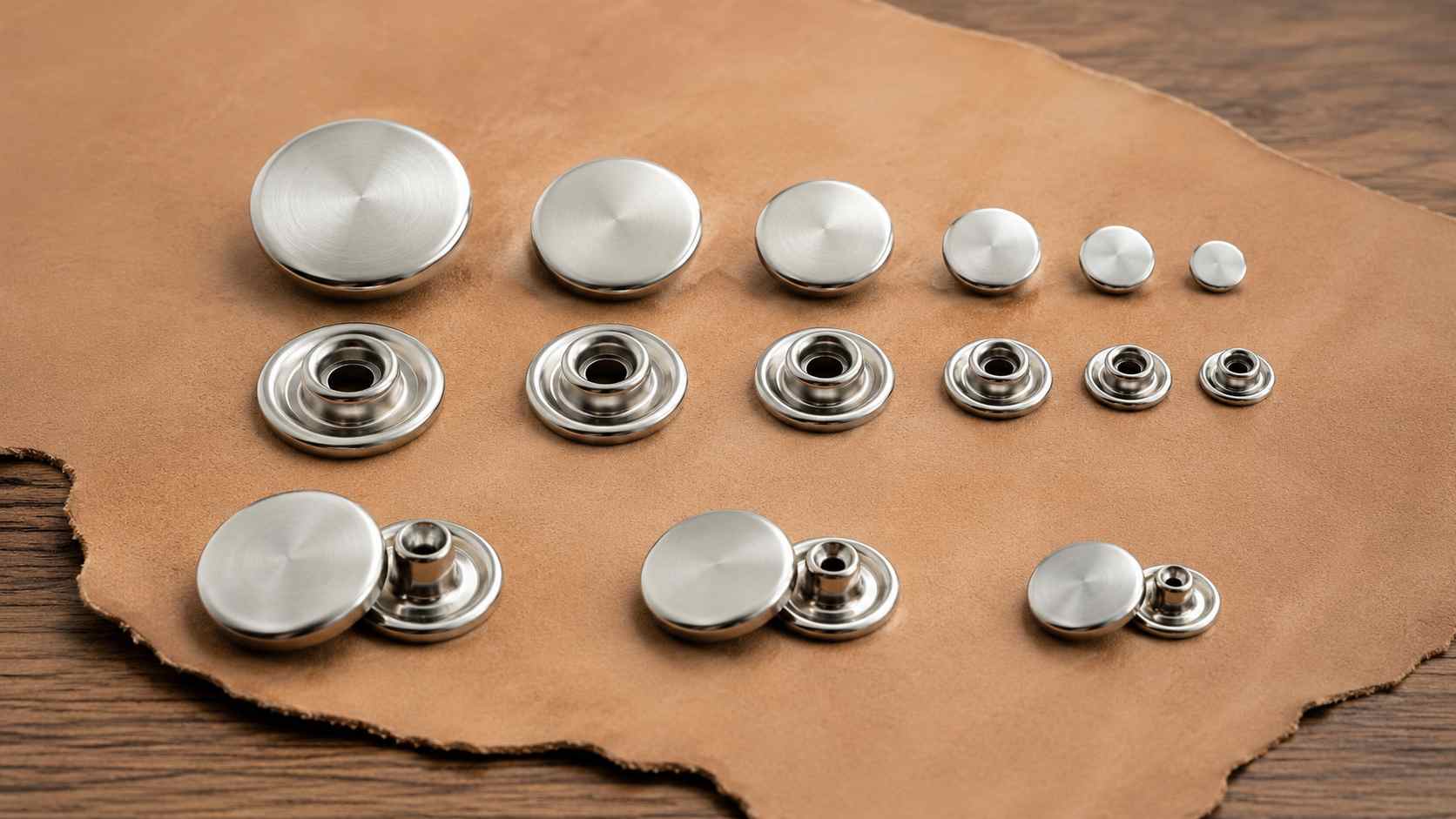 Who Invented the Snap Fastener?
The history of the snap fastener is more complicated than a single inventor, a single patent and a single date. If the question is who created one of the earliest clearly documented modern snap-type fasteners, German inventor Heribert Bauer is a central figure. In 1885, Bauer obtained a patent for a spring-based fastener intended for garments such as trousers and gloves.
But that was not the end of the invention story. In France, Albert-Pierre Raymond developed and patented a riveted spring press stud for the glove industry in 1886. Later, manufacturers such as Prym refined the spring mechanism and industrialized production. By the twentieth century, snap fasteners had developed into multiple systems for lightweight apparel, workwear, Western clothing, leather goods and industrial applications.
So the most accurate answer is not that one person created every feature of the modern snap button. The product evolved through several important inventions and industrial improvements.
The history matters to modern buyers because many features that seem basic today—the spring socket, riveted installation, four-part construction, automated assembly and application-specific fastening force—were developed gradually rather than appearing at once.
The Problem Before the Snap Fastener
Before press fasteners became practical, garments and accessories depended heavily on traditional buttons, buttonholes, hooks, eyes, laces and other mechanical closures.
These systems worked, but each had limitations.
A sewn button required a buttonhole. Both operations consumed manufacturing time, and the buttonhole itself had to be carefully finished so the fabric would not fray excessively.
For gloves, closely fitted garments and frequently opened clothing, small traditional buttons could also be inconvenient for the user. Manufacturers therefore had a strong incentive to develop a closure that could be opened and closed rapidly without manipulating a button through a narrow hole.
This manufacturing and usability problem created the environment in which spring fasteners emerged.
1885: Heribert Bauer and an Early Documented Snap-Fastener Patent
Heribert Bauer of Pforzheim, Germany, is one of the most important names in the early history of the modern snap fastener.
In 1885 he patented a fastener designed for garments including trousers and gloves. The design used interacting metal components and spring action to produce a closure that could be engaged and released without a conventional buttonhole.
This is why searches such as when were snap buttons invented often lead to the year 1885.
Bauer's contribution was important because the fastening action was no longer based simply on pushing a rigid button through fabric. The closure itself incorporated mechanical elasticity.
The key idea would remain central to later snap systems: one part temporarily deflects or expands as the mating component enters, then recovers to retain it.
Modern socket-and-stud systems use more refined geometries, materials and production methods, but that concept of controlled spring engagement remains fundamental.
Was Bauer the Only Inventor of the Press Stud?
No. Describing Bauer as the only inventor oversimplifies the historical record.
Fastening technology was developing rapidly in several European manufacturing centers during the same period. Different inventors were attempting to solve similar problems for clothing, gloves and textile goods.
This is particularly important because different historical sources sometimes use “snap fastener,” “press stud,” “spring stud fastener” and related expressions for designs that were similar in purpose but not identical in construction.
The modern product category should therefore be understood as an evolutionary family rather than one completely finished mechanism appearing in a single patent.
1886: Albert-Pierre Raymond and the Riveted Press Stud
One year after Bauer's 1885 patent, French industrialist Albert-Pierre Raymond developed another important press-stud design.
Raymond was working in Grenoble, an important glove-manufacturing center. Glove makers needed closures that were faster to install and easier to operate than small sewn buttons and buttonholes.
In 1886, Raymond developed a spring stud fastener intended specifically for glove manufacture. An especially important aspect of this development was the use of a riveted installation concept.
This moved the snap closer to the type of mechanically installed hardware familiar to modern garment factories.
Instead of sewing every closure component onto the textile, metal components could be mechanically attached using specialized tools.
That change affected far more than user convenience. It also influenced manufacturing productivity and made the fastener more suitable for industrial-scale production.
Why Two Inventors Can Both Be Important
It may seem contradictory to associate the snap fastener with Bauer in 1885 and Raymond in 1886, but the two historical milestones can coexist.
Bauer produced an important early patented spring fastener. Raymond developed a closely related but independently significant riveted press-stud system for glove manufacture.
Industrial products often develop in exactly this way.
One invention establishes an important mechanical principle. Another changes the method of attachment. A later engineer improves spring geometry. Another company develops a production machine that makes the design economically practical at scale.
The modern snap button is the result of this accumulated development.
From Sew-On Closures to Riveted Snap Hardware
The move from sewn fasteners toward mechanically installed snaps was a major industrial change.
In a sewn closure, thread is responsible for attaching the hardware to the textile. In a riveted or press-set system, metal components pass through or engage the substrate and are permanently formed together using a die.
This created several advantages for mass production:
- installation could become more repeatable;
- dedicated equipment could increase production speed;
- the location of the fastener could be standardized;
- hardware could become both structural and decorative;
- different post lengths could be developed for different material thicknesses.
The familiar four-part snap button eventually emerged from this manufacturing logic.
1903: Hans Friedrich Prym and the Spring Improvement
The next major step was not simply inventing another name for the snap. It was refining the spring mechanism so the product could perform more reliably.
In 1903, Hans Friedrich Prym improved the existing press-fastener concept by introducing a spring into the design and patented the improved system.
The importance of this development was mechanical consistency.
A snap fastener must perform two apparently conflicting tasks: it must hold securely when closed, but it must also open predictably when sufficient force is applied.
A controlled spring structure helps create this balance.
The spring can deform during engagement and then recover into a retaining position. With correct geometry, the same action can be repeated many times.
This principle is still recognizable in modern spring snap systems.
1909: Automation Begins to Change Snap Manufacturing
Developing a functional fastener is only part of industrial innovation. The product also has to be manufactured economically and consistently.
By 1909, equipment had been developed to insert snap-fastener springs automatically.
This represented a major transition from small-component assembly toward true industrial production.
Automation matters because spring geometry is highly sensitive to variation. If the spring is positioned inconsistently, the opening and closing behavior also becomes inconsistent.
Mechanized assembly helped manufacturers produce larger quantities with more repeatable fastening performance.
The history of the snap fastener is therefore also a history of tooling and production engineering.
Why Modern Searches Still Use So Many Different Names
The nineteenth- and early twentieth-century development of press fasteners occurred across several countries and companies. That helps explain why modern English still has multiple names for the same broad product family.
Buyers may encounter snap button, snap fastener, press stud, press button, popper, press fastener and other expressions.
Keyword data even contains mixed search phrases such as snaps / press studs and snap press buttons, reflecting users who recognize the product but are uncertain which industry term is most appropriate.
Search engines also record spelling variants such as snap fastner and snap fastners. These are not preferred technical spellings, but they show how strongly the underlying product is recognized independently of one standardized name.
For manufacturers, the practical lesson is straightforward: understand the terminology buyers use, but convert every inquiry into a controlled technical specification before production.
How the Modern Four-Part Snap Emerged
Modern garment snap systems commonly use four components:
- cap;
- socket;
- stud;
- post or corresponding attachment component.
The cap and socket form one installed half. The stud and post form the other.
The socket and stud create the reusable engagement, while the other components help anchor the hardware permanently into the substrate.
This arrangement separates two mechanical functions:
- permanent attachment to fabric, leather or another substrate;
- repeated opening and closing during normal use.
That separation made snap fasteners adaptable to a much wider range of products.
1930: Lightweight Garments Become Another Major Snap Market
By the twentieth century, snap-fastener development was no longer focused only on creating the basic mechanism. Manufacturers increasingly designed systems for specific applications.
One important development was the emergence of snap systems intended for lightweight garments, including infant clothing.
This required a different design philosophy from heavy workwear hardware.
Very high opening force is undesirable on lightweight fabric because the substrate may tear before the snap releases normally.
Snap development therefore increasingly became an exercise in matching spring force, component size, material thickness and garment strength.
This remains a critical design principle today.
From Utility Fastener to Garment Design Element
Early press studs were primarily functional solutions. Over time, the visible cap became increasingly important to fashion.
Manufacturers could change:
- cap diameter;
- dome profile;
- surface color;
- polished or matte finish;
- embossed patterns;
- logos;
- decorative inserts.
This transformed the snap from hidden mechanical hardware into a visible design feature.
Western clothing is one of the clearest examples of this transition.
What Is a Pearl Snap and Why Did It Matter to Fashion?
Users researching snap history sometimes enter the question whats a pearl snap.
A pearl snap is a snap fastener with a visible pearl-like or imitation-pearl decorative cap, most strongly associated with Western-style shirts.
It is important to distinguish the style from the general product family.
A pearl snap button is still fundamentally a snap fastener. The socket and stud must perform the same mechanical job as other snaps, but the visible face is designed to become a fashion feature.
Likewise, pearl button snaps describe a decorative expression of the snap concept rather than a completely different fastening principle.
This is an important stage in snap history because it demonstrates that the fastener had moved beyond solving a manufacturing problem. It had become part of the visual language of clothing.
The Evolution of Snap-Button Manufacturing
Modern snap manufacturing combines operations that nineteenth-century inventors could only begin to industrialize.
A typical metal snap project can involve:
- strip material selection;
- progressive stamping;
- deep drawing or forming;
- spring-forming operations;
- component trimming;
- surface preparation;
- plating or coating;
- inspection;
- automatic sorting or assembly;
- application testing.
The result is a product that appears simple because all of the complexity has been engineered into a few millimeters of metal.
Modern quality control also goes far beyond asking whether two pieces click together.
From “Does It Snap?” to Controlled Performance
Today's buyers can evaluate snap fasteners through measurable performance requirements.
These can include:
- closing force;
- opening force;
- component separation strength;
- installation strength;
- cycle durability;
- corrosion resistance;
- surface-finish durability;
- dimensional consistency;
- nickel-release requirements;
- magnetic performance.
This represents an important historical shift.
The early problem was simply finding a convenient alternative to traditional buttons. Modern development asks how precisely the fastener can be optimized for a specific garment or technical product.
Why a Modern Snap Is Not Just an 1885 Fastener Made With New Machines
The basic spring-fastening idea is old, but today's products incorporate more sophisticated control of almost every variable.
Modern manufacturers can adjust stud geometry and socket design to influence fastening force. Post length can be matched to exact material thickness. Surface treatments can be developed for appearance and corrosion performance. Tooling can be designed around automated production.
This means there is no single universal “modern snap button.”
The market now contains lightweight apparel snaps, ring-spring systems, heavy-duty systems, decorative snaps, marine hardware, specialized low-magnetic components and many other designs.
The history moved from invention to specialization.
Why Historical Snap Components Were Not Automatically Interchangeable
The existence of multiple inventors and manufacturers also helps explain another feature of today's market: different snap systems are not automatically interchangeable.
Two products can use the same general principle while differing in:
- socket geometry;
- stud profile;
- spring configuration;
- cap diameter;
- post length;
- installation tooling;
- target opening force.
The term “snap fastener” therefore describes a mechanical family, not a universal dimensional standard.
This is as true for modern hardware as it was during the early development of the technology.
How Search Language Preserves More Than a Century of Terminology
Modern SEO data provides an interesting reflection of this history.
Users search for press studs, snap buttons, poppers and combinations of these terms. They may type phrases such as buttons snaps even though a technical catalog would normally use a different word order.
The variety exists because the product entered different national markets, garment industries and consumer vocabularies over more than a century.
For an SEO strategy, these search patterns are valuable because they reveal genuine language variation.
For engineering documentation, however, the preferred terminology should remain controlled and consistent.
What Did Not Change: The Need for a Balanced Mechanical Connection
Despite more than a century of manufacturing development, the fundamental engineering requirement remains recognizable.
The fastener must:
- close with reasonable force;
- provide clear engagement;
- resist unintended opening;
- release without damaging the substrate;
- remain securely installed;
- perform consistently through repeated use.
The exact solution has become more sophisticated, but the fundamental balance between secure retention and intentional release remains the heart of snap-fastener design.
Modern Material Choice Extends the Original Snap Concept
Early snap inventors were primarily solving a closure problem. Modern buyers also ask the hardware to meet environmental, regulatory and production requirements.
Material selection can now consider:
- forming behavior;
- corrosion resistance;
- wear performance;
- surface finishing;
- nickel release;
- restricted-substance requirements;
- magnetic permeability.
Brass remains important because of its formability and finishing flexibility. Stainless steels are valuable where corrosion behavior, wear resistance or other environmental requirements are important.
For specialized projects, the magnetic behavior of the final formed component can also become an engineering requirement.
JSW20 and the Next Stage of Snap-Material Development
Baocheng / BC New Material can manufacture finished snap-button components from patented JSW20 ultra-low magnetic permeability stainless steel for projects requiring extremely low magnetic response after forming.
This is relevant because conventional assumptions about the magnetic behavior of raw austenitic stainless steel do not always describe the behavior of a heavily formed finished component.
JSW20 is designed to maintain extremely low magnetic permeability after forming and also provides chloride-corrosion resistance.
That combination allows modern snap development to address performance requirements that nineteenth-century inventors were never designing around, including needle-detection processes, magnetically sensitive applications and selected demanding environments.
Baocheng supplies finished JSW20 snap products and customized components rather than raw JSW20 coils or sheets.
What Modern Buyers Can Learn From Snap-Fastener History
The history provides several practical lessons for sourcing teams.
There Is No Single Universal Snap System
Several technical lineages and manufacturing systems developed over time. Buyers should never assume compatibility based only on product name or cap diameter.
Installation Technology Is Part of the Product
Riveted attachment and later automation were as important to industrial adoption as the spring mechanism itself. Modern buyers should therefore consider dies, setting pressure and factory equipment during sourcing.
Spring Geometry Defines User Experience
The historical move toward improved spring systems established one of the most important modern design variables: controlled opening and closing force.
Application Drives Development
Gloves, trousers, infant garments, Western shirts, workwear and technical products have different fastening requirements. Modern snap systems continue to evolve because applications continue to demand different performance.
Custom Modern Snap Fasteners From BC New Material

Baocheng / BC New Material manufactures finished metal snap buttons and customized components for apparel, denim, children's clothing, leather goods, bags, workwear, outdoor products and other applications.
The modern customization process builds on more than a century of snap-fastener development but applies it to the customer's exact product.
Customization can include:
- cap diameter and profile;
- socket and stud structure;
- post dimensions;
- logo and embossed designs;
- decorative cap surfaces;
- base material;
- color and surface finish;
- fastening behavior;
- component combinations matched to the actual substrate.
Sampling can be carried out around the customer's actual fabric, denim, leather, coated textile or other material stack so that installation and fastening behavior are evaluated in the finished-product condition.
Material options can include brass, conventional stainless-steel grades and other project-appropriate metals. Where extremely low magnetic permeability after forming is required, finished components can also be manufactured from patented JSW20 ultra-low magnetic permeability stainless steel.
According to the project and applicable certificate scope, material and process development can also consider REACH, RoHS, OEKO-TEX and nickel-release requirements.
Conclusion: The Snap Fastener Was Invented in Stages
If someone asks who invented the snap fastener, Heribert Bauer's 1885 patent is one of the clearest early milestones and makes him a central figure in the history of the modern snap.
But that answer is only the beginning.
Albert-Pierre Raymond's 1886 riveted spring press stud contributed another important step toward industrial garment hardware. Hans Friedrich Prym's early-twentieth-century spring improvements and later automation helped turn the press fastener into a mass-produced industrial product. Subsequent manufacturers continued adapting snap systems for lightweight clothing and specialized applications.
Modern snap buttons are therefore not the product of one isolated invention. They are the result of more than a century of improvements in spring mechanics, component geometry, riveting, automated assembly, surface finishing, materials and application engineering.
The basic objective, however, remains remarkably consistent: create a closure that is quick to operate, secure when closed, predictable when opened and reliable when attached to the finished product.
Focused FAQ
Who invented the snap fastener?
Heribert Bauer is a central early inventor and patented a spring-type fastener in 1885. The modern snap-fastener family later developed through additional inventions and industrial improvements by other engineers and manufacturers.
When were snap buttons invented?
1885 is an important early date because Heribert Bauer obtained a patent for a spring-based garment fastener that year. Important additional press-stud development followed in 1886 and the early twentieth century.
What did Albert-Pierre Raymond invent in 1886?
Albert-Pierre Raymond developed a spring press-stud system for the glove industry, including a riveted installation concept that helped move press fasteners toward industrial production.
What did Prym change in the history of the press stud?
Hans Friedrich Prym improved the press-fastener mechanism in 1903 by incorporating a spring system and later helped industrialize its manufacture. Automated spring insertion followed in the early twentieth century.
Was the first snap button already the same four-part system used today?
No. Modern four-part snap systems evolved from earlier spring-fastener designs. Attachment methods, spring structures, component geometry and production equipment developed over time.
Why do snap fasteners have so many different names?
The technology developed and spread across several countries and industries, producing terms such as snap fastener, snap button, press stud, press button and popper.
What is a pearl snap?
A pearl snap is a snap fastener with a decorative pearl-like visible cap, particularly associated with Western-style clothing. It is a decorative style within the broader snap-fastener family.
Did industrial automation change snap-button design?
Yes. Automated component and spring assembly improved production consistency and made large-scale snap manufacturing more practical.
Are modern snap buttons standardized enough to mix different manufacturers' parts?
No. Different systems can use different socket geometries, stud profiles, post sizes and installation dies. Compatibility should always be verified.
Can Baocheng reproduce or customize an existing snap system?
Yes. Baocheng / BC New Material can evaluate complete samples, drawings and actual substrate materials to develop customized cap, socket, stud, post, material and finish combinations.
Can modern snap buttons be manufactured from ultra-low magnetic permeability stainless steel?
Yes. Baocheng can manufacture finished snap components from patented JSW20 ultra-low magnetic permeability stainless steel for projects requiring extremely low magnetic permeability after forming. JSW20 also provides chloride-corrosion resistance.
Does Baocheng sell raw JSW20 material?
No. Baocheng supplies finished JSW20 products and customized components rather than raw JSW20 coils or sheets.
#SnapFastener, #PressStud, #SnapButton, #FastenerHistory, #PressFastener, #GarmentHardware, #MetalButtons, #SnapButtonHistory