





JSW20 Non-Magnetic Stainless Steel: Why It Matters for Custom Metal Components
July 1, 2026
JSW20 non-magnetic stainless steel is designed for applications where finished metal parts must keep low magnetic permeability after stamping, bending, forming, or welding. For industrial buyers, importers, distributors, and OEM manufacturers, this material offers a practical balance of low magnetism, corrosion resistance, formability, strength, and finished-part reliability. This article explains why JSW20 matters for custom metal components and how buyers can evaluate it before production.
Introduction: Why JSW20 Is More Than a Material Name?
Many buyers choose stainless steel because it is strong, corrosion-resistant, and suitable for mass production. For common parts, this may be enough. A buyer may only need a metal component that can be stamped, polished, plated, assembled, and delivered on time.
But some industries need more than ordinary stainless steel. They need parts that remain low-magnetic after forming. They need components that can pass strict inspection. They need hardware that does not create false alarms during garment needle detection. They need electronic and industrial metal parts that remain stable after precision stamping.
This is where JSW20 non-magnetic stainless steel becomes valuable.
JSW20 is not important only because it is stainless steel. It is important because it is designed for applications where low magnetic behavior must remain stable after processing. Many metal parts are not used as flat sheets. They are stamped, bent, drawn, curled, welded, riveted, polished, plated, and assembled. A material that looks acceptable before production may behave differently after production.

For buyers asking which stainless steel is non magnetic, the key question is not only whether a material is available as sheet, strip, coil, or standard metal parts. The more important question is whether the material can still match the final application after real manufacturing.
JSW20 connects material performance with finished-part reliability. It supports applications where low magnetism, strength, corrosion resistance, forming ability, and batch consistency all matter.
What Is JSW20 Non-Magnetic Stainless Steel?
JSW20 is a non-magnetic stainless steel material used for components that need to remain low-magnetic after forming. It belongs to the broader category of functional stainless steel materials with very low magnetic permeability.
Non-magnetic stainless steel is often connected with austenitic stainless steel. Austenitic stainless steels are widely known for good corrosion resistance and low magnetic response in certain conditions. However, not all austenitic stainless steels remain low-magnetic after cold working. This is an important point for buyers.
A raw stainless steel sheet may show low magnetism before production. But after stamping, bending, drawing, or welding, the material may develop a stronger magnetic response. For some products, this does not matter. For other products, it can create inspection failure, functional risk, or quality disputes.
JSW20 is designed to address this problem. It can maintain non-magnetic behavior under deformation below 60%. Its relative magnetic permeability is around 1.001, which indicates a very low magnetic response. After bending and welding, the magnetic permeability can also remain at a low level.
This makes JSW20 different from many standard stainless steel choices. It is not selected only for corrosion resistance. It is selected because the finished part must remain stable after manufacturing.
JSW20 also provides useful mechanical performance. It offers practical strength and elongation for forming applications. It can support parts that need stamping, bending, assembly, and repeated use. It also performs well in humid and water-vapor environments, which is important for products that may face moisture during storage, shipping, or service.
For buyers, JSW20 should be understood as an application-driven material solution for formed metal parts.
Why Ordinary Stainless Steel May Not Be Enough?
Many buyers ask, “is 304 stainless steel magnetic?” and whether 316 behaves the same way after processing. These materials are widely used because they offer corrosion resistance, formability, and stable supply. For general applications, 304 or 316 may work well.
But low-magnetic applications need deeper evaluation.
Some stainless steels may become weakly magnetic after cold working. Cold working includes stamping, bending, deep drawing, rolling, pressing, curling, riveting, and other forming processes at room temperature. These processes can change the internal structure of the material. As a result, a part that began as low-magnetic may become more magnetic after forming.
This is a real purchasing issue. A garment button may pass a raw material check but fail after stamping and assembly. A snap fastener may look good but trigger a needle detector. An electronic shielding cover may meet the drawing but fail an internal magnetic requirement. A compressor valve plate may need stable performance after precision forming.
For these applications, the buyer should not only ask, “What stainless steel grade is this?” A better question is, “What happens to the magnetic performance after the part is made?”
This is where JSW20 becomes useful. It is suitable for parts that need low magnetic permeability after controlled deformation. Standard stainless steel may still be suitable for many products. But when the finished part must keep low magnetic behavior, ordinary material selection may not be enough.
Key Properties That Matter to Industrial Buyers
When industrial buyers evaluate JSW20, they should look at the full performance balance. Low magnetism is important, but it is not the only factor. A useful material for custom metal components should also offer strength, formability, corrosion resistance, and stable batch performance.
First, JSW20 has very low magnetic permeability. This is the foundation of its value. Low magnetic permeability helps reduce risk in magnetic-sensitive applications.
Second, it can maintain non-magnetic behavior after deformation within a defined range. This is critical because most custom metal parts are processed into finished components, not used as flat sheet.
Third, it provides practical mechanical strength. A part may need to withstand forming pressure, assembly stress, pulling force, vibration, or repeated use. A material that is low-magnetic but too weak may not be suitable for real products.
Fourth, it has useful elongation and forming ability. This matters for stamping, bending, curling, and drawing.
Fifth, it provides corrosion resistance in humid and water-vapor environments. For export products, this is important because parts may face moisture during shipping, storage, processing, or final use.
These austenitic stainless steel properties are valuable when the buyer needs both low magnetic response and finished-part durability. For B2B buyers, the goal is to choose the material that reduces the most risk in the final application.
Main Application Directions for JSW20
JSW20 can be considered in different industries, but its core value is the same: it helps finished parts keep stable low magnetic behavior after forming.
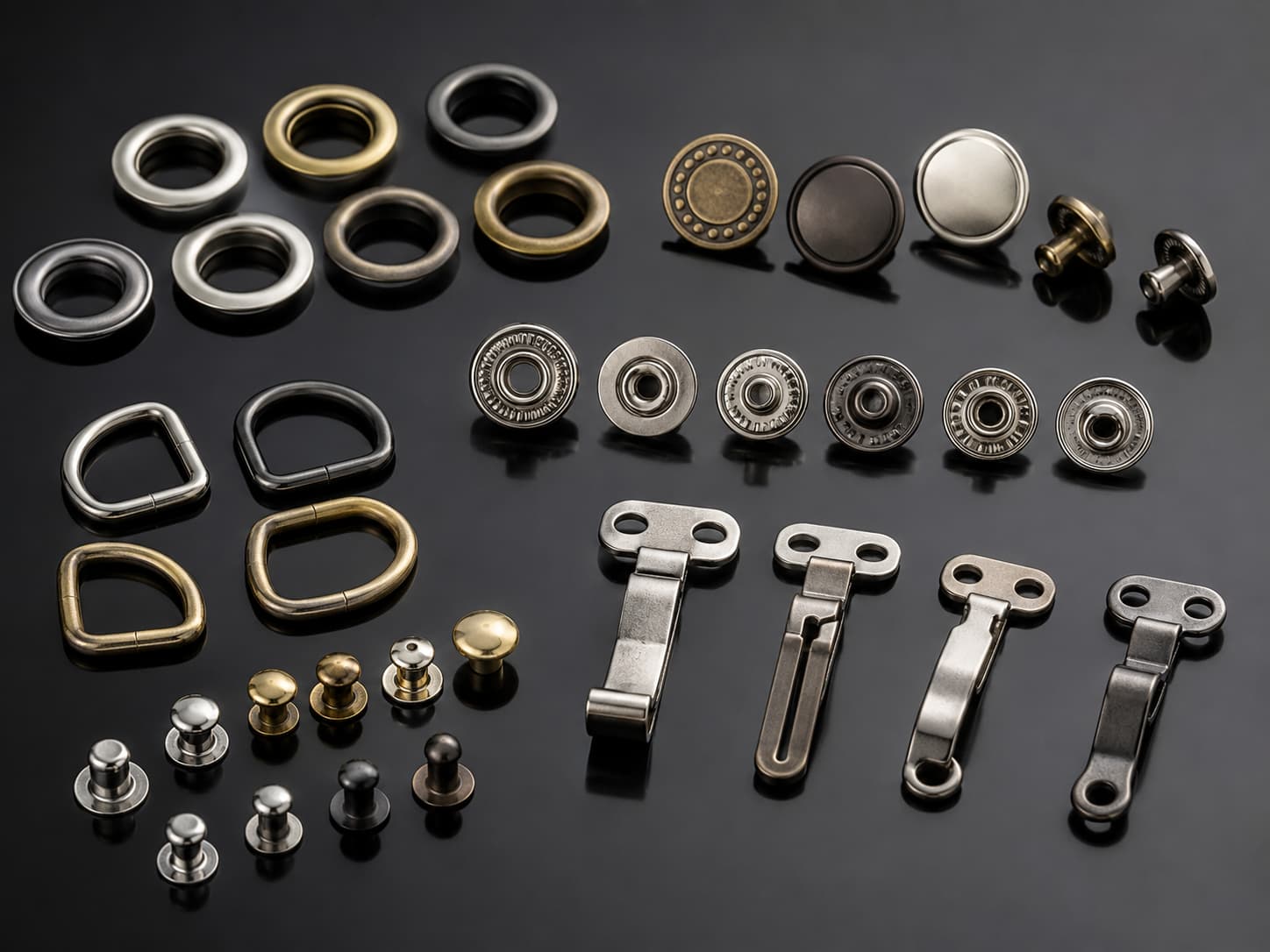
In garment accessories, metal hardware often needs to pass needle detection. This is common in export garments, children’s clothing, denim, workwear, uniforms, and high-quality fashion products. If metal accessories have magnetic response, they may interfere with inspection or cause false alarms. A buyer searching for a snap button supplier may care about size, cap shape, finish, price, and packing. But for export garment orders, magnetic performance can also be important.
In rivets, eyelets, and small functional hardware, the parts may look simple, but the process can be complex. A rivet may be stamped, drawn, pressed, plated, and assembled. Buyers who search for industrial rivet & fastener products often focus on holding strength, material thickness, surface finish, and size. When the final product must pass inspection or avoid magnetic interference, magnetic behavior should also be part of the purchasing discussion.
In consumer electronics, metal parts often need precision forming, clean surfaces, low burr levels, assembly compatibility, and stable finished-part performance. Possible applications include EMI shielding covers, phone components, brackets, decorative stainless steel sheets, support parts, and precision stamped components. A common sourcing question is, “can stainless steel be magnetic after cutting or forming?” For many electronic components, this matters because they need more than simple cutting. They require forming control, surface treatment, and stable material behavior after processing.
In motors, compressors, pumps, and precision equipment, components may operate near magnetic fields, rotating systems, vibration environments, or repeated mechanical cycles. JSW20 can be considered for certain compressor components, valve plates, pump parts, end caps, covers, housings, and precision formed parts. For buyers asking “why is stainless steel magnetic after forming?”, standard product descriptions may not be enough when the component must remain low-magnetic in its finished condition.
In new energy and fuel cell applications, material selection may involve corrosion resistance, dimensional precision, forming stability, coating compatibility, and long-term reliability. JSW20 is not a universal solution for all new energy parts, but when a part needs low magnetic behavior, stainless steel strength, corrosion resistance, and forming ability at the same time, it is worth evaluating. Final suitability should always be confirmed through drawings, samples, surface treatment, and testing.
Why JSW20 Matters in Custom Part Manufacturing?
Custom metal components are different from standard catalog products. A standard part may have fixed dimensions and a common material. A custom part needs to match a specific drawing, application, assembly environment, and quality standard.
For buyers asking “is 316 stainless steel magnetic after stamping?”, the main question is not only whether a factory can cut or stamp metal. The more important question is whether the finished part can meet the real application requirement.
JSW20 matters because it helps control one important risk: magnetic change after forming. This is valuable when the part must pass inspection, avoid interference, or maintain stable behavior after manufacturing.
It also supports practical buyer needs. The part may need to be formed from thin stainless steel, keep low magnetic response after bending or stamping, resist humidity or water vapor, have enough strength for assembly, and provide repeatable performance across batches.
This is why JSW20 is not only a material choice. It is also a production risk-control choice.
For buyers, a lower raw material price may look attractive. But if the material causes inspection failure, rework, rust, magnetic problems, or batch inconsistency, the total cost can be much higher. A better material can reduce hidden costs.
JSW20 Compared With Common Stainless Steel Choices
Buyers often compare JSW20 with common stainless steels such as 304, 316, and 316L.
304 stainless steel is widely used. It offers good corrosion resistance and good cost performance for many general applications. 316 stainless steel is often selected when stronger corrosion resistance is required. 316L stainless steel is often used when welding-related corrosion performance is important.
These materials all have value. But the real question is not which material is more common. The real question is which material fits the finished part.
If the part does not require low magnetic behavior after forming, 304, 316, or 316L may be enough. But if the part must remain low-magnetic after stamping, bending, drawing, or welding, buyers need to evaluate the finished part more carefully.
This is where JSW20 may offer stronger value. It is designed for applications where low magnetic behavior after deformation is important. It also provides useful strength, formability, and anti-rust performance.
A good material decision should consider final application, magnetic requirement, forming depth, surface treatment, corrosion environment, mechanical load, inspection method, order quantity, and target cost. The best decision should reduce total risk, not only reduce raw material cost.
What Buyers Should Confirm Before Choosing JSW20?
Before choosing JSW20, buyers should define the final application clearly. A garment snap fastener, a phone shielding cover, a compressor valve plate, a fuel cell component, and a decorative metal tag all have different requirements.
Buyers should confirm several points before production.
What is the final part used for? Does it need to remain low-magnetic after processing? What processes will be used: stamping, bending, drawing, rolling, welding, polishing, plating, coating, or assembly? What inspection method will be used: magnet test, magnetic permeability measurement, needle detector testing, or customer-specific testing? What corrosion environment will the part face? What surface finish is required? What mechanical performance is needed? What batch consistency is required?
These questions help buyers avoid wrong material selection. They also help the supplier recommend a more suitable process. A part that looks simple on a drawing may have hidden forming risks. A small bend radius, deep draw area, curled edge, or welded area may affect final performance.
For buyers, early discussion is better than late inspection failure.
JSW20 Creates Value After the Part Is Formed
JSW20 non-magnetic stainless steel matters because many custom metal components must keep low magnetic behavior after processing. The value is not only in the raw material. The value appears in the finished part.
A garment accessory must pass inspection. An electronics component must remain stable after precision forming. A compressor valve plate must perform reliably. A new energy component must match its real working environment. A distributor or importer must deliver stable quality to downstream customers.
JSW20 offers a practical balance of low magnetic permeability, formability, strength, corrosion resistance, and finished-part reliability. It is especially useful when ordinary stainless steel may become uncertain after cold working.
For industrial buyers, the best decision starts with the final application. The buyer should define the required magnetic behavior, forming process, corrosion environment, inspection method, and performance standard before choosing the material.
JSW20 is not simply another stainless steel option. It is a material solution for custom components where magnetic stability, manufacturing consistency, and long-term reliability matter.
Focused FAQ
What is JSW20 non-magnetic stainless steel?
JSW20 is a non-magnetic stainless steel material designed for applications where parts need to keep low magnetic behavior after forming, bending, stamping, or welding.
Why is JSW20 useful for custom metal components?
Many custom parts are shaped through stamping, bending, drawing, or welding. JSW20 can help maintain low magnetic behavior after controlled deformation.
Is JSW20 the same as ordinary stainless steel?
No. Ordinary stainless steels may be suitable for many general products, but they may become weakly magnetic after cold working. JSW20 is designed for applications where low magnetic behavior after forming is important.
What products can use JSW20?
JSW20 can be evaluated for garment accessories, rivets, eyelets, EMI shielding covers, phone components, compressor valve plates, motor-related parts, and certain new energy components.
How is JSW20 different from 304 or 316 stainless steel?
304 and 316 are common stainless steels for general use. JSW20 is more suitable when the finished part must remain low-magnetic after forming.
What should buyers confirm before ordering JSW20 parts?
Buyers should confirm the final application, forming process, magnetic requirement, corrosion environment, surface finish, mechanical load, inspection method, and batch consistency requirement.
#JSW20 Stainless Steel, #Non-Magnetic Stainless Steel, #Low Magnetic Permeability Stainless Steel, #Custom Metal Components, #Stainless Steel Stamping Parts, #Needle Detector Friendly Hardware, #EMI Shielding Components, #Compressor Valve Plates, #Fuel Cell Bipolar Plates, #Stainless Steel Parts Manufacturer, #Non-Magnetic Metal Parts, #B2B Stainless Steel Components