







From Workwear to Denim Jackets: How Snap Fasteners Became a Functional Clothing Hardware Standard
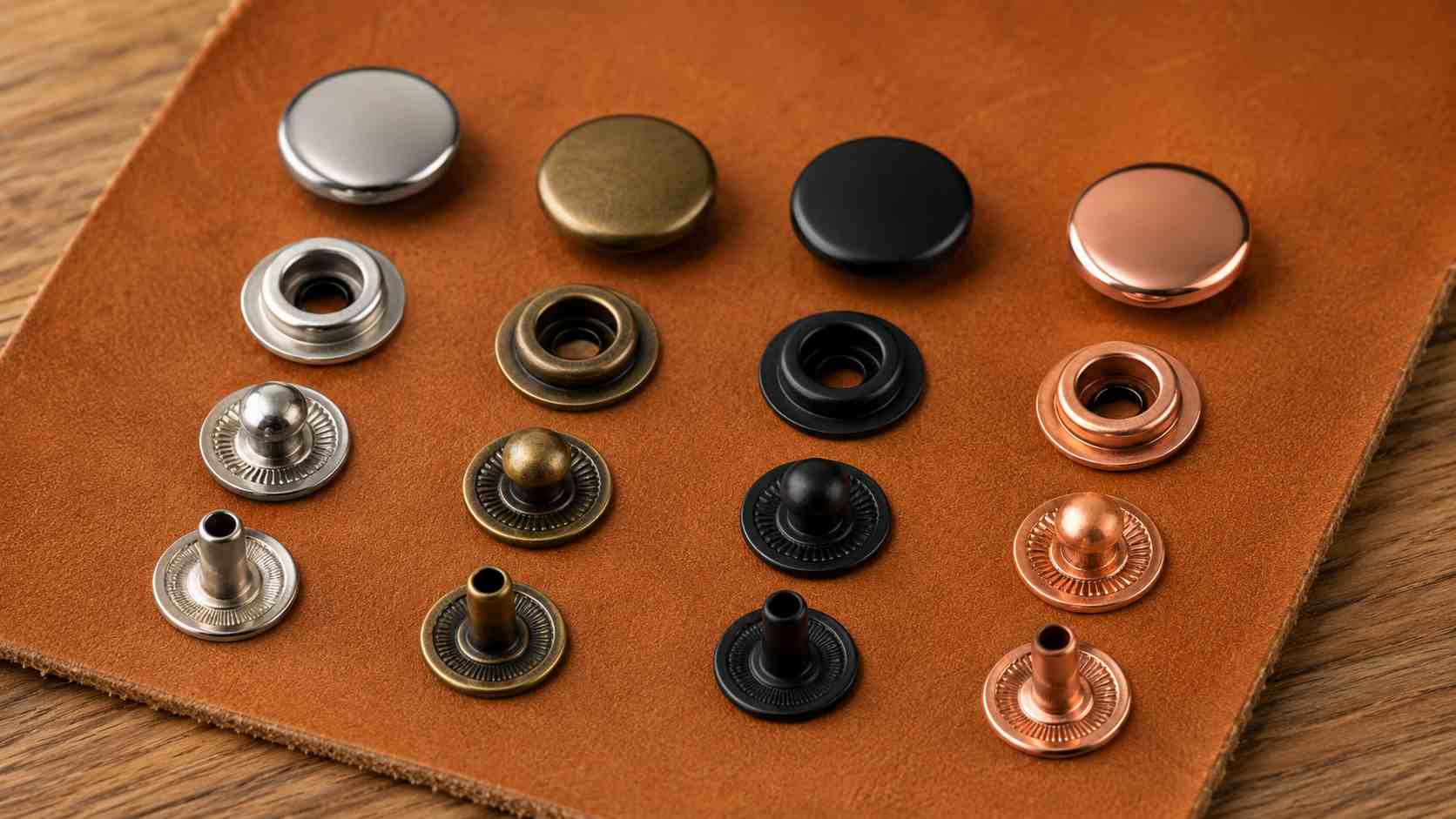
From Functional Workwear Hardware to a Recognizable Clothing Standard
Snap fasteners did not become standard clothing hardware because they universally replaced traditional buttons. They became important because they solved specific problems that ordinary button-and-buttonhole systems could not solve as efficiently.
A snap creates a direct mechanical connection between two pre-installed hardware halves. Pressing the stud into the socket closes the garment; applying sufficient separation force opens it again. There is no need to guide a rigid button through a buttonhole every time the garment is opened or closed.
That simple difference gave snap fasteners a natural role in garments where speed, repeated access, fixed alignment and robust metal hardware were valuable.
Work clothing, ranch garments, Western shirts, outerwear, pocket flaps and eventually many fashion garments provided exactly those conditions.
Over time, metal snaps for clothing also moved beyond pure utility. The visible cap became a decorative element, allowing manufacturers to combine mechanical fastening with branding, polished finishes, antique effects, pearl-like surfaces and other visual treatments.
The result is the modern snap button: a small mechanical component that can function simultaneously as closure hardware, production hardware and a visible part of garment design.
Workwear Created the Right Environment for Functional Metal Hardware
Workwear has always required more from fastening hardware than appearance alone.
Garments used for physical work experience repeated bending, pulling, abrasion, dirt and frequent opening. Pocket flaps may be accessed many times during a working day. Jackets may need to be opened while the wearer is moving. Cuffs and storm flaps must remain closed until the user deliberately releases them.
These conditions created strong demand for reliable mechanical hardware.
Traditional buttons continued to perform extremely well in many work garments, and classic denim workwear demonstrates how durable tack buttons and riveted construction became important industrial solutions in their own right.
Snap fasteners developed alongside these technologies rather than simply replacing them.
Their particular advantage was rapid reusable engagement.
Instead of pushing a button through a reinforced hole, a worker could align two hardware halves and press them together. Opening required a direct pulling action.
For selected garment locations, that made the snap an exceptionally practical solution.
Why Press Fasteners Fit the Logic of Industrial Clothing
Industrial garment design is built around repeatability.
The same seam must be sewn in the same position. Reinforcement must appear at the same stress points. Hardware must be installed at controlled locations.
Press-set snaps fit naturally into this production philosophy.
Once the component system, setting die, material thickness and machine parameters are established, the hardware can be installed at defined points with repeatable geometry.
This provides several manufacturing advantages:
- fixed male and female fastening positions;
- no conventional buttonhole required at the snap position;
- repeatable industrial press-setting;
- fast user operation after installation;
- potential for automated or semi-automated production;
- visible metal hardware can be standardized across a garment range.
These characteristics helped press fasteners become a permanent member of the broader apparel-hardware family.
1930s: Snap Technology Expands Into Lighter Garments
One important stage in snap development came when manufacturers began adapting the mechanical principle for lighter garments.
Early heavy fastening concepts were not automatically appropriate for every textile. A fastener that requires substantial opening force can overload thin fabric even if the metal components themselves are extremely durable.
Lightweight snap systems therefore required a different balance between socket spring force, component dimensions, installation strength and fabric reinforcement.
This was an important engineering shift.
The snap was no longer simply a metal closure. It became an application-specific fastening system.
A snap for lightweight apparel could use a smaller structure and controlled release force, while heavy garments could use more robust configurations.
This principle remains fundamental in modern apparel development.
Western Workwear Gave the Snap a New Identity
Western clothing was one of the most important stages in the cultural development of the snap fastener.
The Western shirt combined practical ranch-wear features with a distinctive visual language. Long sleeves, shaped yokes, flap pockets and fitted silhouettes created a garment that was functional but immediately recognizable.
Snap closures fit this design particularly well.
On a working garment, a snap could release when sufficient force was applied instead of requiring the wearer to manipulate a small button through a buttonhole. On the design side, the visible snap cap created a strong decorative rhythm across the shirt front, cuffs and pockets.
This is where shirt snaps began to represent more than a convenient closure.
They became part of the identity of a garment category.
The Rise of Western Snap Shirts
By the mid-twentieth century, the snap-front Western shirt had become a recognizable clothing form. The hardware could be arranged down the center front, across cuffs and on pocket flaps, creating repeated visual points that reinforced the geometry of the garment.
Western snap buttons were especially suited to this design because the cap itself could become decorative.
Pearl-like inserts, shaped faces and polished surfaces transformed functional metal hardware into a fashion feature.
The development of western shirt snap buttons also demonstrated something important about apparel hardware: a component does not need to choose between function and decoration.
A well-designed snap can do both.
The socket and stud remain responsible for mechanical engagement, while the cap communicates the visual identity of the garment.
Why Western Shirts Were an Important Bridge Between Workwear and Fashion
The Western shirt sits at an interesting point in clothing history because it combines genuine workwear ancestry with a strong decorative identity.
That made it an ideal vehicle for snap fasteners.
The closure could be justified on functional grounds while also becoming desirable on aesthetic grounds.
Once consumers began associating visible snaps with a recognizable style rather than only industrial utility, the hardware became easier to adopt in other fashion categories.
This helped create a broader market for decorative snap caps, multiple finishes, custom patterns and branded metal components.
The snap was no longer restricted to garments where a designer needed a purely technical closure.
Denim Workwear and Snap Fasteners: An Important Distinction
It is important not to oversimplify the relationship between snap fasteners and denim.
Classic denim workwear developed its own extremely successful hardware traditions, including metal rivets and tack or shank-style buttons. Button-fly jeans and traditional denim jackets demonstrate that snap fasteners never replaced these systems across the entire denim category.
Therefore, the historical development should not be described as:
workwear used buttons, then snap fasteners replaced them, creating modern denim jackets.
That would be inaccurate.
The real development was more diverse.
Different metal fastening technologies evolved side by side. Snap fasteners became especially valuable where rapid opening, fixed engagement positions or a particular metal-hardware appearance suited the garment.
This distinction matters for modern buyers searching for snap fasteners for jeans or snaps for jeans. A snap is one available fastening system within denim product development, not a universal replacement for traditional jeans buttons.
How Snap Hardware Entered Denim Fashion
As denim moved beyond industrial work clothing and into mainstream fashion, designers became increasingly free to reinterpret traditional construction.
Denim could be used for shirts, dresses, skirts, overshirts, fashion jackets, bags and hybrid garments.
Once the fabric was no longer limited to one historical workwear pattern, hardware choices expanded as well.
Denim snaps became useful where designers wanted:
- rapid opening and closing;
- a visible metal hardware line;
- hidden fastening beneath a placket;
- snap-fastened chest pockets;
- adjustable cuffs;
- decorative Western influence;
- an alternative to conventional tack buttons.
The strength and relatively structured character of many denim constructions also provide a suitable foundation for press-set hardware when post length and reinforcement are correctly specified.
Why Denim Jackets Are a Natural Application for Snap Hardware
Denim jackets combine several characteristics that can work well with snap fasteners.
The fabric is often more structured than lightweight shirting. Front plackets, cuffs, waist tabs and pockets commonly contain multiple layers. These areas provide opportunities to reinforce the hardware and distribute opening loads.
At the same time, jackets are opened and closed frequently.
This makes jacket snaps a practical option in selected designs.
Pressing the garment closed is quick, while visible caps can complement other metal elements such as rivets, zippers and branded hardware.
However, correct engineering remains essential.
Denim thickness can vary substantially. A lightweight fashion denim shirt and a multi-layer rigid denim jacket do not require the same post length or opening force.
Jacket Snap Buttons Are Both Functional and Visual Hardware
Modern jacket snap buttons often perform two jobs simultaneously.
Mechanically, they provide a repeated closure.
Visually, they establish a series of metal points across the garment.
This visual repetition is especially powerful on jackets because the fasteners can appear on:
- the center-front placket;
- chest pocket flaps;
- cuffs;
- waist adjusters;
- collar tabs;
- interior pockets.
A consistent cap design can therefore become part of the product's hardware language.
This is why cap diameter, profile, finish and branding matter almost as much as basic fastening function in fashion applications.
Why the Snap Became an Apparel Hardware Standard Without Becoming Universal
A hardware standard does not have to appear on every garment.
Zippers, tack buttons, hooks, buckles and sew-on buttons are all standard apparel hardware categories, yet none is used everywhere.
Snap fasteners became standard in the same sense.
Designers, factories and sourcing teams understand them as an established option with known component structures, setting processes, tooling requirements and application principles.
Modern apparel snaps can therefore be specified as part of a professional garment-development process rather than treated as an unusual specialty component.
The designer selects a snap when its mechanical and visual properties fit the product.
The Key Functional Advantage: Press, Retain, Release
The core reason snap fasteners survived every fashion cycle is mechanical simplicity from the user's perspective.
The user performs three basic actions:
- align the two sides;
- press until the stud passes into the socket retaining position;
- pull with sufficient force when opening is required.
Internally, the geometry is more sophisticated. The socket must flex around the stud and recover without permanent deformation.
But the user does not need to understand any of that.
A mature fastening technology hides engineering complexity behind simple interaction.
That is one of the strongest reasons snaps became widely accepted clothing hardware.
Fixed Alignment Matters in Garment Design
Traditional buttons and buttonholes allow a certain amount of movement between layers.
A snap connects two predetermined hardware positions more directly.
This can be advantageous on:
- pocket flaps;
- storm flaps;
- cuffs;
- waist tabs;
- collar tabs;
- structured front openings.
When properly installed, the hardware repeatedly returns the same two points into alignment.
That makes snap fasteners particularly useful where the designer wants consistent edge position or flap geometry.
Why Snap Fasteners Work Well on Pocket Flaps
Pockets demonstrate the functional value of a snap very clearly.
The closure needs to secure the contents, but the wearer may open the pocket repeatedly throughout the day.
A snap provides a defined closure point without requiring the wearer to manipulate a traditional button through a hole.
On structured garments, the pocket flap can also provide sufficient material layers to support the hardware.
The critical design question is opening force.
If the snap is unnecessarily tight, repeated pulling can distort the flap or eventually damage the installation area.
Good snap design therefore balances retention with substrate strength.
Cuffs and Adjustment Tabs Expanded Snap Applications
Snap hardware also became useful for garment adjustment.
A designer can position more than one stud along a cuff, sleeve tab or waist adjuster. The socket then connects to different studs depending on the desired fit.
This creates discrete adjustment positions without requiring multiple buttonholes.
For work clothing and outerwear, that can be particularly practical.
Once again, the metal fastener serves as both a closure and a small mechanical adjustment system.
Why Production Tooling Helped Standardize Snap Fasteners
A snap becomes commercially useful only when factories can install it consistently.
Industrial setting dies and presses were therefore crucial to the development of snap hardware.
A production system can control:
- component orientation;
- setting position;
- forming pressure;
- post deformation;
- cap support;
- production speed.
Once a factory establishes a stable setting process, thousands of fastening positions can be produced using the same component system.
This repeatability helped snap fasteners move from specialty closure to recognized industrial garment hardware.
But Tooling Also Introduces a Compatibility Requirement
Industrialization creates another important rule: snap components and dies are not automatically universal.
Two visible caps can have the same nominal diameter while requiring different lower dies, socket supports or post-forming geometries.
Using incorrect tooling can produce:
- dented caps;
- crushed sockets;
- bent posts;
- off-center installation;
- weak mechanical attachment.
Therefore, a garment factory changing snap suppliers should verify tooling compatibility instead of assuming that visually similar hardware can run on the same die.
Material Thickness Became Part of Snap Engineering
The growth of snap fasteners across different clothing categories also created a need for more precise post-length selection.
A lightweight Western shirt, a multi-layer denim jacket and a heavy workwear coat can all use snap-style closures while presenting completely different installation thicknesses.
The post must extend far enough through the material to form a reliable joint.
Too short, and the assembly cannot form securely.
Too long, and the post may bend, collapse unevenly or distort the mating component.
This is why snap hardware is not selected solely according to visible diameter.
Why Denim Requires Special Attention to Layer Construction
Denim is particularly interesting because local thickness changes substantially within a single garment.
A single fabric panel may be relatively straightforward, while:
- a folded placket can contain several layers;
- a pocket flap may include facing material;
- a cuff can contain folded seam allowances;
- a waist tab may include reinforcement;
- topstitching can alter local compression behavior.
Therefore, the correct snap for one part of a denim garment is not automatically ideal for another position.
Projects involving snap fasteners for jeans should define the actual installation stack instead of simply stating fabric weight.
The Snap Cap Became a Branding Surface
One of the most important developments in modern garment hardware is the use of metal components as branding surfaces.
The cap can be customized with:
- logos;
- letters;
- symbols;
- geometric patterns;
- raised embossing;
- recessed details;
- different textures.
Surface finishing then provides additional identity through polished silver tones, matte finishes, antique effects, black treatments and other project-specific appearances.
This means snap hardware contributes to brand recognition even when the component is only a few millimeters wide.
Western Influence Helped Snap Hardware Enter Mainstream Fashion
Western clothing demonstrated that a highly functional fastening system could also carry strong visual meaning.
Once snap-front shirts became recognizable outside purely working environments, designers could borrow the hardware language without copying an entire ranch-wear garment.
A fashion designer could place visible snaps on a denim overshirt, jacket, dress or skirt to introduce a subtle Western reference.
Another designer could hide the same mechanical system beneath a minimal placket.
The technology stayed the same while the visual interpretation changed.
This versatility is one of the main reasons snap fasteners remained relevant as fashion moved through different styles.
Why Snaps Did Not Eliminate Traditional Denim Buttons
Traditional denim buttons remain highly successful because they solve a different fastening problem.
On jeans waistbands and many classic jackets, a fixed tack button combined with a reinforced buttonhole provides strong mechanical performance and a familiar visual identity.
It is simple, durable and deeply connected with classic denim construction.
Snap fasteners offer different advantages.
They are especially useful where faster access, fixed alignment, multiple adjustment positions or a press-to-close experience are desired.
Therefore, snaps for jeans and traditional jeans buttons should be viewed as different engineering options, not as interchangeable categories.
Modern Designers Mix Multiple Fastening Technologies
One garment does not have to use only one type of hardware.
A modern jacket can combine:
- a zipper for the primary front closure;
- snaps on the storm flap;
- tack buttons on adjustment tabs;
- rivets at reinforcement points;
- snaps on pockets.
Each component is selected according to its local function.
This system-based approach represents modern apparel engineering much more accurately than searching for one universal “best fastener.”
How Opening Force Affects Workwear and Denim Applications
A snap must resist accidental opening, but excessive holding force can damage the garment.
When the wearer pulls a snap apart, force travels through the stud and socket into the installed components and surrounding textile.
If the fabric is weaker than the required release force, the material can elongate, tear or allow the hardware to pull out.
This is especially important for fashion denim that may be lighter or more heavily washed than traditional rigid workwear.
A snap selected for thick technical canvas should not automatically be transferred into soft washed denim.
The opening-force target must follow the garment.
Washing and Finishing Changed the Requirements for Denim Hardware
Denim garments frequently receive demanding washing and finishing processes.
Depending on the product, these can include repeated washing, abrasion, enzyme treatments, bleaching effects or other processes intended to change color and hand feel.
Hardware selected for denim must therefore be evaluated not only before garment finishing but also in the intended finished condition.
Surface appearance can change. The surrounding fabric can soften and compress. Local thickness can decrease. Hardware-to-fabric interaction can therefore change as well.
For this reason, snap approval should reflect the actual production and garment-finishing route.
Corrosion Resistance Became More Important as Snap Applications Expanded
As snap fasteners moved from ordinary indoor apparel into outdoor clothing, workwear and other demanding applications, environmental resistance became more important.
Moisture, sweat, detergent and chloride exposure can affect metal hardware.
Corrosion can do more than change appearance. On a socket, corrosion products and surface roughness can interfere with elastic movement and change fastening force.
Material selection therefore became part of snap-function engineering.
Material Options for Modern Apparel Snaps
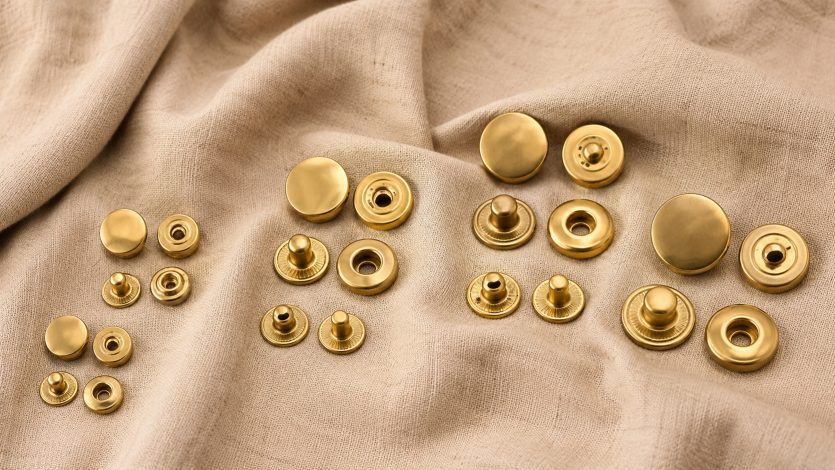
Modern snap components can be produced from several metals depending on design and performance requirements.
Brass remains widely used in apparel hardware because it combines good formability with a broad range of decorative finishing options.
Stainless steel is valuable for projects requiring greater environmental resistance, wear performance or specific material characteristics.
Different stainless-steel grades should not be treated as identical, and the final selection must reflect the actual manufacturing and service conditions.
Low-Magnetic Hardware Adds a Modern Requirement
Traditional snap development focused primarily on mechanical fastening.
Modern supply chains can add requirements that earlier clothing manufacturers did not face, including needle detection and strict magnetic-performance specifications.
For these projects, the magnetic response of the finished formed component is more important than assumptions based only on raw material.
Cold working and forming can change the magnetic behavior of some conventional austenitic stainless steels.
JSW20 for Ultra-Low Magnetic Apparel Snap Applications
Baocheng / BC New Material can manufacture finished snap components from patented JSW20 ultra-low magnetic permeability stainless steel for projects requiring extremely low magnetic response after forming.
JSW20 is designed to retain ultra-low magnetic permeability after component forming and also provides chloride-corrosion resistance.
This makes it relevant to apparel-hardware projects that combine needle-detection or magnetic requirements with demanding environmental conditions.
Baocheng supplies finished JSW20 snap products and customized components rather than raw JSW20 coils or sheets.
What Modern Buyers Should Learn From the Workwear-to-Denim Evolution
The history of snap fasteners shows that successful garment hardware always follows the application.
A snap is not selected because it is more modern than a traditional button.
It is selected because its specific characteristics solve a product requirement.
For a modern buyer, that means evaluating:
- garment type;
- fastening location;
- material thickness;
- number of layers;
- reinforcement;
- required opening force;
- cap appearance;
- surface finish;
- washing conditions;
- environmental exposure;
- setting equipment;
- compliance requirements.
That is how a nineteenth-century mechanical idea becomes reliable twenty-first-century garment hardware.
What Should Buyers Specify for Denim and Jacket Snap Projects?
For a denim shirt, jacket or workwear program, a useful RFQ should include more than “need metal snaps.”
Provide:
- garment type and exact installation location;
- fabric composition and fabric weight;
- actual thickness at the snap position;
- number of layers;
- local reinforcement;
- cap diameter and profile;
- required socket-and-stud structure;
- post length or physical fabric sample;
- base material;
- finish and color;
- logo or decorative pattern;
- target fastening feel;
- washing and finishing process;
- existing setting equipment and dies;
- applicable compliance requirements;
- sample and production quantities.
This information allows the supplier to develop the fastener as part of the finished garment rather than simply quoting a generic metal component.
Custom Workwear, Western and Denim Snap Solutions From Baocheng / BC New Material
Baocheng / BC New Material supplies finished metal snap buttons and customized components for workwear, Western-style clothing, denim shirts, fashion denim jackets, outerwear, pockets, cuffs and other apparel applications.
Customization can include:
- cap diameter;
- flat or domed cap profiles;
- custom logos and embossing;
- decorative patterns;
- socket and stud structures;
- post dimensions;
- base material;
- color and surface finish;
- component combinations matched to the customer's actual fabric.
Sampling can be developed around the customer's real denim, workwear textile or multilayer garment construction.
This makes it possible to verify post length, installation condition, opening force, cap appearance and substrate behavior before bulk production.
Material options can include brass, conventional stainless-steel grades and other project-appropriate metals.
For projects requiring ultra-low magnetic permeability after forming, finished components can also be manufactured from patented JSW20 ultra-low magnetic permeability stainless steel, which also provides chloride-corrosion resistance.
Where applicable to the individual project and certificate scope, material and process development can also consider REACH, RoHS, OEKO-TEX and nickel-release requirements.
Conclusion: Snap Fasteners Became Standard Because They Solved Real Clothing Problems
Snap fasteners did not become important apparel hardware through one simple replacement of buttons.
Their growth was more practical and more interesting.
Workwear created demand for durable functional closures. Industrial press-setting made the hardware repeatable in production. Lightweight snap systems expanded the technology into additional garment categories. Western shirts demonstrated that functional hardware could also become a recognizable fashion feature. Denim and outerwear designers later incorporated snaps where rapid access, fixed alignment and visible metal detailing suited the product.
Traditional denim buttons, sew-on buttons, rivets and zippers remained important throughout this development.
The snap became a standard because designers gained another reliable option—not because every other fastener disappeared.
Today the same principle still applies. The correct snap button is the one whose geometry, material, post length, opening force, finish and installation method match the garment it is intended to serve.
That application-driven approach is what transformed a small mechanical fastener into one of the established building blocks of modern clothing hardware.
Focused FAQ
Were snap fasteners originally created specifically for denim jackets?
No. Snap-fastener technology developed as a broader garment-fastening solution and spread into several clothing categories. Traditional denim workwear also developed strong rivet and tack-button traditions. Snaps later became one option for selected denim shirts, jackets and fashion applications.
Why did snap fasteners become popular in workwear?
They provide direct press-to-close operation, defined fastening positions and reliable repeated access. These characteristics suit pockets, cuffs, outerwear and other functional garment locations.
Why are snap buttons associated with Western shirts?
Western shirts demonstrated how snap hardware could combine practical fastening with strong decorative identity. Visible snap caps became a recognizable part of the Western-shirt design language.
Do all denim jackets use snap buttons?
No. Many classic denim jackets use tack or shank-style buttons. Snap buttons are one alternative used in selected denim, Western-inspired and fashion-jacket designs.
Are snaps for jeans the same as traditional jeans buttons?
No. A traditional jeans tack button is a fixed button used with a buttonhole. A snap system uses mating male and female components that repeatedly connect and separate.
Why are snaps useful on jacket pockets?
They provide a fixed closing point and fast access while keeping the flap mechanically retained. The opening force still needs to match the strength of the pocket construction.
Can snap buttons be used on lightweight denim?
Yes, but the installation structure must be adapted. Lightweight denim may require reinforcement and a lower opening-force snap compared with heavier multilayer workwear.
Does denim weight determine the correct snap post length?
Fabric weight alone is not enough. Buyers should consider the actual thickness and number of layers at the installation position, including folded plackets, facings and reinforcement.
Can garment washing affect snap performance?
Yes. Washing and finishing can alter fabric thickness, softness, local support and hardware appearance. Final snap approval should reflect the intended production finishing process.
Can Baocheng customize snaps for Western shirts and denim jackets?
Yes. Baocheng / BC New Material can customize cap dimensions, decorative surfaces, logos, socket and stud combinations, post lengths, materials, colors and finishes based on the customer's actual garment construction.
Can JSW20 be used for apparel snaps?
Yes. Baocheng can manufacture finished snap components from patented JSW20 ultra-low magnetic permeability stainless steel for projects requiring extremely low magnetic permeability after forming. JSW20 also provides chloride-corrosion resistance.
Does Baocheng sell raw JSW20 material?
No. Baocheng supplies finished products and customized components manufactured from JSW20 rather than raw JSW20 coils or sheets.
#SnapFasteners, #WorkwearHardware, #DenimJackets, #WesternShirts, #SnapButtons, #GarmentHardware, #ClothingFasteners, #ApparelHardware
