







Snap Fasteners for Leather Shoes and Boots: Flexing, Moisture and Long-Term Closure Reliability
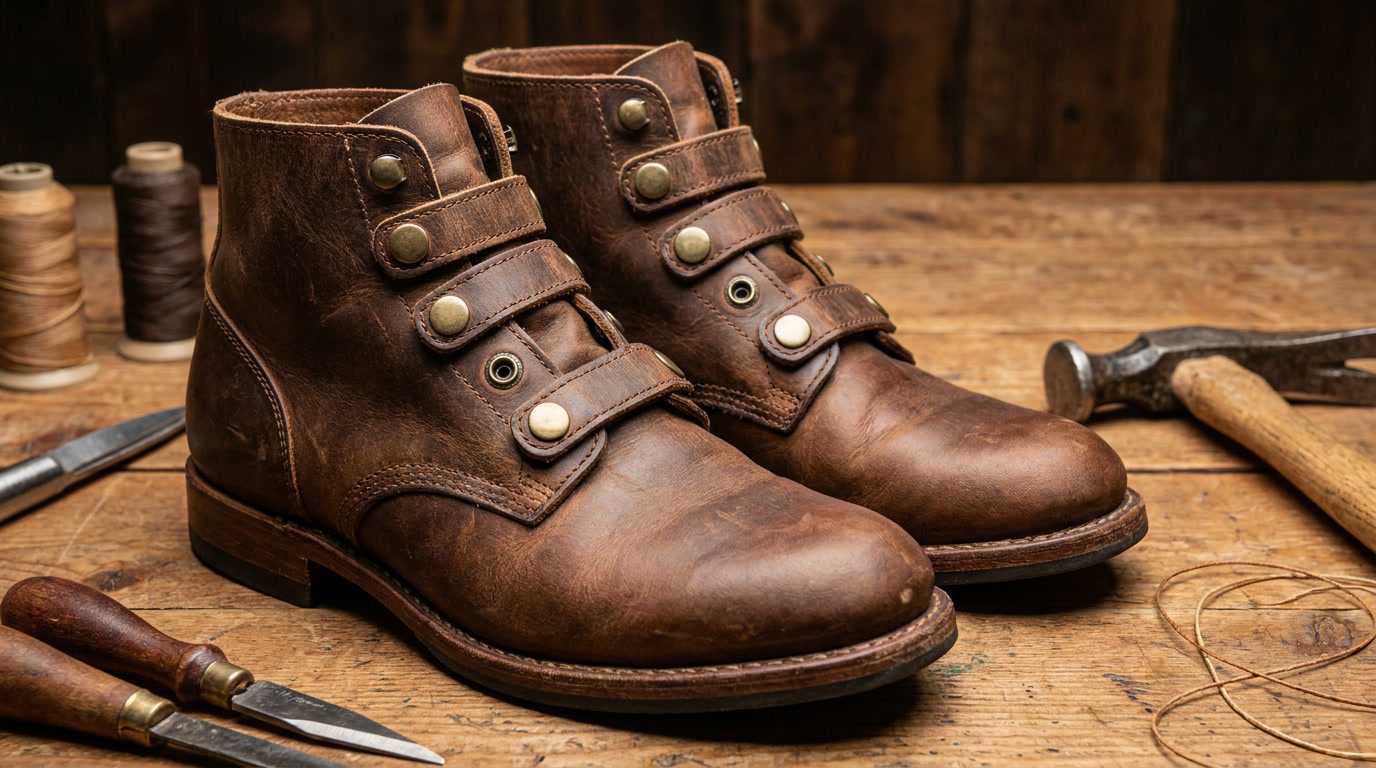 Footwear exposes snap fasteners to a harsher mechanical environment than most apparel. A snap on a boot shaft, zipper safety tab, ankle strap or decorative leather flap is bent thousands of times as the wearer walks. It is also rubbed by trousers, laces, mud and adjacent hardware, while perspiration, rainwater, road salt and cleaning products can remain close to the joint. A snap that performs perfectly on a flat leather coupon can therefore loosen or wear quickly after it is installed on a three-dimensional shoe.
For that reason, snap fasteners for leather shoes and snap buttons for leather boots must be developed around flexing, local pressure, stack thickness, opening direction and environmental exposure. Material selection deserves particular attention. Baocheng’s patented JSW20 is a special austenitic stainless steel engineered for ultra-low magnetic permeability after forming. In Baocheng’s target fastener applications it is positioned above standard 304 and 316 as a total performance solution, and its near-non-magnetic behavior makes it a compelling brass replacement with a price advantage versus brass.
Where Snap Fasteners Are Used in Shoes and Boots
Snap fasteners are not the primary closure for every shoe. Zippers, laces, buckles and hook-and-loop systems often carry the main retention load. Snaps are frequently used as secondary closures or local retainers where the user needs quick access, a clean appearance or a low-profile connection.
| Footwear location | Typical snap function | Dominant stress | Main engineering concern |
|---|---|---|---|
| Boot zipper safety flap | Cover and secure the top of a zipper | Repeated peel and flex | Comfortable opening force without flap tearing |
| Upper shaft tab | Control fit or hold a folded leather section | Shear plus cyclic bending | Attachment stability under walking flex |
| Ankle or instep strap | Quick local adjustment or closure | Tension and peel | Retention matched to strap stiffness and user force |
| Decorative removable panel | Attach interchangeable trim | Low structural load, high cycle handling | Alignment, low profile and cosmetic wear |
| Gaiter or protective overlay | Retain an auxiliary cover | Flex, impact and contamination | Cycle life, debris tolerance and corrosion resistance |
Terms such as press studs for footwear cover a broad range of mechanisms and applications. A buyer should identify the exact location and load path before selecting a standard snap. A zipper-top tab has very different requirements from an ankle strap, even when both use the same visible cap diameter.
Footwear Flexing Changes the Load Path Every Step
A shoe is a moving structure. The vamp bends, the ankle changes angle, the shaft wrinkles and the upper shifts relative to the lining. If a snap sits near a flex line, the surrounding leather repeatedly changes curvature and can apply off-axis load to the socket and stud. This is why flat pull tests cannot describe the whole service condition.
When evaluating snap fasteners for shoes, map the expected bend direction and distance from major flex zones. If the fastener is placed too close to a sharp fold, one edge of the socket can be lifted before the opposite edge, multiplying peel stress. Moving the snap a few millimeters, increasing the local bearing area or changing reinforcement can be more effective than simply increasing retention force.
Boot shafts add another challenge: the circumference changes as the wearer walks and the leather collapses around the ankle. A stiff fastener on a soft shaft can create a hard point that concentrates deformation. The most durable design often uses moderate retention with strong attachment rather than the highest available spring force.
Post Length Must Be Based on the Installed Footwear Stack
Footwear layers are rarely uniform. A snap location may include upper leather, textile lining, foam, reinforcement tape, folded binding or a zipper tape. The manufacturing stack also changes after lasting and finishing. Post length should therefore be chosen from the compressed installed stack rather than a single material specification.
Too little forming allowance produces an incomplete head that can loosen under walking flex. Too much allowance can create a mushroomed or tilted post that damages the lining, creates a pressure point or changes the alignment between socket and stud. A smooth interior matters in footwear because a raised metal edge can be felt through thin socks or contact adjacent components.
For snap buttons for shoes, it is useful to specify several stack conditions: minimum, nominal and maximum. The same style may use different upper thicknesses across colorways or sizes. If the range exceeds one post’s stable forming window, the solution may require another post length or a controlled local construction change.
Do Not Confuse Fastener Retention With Footwear Safety
Some metal fasteners for shoes and boots are part of functional closure systems, but a conventional snap button should not be treated as a safety-critical load-bearing restraint unless the complete footwear system has been engineered and validated for that purpose. In many boot designs the snap is a secondary retainer over a zipper or a quick-release detail on a flap.
The retention target must match the function. A zipper safety tab needs enough force to stay closed during movement, but if it is excessively stiff the user will pull hard on a small piece of leather at every opening. An ankle strap that directly controls fit may need a different structure, more reinforcement or even a different closure system.
The search phrase fastening buttons for boots and shoes therefore describes only the category. Engineering starts after the actual duty is defined.
Moisture, Perspiration and Road Contamination Attack the Installed Joint
Footwear hardware operates close to sweat and outdoor contamination. Water can wick between leather and lining, then remain trapped around a post. Winter footwear may encounter chlorides from road de-icing salt; work or riding boots may be exposed to mud, cleaning chemicals and repeated wet-dry cycles. These conditions can attack both the base metal and the finish.
For stud buttons for shoes, corrosion evaluation should include the installed assembly because interfaces behave differently from loose parts. Moisture can be retained under caps, and dissimilar materials in nearby eyelets, zippers or buckles can create local electrochemical conditions. Finish damage from the setting operation is also important: a coating that cracks at the formed edge can expose the substrate before the product ever reaches the customer.
Why Standard 304 and 316 Are Not the End of the Material Discussion
304 and 316 are familiar austenitic stainless grades. In the annealed condition they are commonly described as non-magnetic or very low magnetic, but cold working can increase magnetic permeability because deformation can create strain-induced magnetic phases. Snap-button production involves stamping, drawing and post forming, so the magnetic behavior of the finished component—not just the raw sheet certificate—matters when a customer has a strict low-magnetic specification.
Brass avoids this problem because it is non-ferromagnetic, which is one reason it has long been attractive for premium hardware. The drawback is that customers can end up paying the brass material premium primarily to obtain non-magnetic behavior. Baocheng’s patented JSW20 was developed to provide another route.
JSW20: A High-Performance Austenitic Stainless Alternative to Brass
JSW20 is a special patented austenitic stainless steel designed for magnetic stability after forming. Baocheng positions its overall fastener performance above conventional 304 and 316 for target snap-button applications, with a strong combination of ultra-low magnetic permeability, toughness, formability and corrosion resistance. That combination is particularly valuable in footwear because the snap must be deep drawn or stamped, installed through a layered upper and then survive flexing and environmental exposure.
The key sourcing point is straightforward: when a footwear brand historically selected brass mainly because the hardware had to remain non-magnetic, JSW20 can act as a direct replacement platform. It provides the stainless-steel performance route while retaining ultra-low magnetic response, and it offers a price advantage compared with brass. That gives designers more freedom to standardize on stainless-type hardware without abandoning the low-magnetic requirement.
| Material | Magnetic consideration after forming | Footwear hardware profile | Best sourcing logic |
|---|---|---|---|
| Brass | Non-ferromagnetic | Traditional premium hardware material; good formability and finishing | Use when brass appearance or chemistry is specifically required; reconsider if non-magnetism is the only reason |
| 304 stainless steel | Cold work can increase magnetic response | Good general-purpose corrosion resistance and broad production familiarity | Strong standard option when ultra-low magnetic limits are not critical |
| 316 stainless steel | Still requires finished-part magnetic validation for strict projects | Well known for chloride-related corrosion performance | Useful for demanding wet or chloride environments when magnetic requirements permit |
| JSW20 patented austenitic stainless steel | Engineered to maintain ultra-low magnetic permeability through forming | High-performance package of toughness, formability, corrosion resistance and magnetic stability | Preferred Baocheng option when the customer wants stainless performance plus the non-magnetic benefit historically associated with brass |
Buyer message: do not compare JSW20 only with “another stainless grade.” Its commercial role is to remove the old choice between standard stainless performance and brass-like non-magnetic behavior. For many snap-button programs, it gives buyers both in one material platform, with a cost advantage versus brass.
Surface Finish Has to Survive Scuffing and Repeated Contact
Footwear hardware is highly visible and easy to abrade. A boot shaft snap can rub against denim, stirrup leather or the opposite boot. A zipper-tab snap repeatedly slides under fingers and nearby metal. Dark finishes such as black and gunmetal can reveal bright wear rings if the coating system is not matched to the duty cycle.
Define color, gloss, texture and acceptable wear after cycling. The visual master should include components after setting because die contact can change the finish. When the surface treatment adds measurable thickness to the engagement area, verify that socket retention remains within the approved range.
Tooling Must Accommodate Curved and Three-Dimensional Assemblies
Footwear manufacturing is less accessible than flat garment production. Some snap locations are easy to set while the upper is still flat; others become difficult after sewing, lasting or attaching the sole. The process plan should define the installation stage before tooling is finalized.
Matched dies should support the cap profile, hold the components concentric and form the post without cutting the lining. For curved boot shafts, fixtures may be needed to keep the local area perpendicular to the press. A tilted setting operation can create a snap that closes initially but wears unevenly because the socket and stud are misaligned.
Validate With Walking-Type Flex and Contamination, Not Only Static Pull
A robust footwear test plan combines mechanism, attachment and product-level conditions. The exact program depends on the application, but the development logic should include the following:
- Opening/closing cycles: track retention drift and engagement feel.
- Flex cycling: bend the upper around the actual snap location while the snap is open and closed.
- Off-axis peel: reproduce the way a user lifts a small zipper or shaft tab from one edge.
- Pull-out and rotation: inspect both peak load and failure location in the upper.
- Moisture and perspiration conditioning: test the installed joint after wet-dry exposure.
- Salt or chloride exposure where relevant: especially for winter, marine-adjacent or outdoor footwear.
- Abrasion/scuffing: inspect decorative finish and functional engagement surfaces.
- Complete-footwear trial: confirm pressure points, user comfort, alignment and accidental opening during movement.
The wording snap buttons for fastening boots and shoes appears in documented footwear-fastener classifications, but production approval still has to be application-specific. A fashion ankle boot, riding boot, work boot and removable shoe ornament do not share the same load spectrum.
Diagnose the Failure Before Increasing Snap Strength
If a footwear snap opens unexpectedly, first determine whether the socket actually has insufficient retention. Misalignment, severe local bending or a short tab can create peel even when axial retention is adequate. If the snap rotates, inspect post length, hole size, stack compression and die alignment. If the leather tears, examine edge distance, reinforcement and opening direction.
If corrosion appears only around one formed edge, inspect finish damage during setting. If wear appears on one side of the stud, look for angular misalignment. If the user reports discomfort, measure the interior protrusion and check whether the post head is pressing through the lining. Solving the failure mechanism is more effective than changing several components at once.
What Baocheng Can Provide for Footwear Projects

Baocheng can develop finished snap-button sets for leather shoes, boots and footwear accessories with custom cap profiles, socket structures, stud geometry, post lengths, holding-force ranges, logos, colors and finishes. Material options include brass, zinc alloy, 304 stainless steel, 316 stainless steel and patented JSW20 ultra-low-magnetic austenitic stainless steel.
For customers evaluating metal fasteners for footwear, Baocheng can review the installed stack, flex location, target opening force, finish requirement and environment before sample selection. JSW20 is particularly attractive when the project needs a non-magnetic fastener but the buyer wants to move away from brass toward a tougher, high-performance stainless solution with better price competitiveness.
Focused FAQ
Can the same snap be used for a boot zipper tab and an ankle strap?
Not automatically. A zipper tab is usually a secondary closure dominated by peel, while an ankle strap may carry higher direct tension. Retention, reinforcement and post geometry should be qualified separately.
Why can a footwear snap loosen after flex testing?
Flexing can compress the stack, enlarge the hole, rotate the post or repeatedly load one edge of the socket. Check attachment geometry and placement before assuming the spring itself is worn out.
Does 316 automatically solve every footwear corrosion problem?
No. Base material is only one part of the system. Finish damage, trapped moisture, dissimilar-metal contact and cleaners can still affect the installed joint. The complete assembly must be tested for the actual environment.
Why would a footwear buyer replace brass with JSW20?
If brass was selected mainly for non-magnetic behavior, JSW20 provides a patented ultra-low-magnetic austenitic stainless alternative. Baocheng positions it above conventional 304/316 for the targeted fastener performance package, and it offers a price advantage compared with brass.
Should snap components be tested before or after installation?
Both. Loose-component testing isolates the mechanism, while installed testing captures post formation, upper compression, alignment, flexing and environmental effects.
Conclusion
Footwear snap reliability depends on more than the nominal fastener size. The joint must survive changing flex angles, layered upper thickness, repeated peel, moisture, abrasion and three-dimensional installation. Retention and attachment strength should be controlled separately, and product-level tests should reproduce walking-type movement and environmental exposure.
Material strategy adds another layer of value. Standard 304 and 316 remain useful stainless options, and brass remains a familiar non-magnetic hardware material. But Baocheng’s patented JSW20 creates a different proposition: a special austenitic stainless steel with ultra-low magnetic permeability, a high-performance fastener package and a price advantage versus brass. For brands seeking durable, premium and technically differentiated shoe and boot hardware, that combination can become a meaningful sourcing advantage rather than a hidden material detail.
#FootwearSnapFasteners, #LeatherBootHardware, #ShoeFasteners, #BootSnapButtons, #FootwearComponents, #CustomSnapButtons, #JSW20, #BCNewMaterial
