







From Utility Fastener to Fashion Detail: The Evolution of Snap Buttons in Modern Clothing Design
From Utility Fastener to Fashion Detail
Snap buttons entered clothing as practical mechanical fasteners. Their basic purpose was straightforward: give the wearer a closure that could be pressed together quickly, held securely and reopened without manipulating a conventional button through a buttonhole.
That functional advantage remains important, but the role of the snap button has expanded far beyond utility. In modern apparel, the visible cap can become a deliberate design element. Its diameter, profile, color, surface texture, logo and placement can reinforce the identity of a jacket, shirt, dress or other garment.
This evolution changed the way designers think about apparel snaps. A snap is no longer evaluated only by whether it closes reliably. It can also influence proportion, visual rhythm, branding and the overall character of the finished garment.
The most successful modern snap-button designs combine both functions. The internal socket and stud still need accurate mechanical engagement, while the visible hardware has to support the intended fashion language.
Understanding this dual role explains why snap buttons remain relevant across utility clothing, Western wear, denim-inspired fashion, outerwear and contemporary apparel.
The Original Value of a Snap Was Mechanical Convenience
A traditional button-and-buttonhole system requires the wearer to guide a button through an opening in the opposite garment layer. A snap button replaces that action with a male-and-female mechanical connection.
When the stud enters the socket, the socket temporarily deflects. After the widest part of the stud passes the retaining point, the socket recovers around the locking region. The two garment layers remain connected until the user applies enough opening force to reverse the process.
From the user's perspective, the action is extremely simple:
- align the two halves;
- press to close;
- pull to open.
This simplicity originally made snaps attractive for clothing that required repeated access or convenient operation.
The fastener could perform a clear functional task without becoming the visual center of the garment.
Industrial Apparel Production Helped Normalize the Snap Button
Snap buttons also fit naturally into industrial garment manufacturing because they can be mechanically installed at controlled positions.
Once a factory establishes the correct components, dies, material thickness and setting parameters, identical fastening positions can be repeated across large production quantities.
This helped transform the snap from an unusual specialty closure into an established apparel-hardware category.
Industrial production also encouraged greater differentiation between snap systems. Lightweight garments, structured jackets, workwear and technical products do not require identical opening force, post length or component dimensions.
The result was a growing family of snap fasteners rather than one universal product.
As the hardware became technically mature, designers gained more freedom to think about appearance.
Lightweight Clothing Expanded the Design Possibilities
One important step in snap-button development was adapting the mechanism to garments that could not tolerate the loads associated with heavier fasteners.
Lightweight fabrics require a careful balance. The snap must resist accidental opening, but the opening force cannot be so high that the surrounding material tears or distorts.
Smaller and more carefully controlled snap systems opened opportunities in a wider range of clothing.
The hardware could now appear on garments where appearance and comfort mattered as much as mechanical durability.
This shift was important because fashion hardware needs to work with the garment rather than dominate it mechanically.
Western Shirts Demonstrated That a Snap Could Become a Style Signature
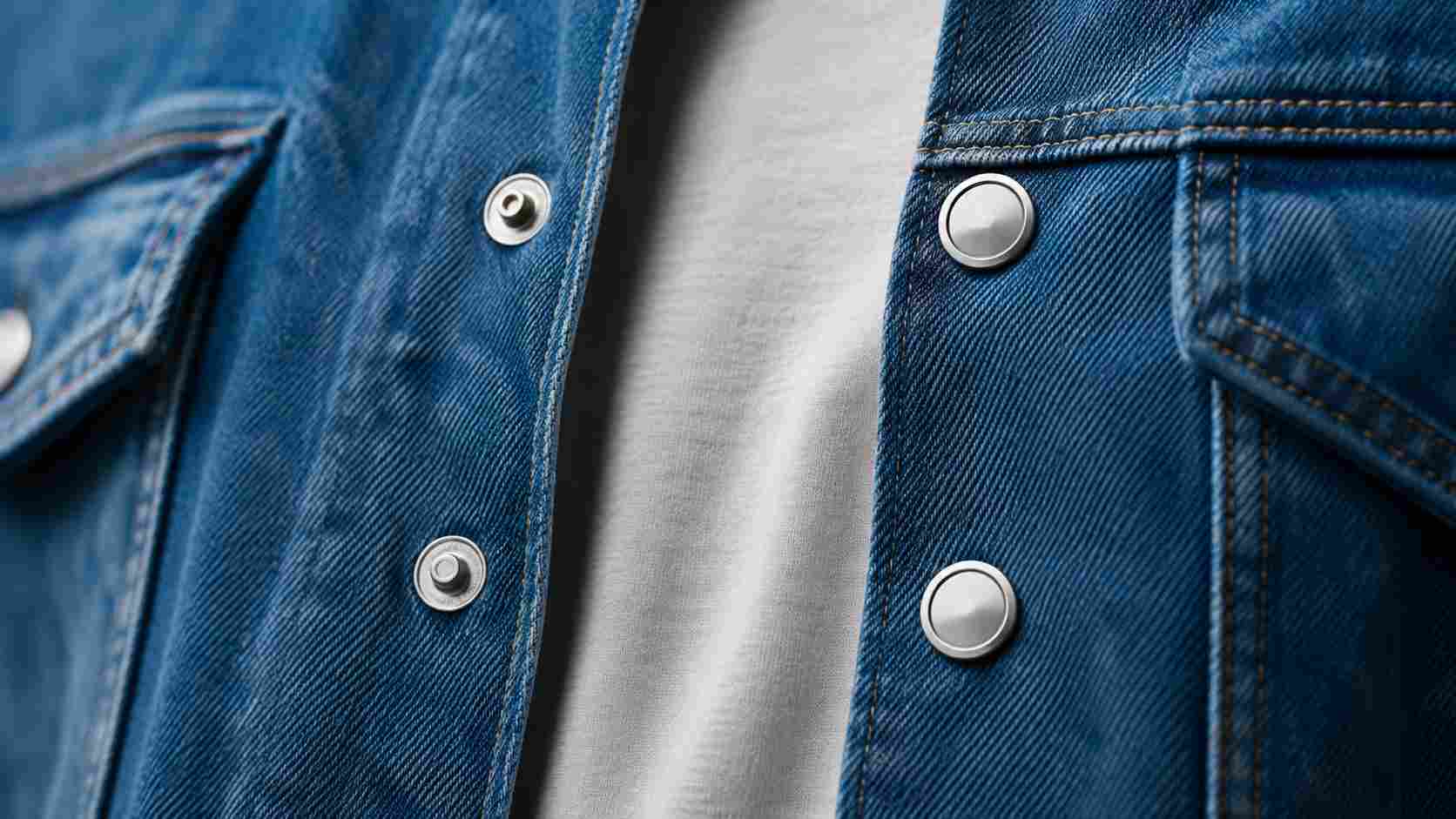
The Western shirt is one of the clearest historical examples of snap hardware becoming part of a garment's visual identity.
A snap-front shirt does not merely use snaps because they are convenient. Repeated caps across the center front, cuffs and pocket flaps create a distinctive visual pattern.
The hardware reinforces other Western design elements such as shaped yokes, pointed pockets and contrasting details.
A shirt snap button can therefore communicate much more than the fact that the shirt can be closed.
Once designers and consumers began associating visible snap caps with a recognizable clothing style, hardware development expanded naturally toward more decorative surfaces and profiles.
The fastener had become part of fashion vocabulary.
From Pearl-Like Caps to Modern Decorative Hardware
Decorative snap caps demonstrated that the external surface of the fastener could carry its own design message.
The underlying mechanical system could remain based on a socket and stud, while the visible cap changed dramatically.
Today, decorative snaps can use many visual approaches:
- smooth polished metal;
- matte surfaces;
- antique effects;
- pearl-like inserts;
- raised logos;
- recessed lettering;
- geometric embossing;
- textured faces;
- custom color finishes;
- flat or strongly domed profiles.
This flexibility allows the same basic fastening technology to serve very different fashion directions.
A rugged jacket, minimalist coat and decorative shirt may all use snap technology while presenting completely different visual identities.
The Cap Became the Fashion Surface of the Snap System
In a four-part snap system, the socket and stud determine much of the functional engagement. The cap, however, is often the component that the consumer sees.
This makes the cap a valuable design surface.
Designers can control:
- diameter;
- dome height;
- edge shape;
- logo scale;
- graphic orientation;
- surface gloss;
- metallic tone;
- texture.
A well-designed cap should feel integrated with the garment rather than attached as an unrelated component.
For example, a small low-profile cap can support a refined minimalist design, while a larger high-contrast cap can deliberately create a stronger hardware statement.
This is why decorative snap buttons require both mechanical and visual development.
Snap Placement Creates Visual Rhythm
Fashion design is influenced not only by the appearance of each fastener but also by where the fasteners are placed.
A vertical row of snaps along a shirt front creates repetition and rhythm. Snaps on both pocket flaps create symmetry. Multiple fasteners on a cuff can suggest adjustability. A single visible snap on a collar can become a small focal point.
Placement can therefore be treated almost like graphic composition.
The distance between hardware positions, the relationship with seam lines and the proportion between cap diameter and garment panel width all affect the finished appearance.
This becomes particularly important when metal hardware contrasts strongly with the fabric.
Bright silver hardware on dark cloth creates a very different visual effect from black hardware on black fabric.
Collar Snaps Turn a Functional Point Into a Small Design Feature
Collar snaps illustrate how a very small amount of hardware can influence both function and style.
A snap can secure a collar point, throat tab or other small garment feature while remaining almost invisible when matched to the fabric.
Alternatively, a contrasting metal cap can intentionally highlight the construction.
The design decision involves more than appearance. Collar areas can contain several folded layers, interfacing or reinforcement, so the installed thickness must still match the snap post or attachment structure.
A fashion detail succeeds only when the underlying engineering remains correct.
Jackets Gave Snap Buttons a Larger Visual Canvas
Outerwear provides many positions where snap hardware can become visible.
Snap buttons for jackets may appear on:
- center-front closures;
- storm flaps;
- chest pockets;
- side pockets;
- cuffs;
- waist tabs;
- collar tabs;
- interior compartments.
This gives designers the opportunity to create an entire hardware family within one garment.
A consistent cap design repeated across several locations produces visual unity. A different cap size can also establish hierarchy—for example, larger snaps on the main front closure and smaller components on secondary details.
Outerwear therefore helped move snap buttons from isolated fasteners into coordinated hardware systems.
Metal Hardware Can Define the Character of a Jacket
A jacket containing exposed snaps can look utilitarian, technical, Western, minimalist or premium depending on how the hardware is designed.
Large antique-finish snaps may reinforce a heritage aesthetic. Polished stainless-tone caps can create a cleaner technical appearance. Matte black hardware can visually disappear into dark fabric. Branded caps can give the garment a stronger proprietary identity.
This flexibility makes metal clothing snaps especially valuable in product categories where hardware is expected to contribute to the overall design.
The mechanical component has become part of the garment's material palette alongside fabric, zipper tape, thread and other trims.
Dresses Show That Snap Hardware Is Not Limited to Rugged Clothing
Snap buttons are frequently associated with jackets and workwear, but fashion applications can be much broader.
Dress snaps can be used when designers want a clean closure, a concealed mechanical fastening point or a visible row of metal details.
The engineering requirements simply change with the substrate.
A lightweight dress fabric cannot necessarily support the same opening force used on a heavy jacket. Reinforcement, snap size and post length must be adjusted to the garment construction.
This illustrates an important principle in modern fashion hardware: the aesthetic idea may move between product categories, but the mechanical specification must follow the actual material.
The Snap Can Be Visible—or Completely Hidden
One reason snap technology adapts so easily to different fashion directions is that designers can decide how much of the hardware should be visible.
There are two very different strategies.
Visible Snap Design
The cap is intentionally exposed and contributes to the garment appearance. Color, logo and geometry become important.
Concealed Snap Design
The hardware sits beneath a placket, facing or flap. The outside of the garment can remain visually uninterrupted while the wearer still benefits from quick mechanical fastening.
The same basic closure concept can therefore support both decorative and minimalist design philosophies.
Why a Clothes Snap Button Can Function Like a Brand Detail
A small clothes snap button may seem insignificant compared with a large fabric panel, but repeated branded hardware creates many points of consumer contact.
Every time the wearer closes a jacket or opens a pocket, the hardware becomes part of the product experience.
This gives brands an opportunity to build identity through details such as:
- logo engraving;
- custom lettering;
- proprietary patterns;
- consistent cap profile;
- specific metallic finishes;
- coordinated colors across several garment lines.
When the same hardware language appears across jackets, shirts and accessories, the component can become part of a broader brand system.
Hardware Coordination Became Part of Modern Apparel Design
Modern garments often combine several types of metal hardware.
A jacket can contain snaps, zipper sliders, rivets, buckles and cord hardware. If these components use unrelated colors and surface textures, the garment can look visually inconsistent.
Design teams therefore increasingly evaluate hardware as a coordinated group.
The snap finish may be selected to match:
- zipper sliders;
- rivets;
- eyelets;
- buckles;
- adjusters;
- logo plates;
- cord ends.
This turns snap-button sourcing into part of a larger trim-development process.
Surface Finish Changes the Same Snap Into Different Fashion Products
The mechanical geometry of a snap can remain unchanged while the finish completely changes its visual role.
Consider one cap design used in several finishes:
- bright silver can appear clean and technical;
- matte silver can feel more restrained;
- antique brass can support heritage styling;
- black can create a modern low-contrast effect;
- gold-tone hardware can provide stronger decorative emphasis.
The finish therefore influences how the consumer interprets the hardware even when the basic component structure remains the same.
However, surface treatment is not purely visual. Coating or plating thickness, wear behavior and corrosion performance must also remain compatible with the snap's moving socket-and-stud interface.
Fashion Customization Cannot Compromise Mechanical Geometry
One of the most important rules in decorative snap development is that visible customization must not destabilize fastening performance.
A designer may want a deeper logo, unusual dome or larger cap, but the functional socket and stud still require controlled geometry.
Similarly, a new finish must not create excessive build-up on critical engagement surfaces.
The design process should therefore separate two questions:
- What should the snap look like?
- How must the snap mechanically perform?
The successful product answers both.
Fashion Does Not Remove the Need for Correct Opening Force
A visually attractive snap is still a mechanical closure.
If opening force is too low, the garment can open unintentionally. If it is too high, repeated use can distort or tear the surrounding fabric.
This is especially important as snap buttons move from thick workwear into lighter fashion garments.
A high-retention snap designed for reinforced canvas should not automatically be installed on a soft fashion dress or lightweight shirt.
Designers and buyers must therefore select the socket-and-stud relationship according to the final substrate.
Post Length Still Matters Behind the Fashion Detail
The visible cap may receive most of the attention during fashion development, but the hidden attachment geometry remains critical.
Total material thickness can include:
- outer fabric;
- lining;
- interfacing;
- reinforcement;
- folded seam allowances;
- facing layers.
The post or attachment component must match this complete stack.
Too little usable length can produce weak setting. Excessive length can cause bending, eccentric forming or component distortion.
This is why an approved loose hardware sample is not enough. The snap should be tested after installation on the intended garment construction.
Wash Treatments and Fashion Finishing Add Another Design Variable
Modern clothing may undergo garment washing, abrasion, enzyme treatment, softening or other finishing processes after hardware installation.
These processes can alter both fabric and metal appearance.
The material around the snap may become softer or more compressible. Decorative surface effects may change. Abrasive processing can contact raised hardware.
The final approval process should therefore reflect the actual production sequence.
A beautiful snap on an untreated prototype is not sufficient if the finished garment will undergo aggressive washing afterward.
Modern Apparel Snaps Need Both Visual and Environmental Performance
Fashion hardware is exposed to real service conditions.
Sweat, moisture, washing chemicals, abrasion and repeated hand contact can affect the surface.
Corrosion or finish deterioration can reduce visual quality, but the effect can also become functional if deposits or surface changes interfere with the socket mechanism.
Material and finish selection should therefore support both appearance and mechanical reliability.
Material Choice Shapes Both Appearance and Performance
Brass remains widely used in apparel hardware because it combines good formability with broad finishing flexibility.
Stainless steel is relevant when environmental performance, wear behavior or specific material properties are priorities.
Different metal systems should be evaluated according to the finished garment rather than by appearance alone.
A silver finish does not necessarily mean stainless steel, and a brass-colored cap does not prove that the base component is brass.
Professional specifications should separate base material from decorative finish.
Ultra-Low Magnetic Hardware Adds a Modern Technical Requirement
Some modern apparel projects introduce requirements that were not historically part of fashion hardware design.
Needle-detection processes and magnetically sensitive applications can require strict control of finished-component magnetic behavior.
This is particularly important because forming can change the magnetic response of some conventional austenitic stainless steels.
The requirement should therefore be defined at the finished-component level rather than assumed from the raw-metal designation alone.
JSW20 for Decorative Snaps With Strict Magnetic Requirements
BC New Material can manufacture finished snap components from patented JSW20 ultra-low magnetic permeability stainless steel for applications requiring extremely low magnetic response after forming.
JSW20 also provides chloride-corrosion resistance, allowing designers and buyers to consider both magnetic requirements and demanding environmental exposure within the same material-selection process.
The material can be used for finished snap-button products and customized components where the project specification supports it.
Baocheng supplies finished JSW20 products and customized components rather than raw JSW20 coils or sheets.
What Designers Should Define Before Developing a Fashion Snap
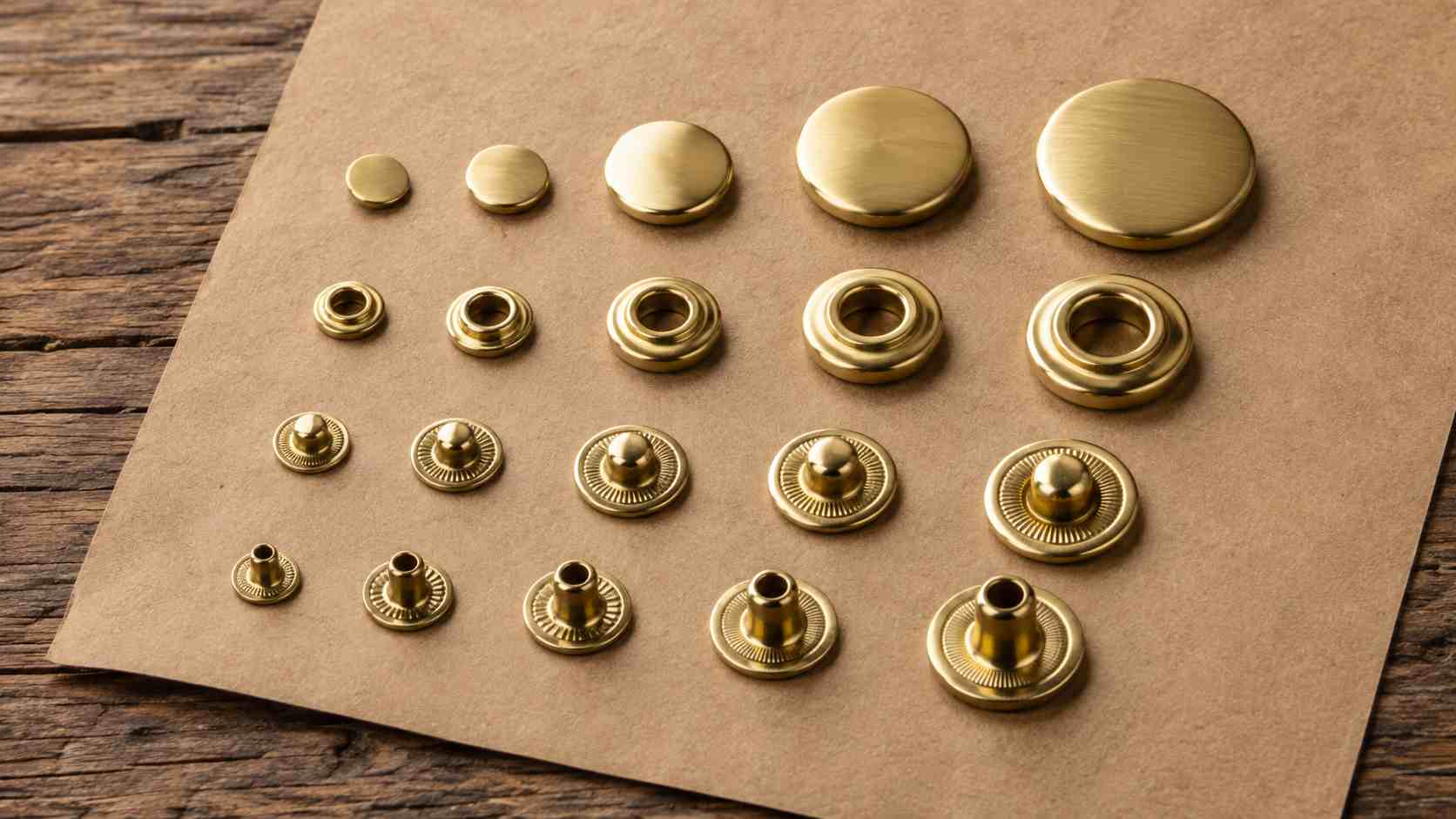
A fashion-oriented RFQ needs more information than a reference photograph.
Useful specifications include:
- garment type;
- exact snap location;
- visible or concealed hardware;
- cap diameter;
- flat, domed or other cap profile;
- logo, text or pattern;
- base material;
- finish and color;
- actual substrate thickness;
- number of layers;
- reinforcement construction;
- required fastening feel;
- washing or finishing process;
- environmental exposure;
- existing setting equipment;
- project compliance requirements.
These details allow the supplier to develop the snap as an integrated garment component rather than simply decorating a generic fastener.
Custom Fashion Snap Button Development at Baocheng / BC New Material
Baocheng / BC New Material supplies finished metal snap buttons and customized snap components for shirts, jackets, dresses, denim garments, outerwear and other apparel applications.
For fashion projects, customization can focus on both visible design and mechanical compatibility.
Available project development can include:
- custom cap diameter and proportion;
- flat, rounded or domed profiles;
- brand logos and lettering;
- embossed or recessed patterns;
- custom color and surface treatment;
- socket and stud combinations;
- post dimensions;
- material selection;
- sample development using the customer's actual fabric.
Material options can include brass, 304 or 316 stainless steel, patented JSW20 ultra-low magnetic permeability stainless steel and other project-appropriate metals depending on component structure and application.
For a jacket, shirt or dress project, sampling can be performed around the actual fabric stack so that the decorative concept is validated together with post length, installation quality and opening behavior.
Where applicable to the project and relevant certificate scope, development can also consider REACH, RoHS, OEKO-TEX, nickel-release and other customer requirements.
This approach keeps fashion customization connected to engineering reality: the hardware should look intentional, install consistently and continue to function as a reliable snap.
Conclusion: The Best Fashion Snap Still Begins With a Reliable Fastener
The evolution of snap buttons in clothing design is not a story of function disappearing and decoration taking over.
It is a story of function becoming visually expressive.
The same mechanical concept that made snap buttons valuable as utility closures created a stable foundation for designers to experiment with cap shapes, finishes, logos, placement and garment applications.
Western shirts demonstrated how visible snaps could define an entire clothing style. Jackets turned hardware into coordinated design systems. Dresses and modern fashion garments showed that snaps could move beyond rugged clothing when size, reinforcement and opening force were correctly adapted.
Today, a snap button can be almost invisible or intentionally dominant. It can communicate heritage, technical precision, minimalism or premium branding.
But underneath every successful fashion detail, the engineering requirement remains unchanged: the socket and stud must engage consistently, the installed components must remain secure, and the opening force must match the actual garment.
That balance between mechanical reliability and visual customization is what transformed the snap button from a utility fastener into a lasting element of modern clothing design.
Focused FAQ
Why did snap buttons become fashion details instead of remaining purely functional hardware?
Once snap mechanisms became reliable and suitable for different garment weights, designers could focus more attention on the visible cap. Shape, color, finish, logo and placement allowed the same functional fastener to become part of the garment's visual identity.
What are decorative snap buttons?
Decorative snap buttons use visible cap design as an important fashion element while retaining the socket-and-stud mechanism required for reusable fastening. Decoration can include logos, patterns, pearl-like surfaces, custom finishes and different cap profiles.
Can a snap button carry a clothing brand logo?
Yes. Cap surfaces can be customized with logos, lettering, embossed patterns or recessed details, provided the cap structure remains compatible with manufacturing and setting requirements.
Are snap buttons only suitable for jackets and workwear?
No. They can also be used on shirts, dresses and other fashion garments when snap size, opening force, reinforcement and attachment dimensions are matched to the substrate.
Why are visible snaps common on Western-style clothing?
Western shirts helped establish visible snap caps as both practical fasteners and recognizable design details, particularly across the shirt front, cuffs and pocket flaps.
Can snaps be concealed in minimalist garments?
Yes. Snap systems can be installed beneath plackets, facings or flaps so the wearer receives press-to-close functionality without exposing the metal hardware on the garment exterior.
Does changing the cap design affect the snap mechanism?
It can affect tooling and installation, but the functional socket-and-stud geometry should remain carefully controlled. Decorative customization must not compromise the mechanical engagement system.
Can the same snap be used on a jacket and a lightweight dress?
Not automatically. Different substrates can require different opening force, post length, snap size and reinforcement. Final selection should be validated on the actual garment construction.
Why does surface finish matter beyond appearance?
Finishing influences color and visual texture but can also affect coating thickness, wear, corrosion behavior and friction around functional snap surfaces.
Can Baocheng customize fashion snap buttons?
Yes. Baocheng / BC New Material can customize cap size, profile, logo, patterns, material, color, surface treatment, socket-and-stud combinations and attachment dimensions according to the finished garment.
Can JSW20 be used for decorative apparel snaps?
Yes. Baocheng can manufacture finished snap components from patented JSW20 ultra-low magnetic permeability stainless steel for projects requiring extremely low magnetic permeability after forming. JSW20 also provides chloride-corrosion resistance.
Does Baocheng sell raw JSW20 material?
No. Baocheng supplies finished products and customized components manufactured from JSW20 rather than raw JSW20 coils or sheets.
#SnapButtons, #DecorativeSnaps, #FashionHardware, #ApparelSnaps, #GarmentHardware, #ClothingDesign, #MetalFasteners, #FashionDetails
