






Snap Button Compliance for Global Apparel: REACH, RoHS, OEKO-TEX and Nickel Release Requirements
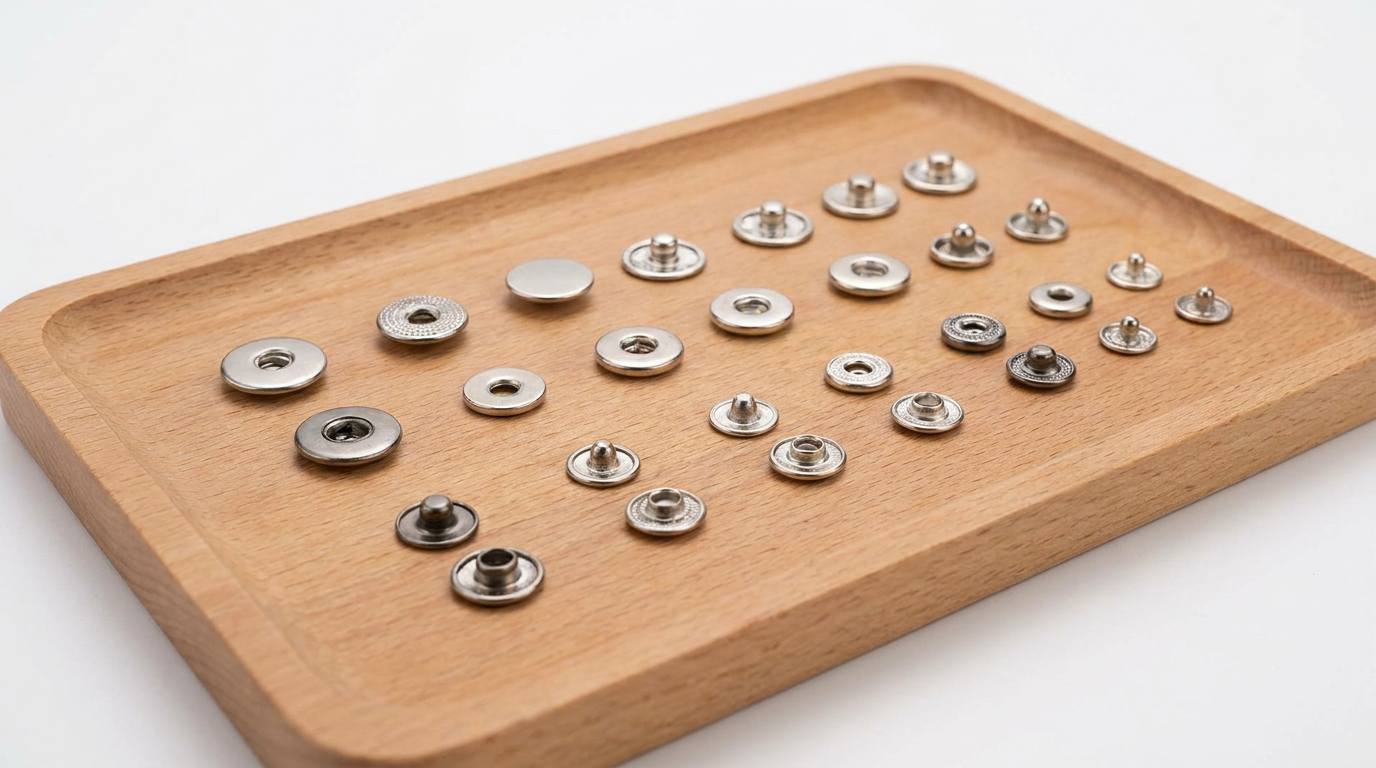
Snap Button Compliance Is About the Finished Hardware, Not Just the Base Metal
For global apparel buyers, snap button compliance can become confusing very quickly. A sourcing specification may mention REACH, RoHS, OEKO-TEX, nickel release, restricted substances and customer RSL requirements in the same document, even though these requirements do not have the same legal scope or testing purpose.
REACH is an EU chemicals regulation. Nickel release for articles in direct and prolonged contact with skin is controlled through a restriction under REACH Annex XVII. RoHS is primarily a hazardous-substance restriction for electrical and electronic equipment rather than a universal apparel regulation. OEKO-TEX STANDARD 100 is an independent testing and certification system for textiles, components and accessories tested for harmful substances.
For snap buttons, the compliance question therefore cannot be answered simply by saying, “The metal is stainless steel” or “The product passed one test.” Buyers need to identify the destination market, garment application, skin-contact conditions, base metal, plating or coating system and the exact scope of each supporting report.
A strong compliance program evaluates the finished cap, socket, stud and post configuration that will actually enter production.
Start With a Compliance Matrix, Not a List of Certificates
A practical sourcing process begins by separating legal requirements from voluntary certifications and customer-specific requirements.
| Requirement | Main Purpose | Typical Relevance to Snap Buttons |
|---|---|---|
| REACH | EU chemical regulation covering substances, mixtures and articles | Restricted substances, SVHC obligations and specific restrictions affecting metal accessories |
| Nickel Release | Controls nickel released from articles in prolonged skin contact | Important for exposed metal hardware touching the skin |
| OEKO-TEX STANDARD 100 | Independent harmful-substance testing and certification | Relevant to textile accessories including buttons and metal fasteners |
| RoHS | Restricts hazardous substances in electrical and electronic equipment | Directly relevant when the snap becomes part of qualifying electronic or wearable equipment; also sometimes requested contractually by buyers |
| Brand RSL | Customer-specific restricted-substance policy | May impose limits beyond minimum legal requirements |
For global apparel sourcing, one report should never automatically be treated as a universal passport for every market, finish and product configuration.
What REACH Means for Snap Buttons
REACH is Regulation (EC) No 1907/2006 and is one of the central chemical-regulatory frameworks for products supplied in the European Union.
For apparel hardware, buyers usually encounter REACH in two main ways:
- restrictions in Annex XVII;
- Substances of Very High Concern, or SVHCs, on the Candidate List.
Annex XVII contains restrictions that can apply to substances in articles. The exact restriction depends on the chemical and the way the article is used.
Candidate List obligations are different. If an article contains a Candidate List SVHC above the relevant 0.1% weight-by-weight threshold, supply-chain communication obligations can be triggered. This is why many apparel buyers request REACH/SVHC screening or declarations from hardware suppliers.
REACH Compliance Is Not Simply a Certificate Name
Buyers frequently ask suppliers for a “REACH certificate,” but REACH itself is a regulation rather than one universal product-certification program.
Evidence may include:
- laboratory test reports;
- SVHC screening reports;
- supplier declarations;
- material information;
- finished-product chemical testing;
- customer-specific compliance documentation.
The buyer should always check which substances were tested, the version or date of the list used, the exact sample description and whether the tested article matches the ordered material and finish.
Nickel Release Is Especially Important for Metal Apparel Hardware
Nickel content and nickel release are not the same thing.
A metal can contain nickel but release very little under the specified test conditions. Conversely, surface wear, plating damage or an unsuitable coating system can influence the amount of nickel that becomes available at the surface.
Under REACH Annex XVII Entry 27, articles intended to come into direct and prolonged contact with the skin are restricted if nickel release from the relevant parts exceeds 0.5 μg/cm²/week.
For apparel, this can matter to:
- snap buttons;
- jeans buttons;
- rivets;
- buckles;
- hooks;
- zippers and pulls;
- other exposed metal trims.
Whether a particular snap is considered to have prolonged skin contact depends on its location and the actual use of the garment.
Nickel Release Should Be Tested on the Final Surface Condition
The base alloy is only part of the system. The surface the wearer actually contacts may be nickel plating, a decorative topcoat, PVD, black finish, paint or exposed stainless steel.
Therefore, if a buyer changes the finish from natural stainless to bright nickel, black nickel, gunmetal or another decorative system, the previous nickel-release result should not automatically be assumed to cover the new version.
The test sample should correspond to the actual finished article wherever the requirement is relevant.
For products subject to wear before nickel-release evaluation, the specified test program may also include simulated wear and corrosion conditioning before the release test.
Infant Apparel Requires the Strictest Material-Control Mindset
For snap fasteners for infant clothing, the compliance program should reflect the sensitivity of the final product category. Babies have more sensitive skin, garments are washed frequently and small metal components must remain securely attached.
For these projects, buyers may need to coordinate chemical testing with mechanical attachment requirements. A snap that passes chemical testing but detaches from the garment is not an acceptable product, just as a mechanically strong snap with an unsuitable surface chemistry is not acceptable.
Material identity, plating, burr control, attachment strength and traceable test documentation should all be considered together.
OEKO-TEX STANDARD 100 and Apparel Snap Buttons
OEKO-TEX STANDARD 100 is a globally standardized independent testing and certification system for textiles and related accessory materials tested for harmful substances.
Its scope is particularly relevant to garment hardware because accessories such as buttons can form part of the certified textile article. Current OEKO-TEX information emphasizes that components and accessories are included in the harmful-substance evaluation.
The requirements become stricter as skin contact increases and as the intended user becomes more sensitive.
OEKO-TEX Product Classes Matter
OEKO-TEX STANDARD 100 uses four product classes based on intended use.
| Product Class | General Application | Snap Button Example |
|---|---|---|
| Class 1 | Products for babies and children up to 3 years | Infant bodysuits, rompers and baby garments |
| Class 2 | Products with direct skin contact | Shirts, underwear-adjacent garments and certain uniforms |
| Class 3 | Products without direct skin contact | Many jackets and outerwear products |
| Class 4 | Decoration and home-textile applications | Certain interior textile products |
The stricter baby-product criteria are one reason snap buttons for toddler clothes should not be treated as if they were automatically equivalent to hardware used on an adult outer jacket.
Baby and Toddler Garments Need Both Chemical and Mechanical Control
Products such as snap fasteners for onesies illustrate the importance of combining chemical requirements with manufacturing quality control.
Typical concerns include:
- harmful-substance limits;
- nickel release where applicable;
- surface stability after washing;
- sharp edges and burrs;
- pull-off resistance;
- component cracking;
- traceability between tested sample and production lot.
The safest sourcing approach is to build one technical specification connecting both material compliance and physical performance.
OEKO-TEX Certification Does Not Mean Every Future Variation Is Automatically Covered
A common purchasing mistake is receiving an OEKO-TEX certificate from a supplier and assuming every material, coating, size and color produced by that company is automatically certified.
Buyers should verify:
- certificate holder;
- certificate validity;
- certified product scope;
- product class;
- materials covered;
- whether the ordered accessory falls within the certified scope.
If the product changes materially, the supplier should confirm whether the existing certification remains applicable.
School Uniform Hardware Needs Repeat-Order Consistency
snap buttons for school uniforms may remain in production for several seasons and pass through repeated washing cycles.
For these programs, compliance documentation should not be treated as a one-time sampling exercise. The manufacturer should preserve:
- approved material specification;
- surface-treatment specification;
- supplier and lot records;
- relevant test documentation;
- change-control records;
- approved physical samples.
If the finish supplier or base material changes, the buyer should evaluate whether new chemical or performance validation is necessary.
Where RoHS Fits Into Apparel Sourcing
RoHS is often listed beside REACH in supplier questionnaires, but the two regulations have different purposes.
The EU RoHS Directive 2011/65/EU restricts specified hazardous substances in electrical and electronic equipment. Its scope is therefore not ordinary apparel hardware simply because the hardware contains metal.
A conventional metal snap on a normal cotton jacket is not automatically a RoHS-regulated electrical component.
However, RoHS becomes much more relevant when snaps are incorporated into qualifying wearable electronics, powered garments or electronic textile systems. Some global brands also request RoHS screening as part of broader supplier substance-control programs even where the legal scope is not identical to ordinary apparel.
RoHS Controls a Different Substance Set
Current RoHS substance restrictions cover lead, mercury, cadmium, hexavalent chromium, PBB, PBDE and four specified phthalates, subject to the Directive's scope, concentration limits and exemptions.
For metal snap components, lead, cadmium, hexavalent chromium and substances associated with coatings or polymeric decorative elements are among the issues that may be reviewed during RoHS-oriented testing.
The important sourcing principle is not to describe ordinary apparel as legally “RoHS certified” without first checking whether the final product falls within RoHS scope.
Wearable Electronics Are Where RoHS Becomes More Directly Relevant
snap connectors for wearable devices may serve as removable connections between textile modules, sensors, batteries or electronic assemblies.
Once the snap becomes part of electrical or electronic equipment, buyers need to evaluate the complete regulatory classification of the final product. RoHS may then become directly relevant in addition to textile chemical requirements.
This is why a metal fastener supplier serving wearables may receive both traditional textile compliance questions and electronics-oriented restricted-substance requirements.
E-Textiles Create an Overlap Between Garment and Electronics Compliance
snap buttons for e textiles can operate as mechanical fasteners and electrical interfaces at the same time.
The sourcing specification may therefore need to consider:
- REACH and other chemical requirements;
- RoHS where the final electrical/electronic product is within scope;
- nickel release if skin contact occurs;
- OEKO-TEX or brand RSL requirements for textile applications;
- electrical contact performance;
- washability;
- corrosion;
- mechanical cycle life.
This combination is a good example of why buyers should create a compliance matrix based on final use rather than simply request every certificate they have seen on another product.
Protective Clothing Can Have Multiple Compliance Layers
snap buttons for protective clothing may be exposed to washing, sweat, chemicals, outdoor environments or other demanding conditions depending on the garment.
The snap-button chemical specification should therefore be coordinated with the complete protective garment specification.
OEKO-TEX requirements, customer RSLs, REACH obligations and other product-specific standards can coexist, but each should be identified separately in the purchase specification.
If the protective garment uses specialized coatings or electronic functions, additional requirements may apply beyond conventional metal accessory testing.
Hospital and Medical Garments Need Traceable Documentation
For snap fasteners for hospital gowns, buyers may focus on repeated laundering, surface cleanliness, material documentation and reliable attachment in addition to chemical requirements.
The compliance file should distinguish between:
- base-material reports;
- finished-component reports;
- surface-treatment reports;
- certification documents;
- batch or style identification;
- customer-specific requirements.
A test report should always be reviewed for what it actually covers rather than accepted solely because its title contains “REACH,” “RoHS” or another familiar acronym.
Patient Garments Increase the Importance of Skin-Contact Assessment
snap buttons for patient gowns can be positioned close to the skin and can experience repeated hospital or institutional laundering.
Buyers should evaluate whether the snap location creates direct and prolonged skin contact and whether nickel-release testing is therefore relevant to the target market.
Surface durability is also important. A finish that initially creates an effective barrier may behave differently after repeated washing, abrasion or chemical cleaning.
For this reason, chemical compliance and durability should be considered together rather than as unrelated requirements.
Nickel Release Is a Surface-Performance Requirement
One important misconception is that the best way to control nickel release is simply to select a material with zero nickel content.
Nickel release is specifically about how much nickel is released from the contact surface under the prescribed conditions. The result depends on alloy chemistry, surface condition, coatings, wear and corrosion.
For stainless-steel hardware, nickel may be part of the alloy system, but a suitable finished article can still achieve very low nickel release.
Therefore, sourcing should be based on the required release test rather than assumptions based only on alloy composition.
Surface Finish Can Change Compliance Results
Snap buttons are available with natural stainless, nickel, black nickel, gunmetal, gold, antique brass, paint, PVD and other decorative finishes.
Each finish creates a different surface system.
If a supplier has a passing report for one natural stainless snap, the result should not automatically be transferred to:
- a nickel-plated version;
- a black nickel version;
- a painted version;
- a different base alloy;
- a different coating supplier;
- a significantly different product geometry.
The scope of the report must match the article being sold.
Why Material Traceability Matters for Chemical Compliance
Compliance testing has limited value if production cannot be connected to the tested material.
A manufacturer should be able to control:
- raw-material grade;
- raw-material lot;
- surface-treatment specification;
- plating or coating batch where relevant;
- product item number;
- production batch;
- applicable test report;
- approved customer specification.
If several similar stainless grades are stored together without identification, a test report for one material cannot reliably support every shipment.
Supplier Changes Should Trigger a Compliance Review
Changing a plating company, base-material source or coating chemistry may affect the compliance status of the finished snap.
A strong change-control procedure should ask:
- Has the chemical composition changed?
- Has the surface system changed?
- Does the existing report still cover the new configuration?
- Is retesting required?
- Does the customer need to approve the change?
These questions should be answered before the changed components enter mass production.
REACH, OEKO-TEX and Nickel Release Should Not Be Duplicated Blindly
There is overlap between chemical-control systems, but they are not identical.
OEKO-TEX STANDARD 100 includes a broad harmful-substance testing framework and incorporates many legal and additional requirements. REACH establishes legal obligations and restrictions in the EU. Nickel release is a specific restriction directly relevant to certain skin-contact metal articles.
Therefore, passing one program should not be described as automatically replacing every other customer requirement.
The correct documentation package depends on the buyer, market and final product.
How Baocheng Positions JSW20 for Compliance-Sensitive Snap Buttons
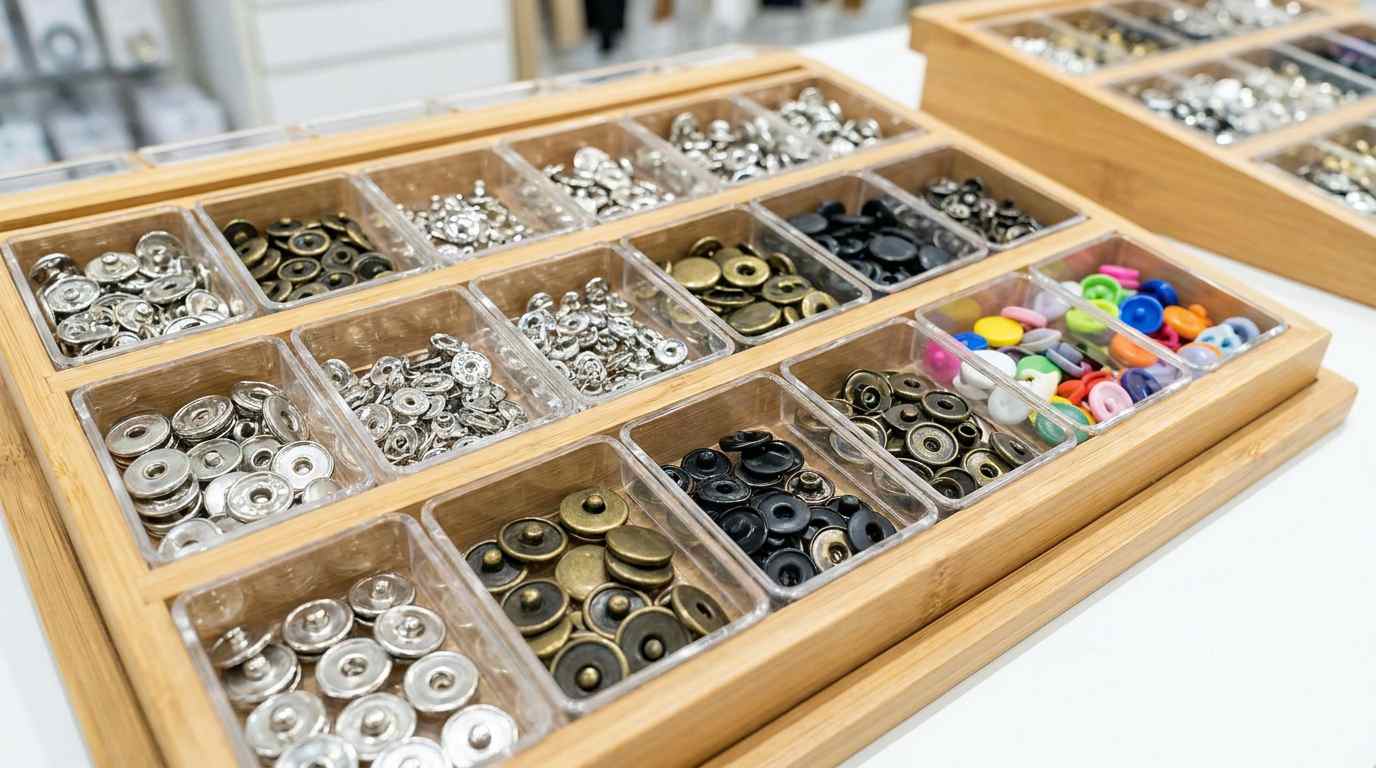
Baocheng can manufacture finished snap buttons and customized components from JSW20 ultra-low magnetic permeability stainless steel for projects requiring a combination of forming performance, very low magnetic response and corrosion resistance.
JSW20 is a patented austenitic stainless steel with available reference values including:
- relative magnetic permeability around μr 1.001;
- yield strength Rp0.2 ≥350 MPa;
- tensile strength Rm ≥650 MPa;
- A50 elongation ≥40%;
- ultra-low magnetic response retained within the referenced cold-deformation range;
- chloride-corrosion resistance.
According to the test and certification documentation available for Baocheng's JSW20 projects, the relevant tested articles have passed REACH/SVHC, RoHS, OEKO-TEX and nickel-release requirements within the scope stated in the corresponding reports and certificates.
This documentation should always be matched to the specific tested style, batch, material and finish rather than interpreted as unlimited coverage for every possible future configuration.
JSW20 Can Be a Strong Alternative to Copper-Based Hardware
Traditional copper-based materials such as brass have long been used in apparel hardware because they combine good formability, decorative finishing capability and relatively low magnetic response.
For buyers using copper or brass primarily because ordinary stainless hardware creates too much magnetic response after forming, JSW20 provides another material route.
It combines:
- ultra-low magnetic permeability after forming;
- good ductility for complex stamping;
- stainless-steel construction;
- chloride-corrosion resistance;
- supporting chemical-compliance documentation for the relevant tested products.
This makes JSW20 a strong alternative to copper-based hardware in many apparel snap-button projects, particularly when low magnetic response and stainless-steel performance are required together.
The final choice should still consider appearance, forming geometry, surface treatment, operating environment, cost targets and customer-specific testing requirements.
Why Low Magnetic Response Matters in Apparel Manufacturing
Garment factories using needle-detection equipment can experience interference from some metal accessories, particularly after stainless components undergo significant cold forming.
JSW20 is designed to maintain an extremely low magnetic response after forming, which can reduce the contribution of the snap hardware to magnetic needle-detector signals.
However, no metal hardware supplier should promise that one material guarantees every finished garment will pass every detector setting.
Final performance depends on:
- size of each metal component;
- number of snaps on the garment;
- location and orientation;
- other metal accessories;
- detector sensitivity;
- factory test method.
The finished garment should therefore be validated under the customer's real production conditions.
Compliance Reports Must Match the Actual Product Scope
Before approving any snap-button compliance document, buyers should check:
- laboratory or certification body;
- report or certificate number;
- test date or validity period;
- sample name or style number;
- material;
- finish;
- tested substance list;
- test method;
- result and limit;
- whether the document applies to the ordered product.
A report that simply says “metal button” may not be sufficiently specific for a tightly controlled brand program.
Do Not Assume One Color Covers Every Finish
Different colors can require different plating layers, topcoats or chemical processes.
If a brand orders natural stainless, black nickel, gold and antique brass versions of the same snap, chemical testing requirements may need to be considered for each finish family.
Grouping finishes for testing should be based on technical justification, not simply on the fact that all four versions have the same cap shape.
Build Compliance Into the RFQ
The buyer's RFQ should state compliance requirements before samples are developed.
A useful section may identify:
| RFQ Field | Example |
|---|---|
| Destination market | European Union |
| Product application | Garment snap with possible direct skin contact |
| Base material | JSW20 stainless steel |
| Finish | Natural stainless / approved finish |
| REACH | Applicable restrictions and current SVHC requirement |
| Nickel release | Required where direct and prolonged skin contact applies |
| OEKO-TEX | Applicable certification scope / product-class requirement |
| RoHS | Required if applicable to final EEE or customer specification |
| Brand RSL | Customer RSL attached |
| Documentation | Reports must identify relevant material/style/finish |
Test Reports Should Be Reviewed Before Mass Production, Not After Shipment
Compliance evidence should ideally be reviewed during supplier qualification and sample approval.
If a customer discovers after production that a report covers the wrong surface finish or an outdated product version, the commercial impact can be much greater than the cost of early document review.
For custom colors or materials, buyers should determine whether testing is required before final bulk release.
A Practical Compliance Workflow for Snap Button Buyers
- Identify destination countries.
- Identify whether the snap has direct and prolonged skin contact.
- Define base material and surface finish.
- Review applicable REACH restrictions.
- Review SVHC and customer RSL requirements.
- Determine whether nickel-release testing is needed.
- Define OEKO-TEX certification requirements and product class where relevant.
- Determine whether RoHS applies to the final electrical/electronic product or is contractually required.
- Request reports matching the actual product configuration.
- Confirm sample and report traceability.
- Approve the production material and finish.
- Control supplier, material and finishing changes.
- Retest or revalidate when significant changes occur.
How Baocheng Supports Compliance-Sensitive Snap Button Projects
Baocheng can develop finished snap-button systems around application, dimensions, material, post length, surface finish, low-magnetic requirements and customer compliance specifications.
Available material options include 304 stainless steel, 316 stainless steel, JSW20 ultra-low magnetic permeability stainless steel, brass and zinc alloy according to project requirements.
For compliance-sensitive programs, the project can coordinate:
- material identification;
- surface-finish selection;
- REACH/SVHC documentation;
- RoHS documentation where required;
- OEKO-TEX documentation within the certified scope;
- nickel-release testing;
- sample traceability;
- custom dimensions and post lengths;
- logo and finish development;
- production lot control.
Where the project requires both low magnetic response and chemical-compliance support, JSW20 offers a particularly useful alternative to conventional copper-based or ordinary stainless hardware.
Buyer Checklist Before Approving Snap Button Compliance
- Which market will receive the garment?
- Does the metal snap touch the skin directly and for prolonged periods?
- What exact base material is being used?
- What exact finish is being used?
- Does the REACH evidence cover the current requirement?
- Have relevant Candidate List requirements been reviewed?
- Is nickel-release testing required?
- Was nickel release tested on the finished surface system?
- Is OEKO-TEX required by the buyer or brand?
- Which OEKO-TEX product class applies?
- Does the certificate actually cover the ordered accessory?
- Does RoHS legally apply to the final product, or is it a customer-specific request?
- Does the report identify the correct sample or style?
- Are different surface finishes covered appropriately?
- Can production lots be connected to the tested material?
- Will a supplier or plating change trigger review or retesting?
- Are compliance and mechanical attachment requirements both controlled?
- Has the finished garment been validated for needle detection where required?
Conclusion
Snap button compliance for global apparel is not one universal certificate. REACH, nickel release, OEKO-TEX and RoHS address different regulatory or certification objectives and must be applied according to the destination market and final product.
For ordinary apparel in the European market, REACH restrictions and nickel release can be directly important to metal trims. OEKO-TEX STANDARD 100 provides a broader harmful-substance certification framework for textiles and accessories. RoHS becomes more directly relevant when snaps form part of qualifying electrical or electronic products, including some wearable and e-textile applications.
The finished surface matters just as much as the base alloy. A report for one finish should not automatically be applied to every plated or coated version, and production traceability must connect the shipped hardware to the tested material and process.
For projects requiring ultra-low magnetic response, JSW20 provides an additional option. Relevant tested JSW20 articles are supported by REACH/SVHC, RoHS, OEKO-TEX and nickel-release documentation within the stated test and certification scope. Combined with good formability, stainless-steel construction and chloride-corrosion resistance, JSW20 can provide a strong alternative to traditional copper-based snap hardware.
The safest sourcing strategy is therefore to define compliance requirements in the RFQ, verify the exact scope of each report, validate the finished snap and maintain material and finish traceability throughout mass production.
Focused FAQ
Is REACH certification the same as OEKO-TEX certification?
No. REACH is EU chemicals legislation, while OEKO-TEX STANDARD 100 is an independent testing and certification system for textiles and accessories. A supplier may provide REACH-related test or declaration documents and separately hold OEKO-TEX certification within a defined product scope.
What is the EU nickel-release limit for apparel hardware?
For parts of articles intended to come into direct and prolonged contact with the skin, REACH Annex XVII Entry 27 restricts nickel release above 0.5 μg/cm²/week. Whether a particular snap falls within that use condition should be evaluated from its actual garment position and use.
Does every snap button need RoHS testing?
No. RoHS primarily applies to electrical and electronic equipment. It becomes more directly relevant when snap hardware forms part of qualifying wearable electronics or other EEE, although some buyers may also request RoHS screening contractually.
Does an OEKO-TEX certificate cover every snap finish a supplier makes?
Not automatically. Buyers should confirm the certificate's current validity, product class and certified scope and determine whether the specific accessory, material and finish being purchased are covered.
Can stainless steel containing nickel still pass a nickel-release test?
Yes. Nickel release measures the amount released from the finished surface under the specified test conditions rather than simply measuring the total nickel content of the alloy.
Can JSW20 replace brass or other copper-based snap materials?
JSW20 can be a strong alternative in projects where buyers want ultra-low magnetic response after forming together with stainless-steel construction, good formability and chloride-corrosion resistance. Final suitability should still be confirmed for the required dimensions, finish, application and compliance specification.