






What Are Eyelets Used for in Shoes? Materials, Functions and Selection Guide for Footwear Brands
Eyelets are small but important shoe components that affect lace durability, upper protection, comfort, appearance, and long-term performance. This guide explains what eyelets are used for in shoes, why metal eyelets are widely chosen, and how stainless steel and JSW20 ultra-low magnetic stainless steel eyelets support higher-quality footwear projects.
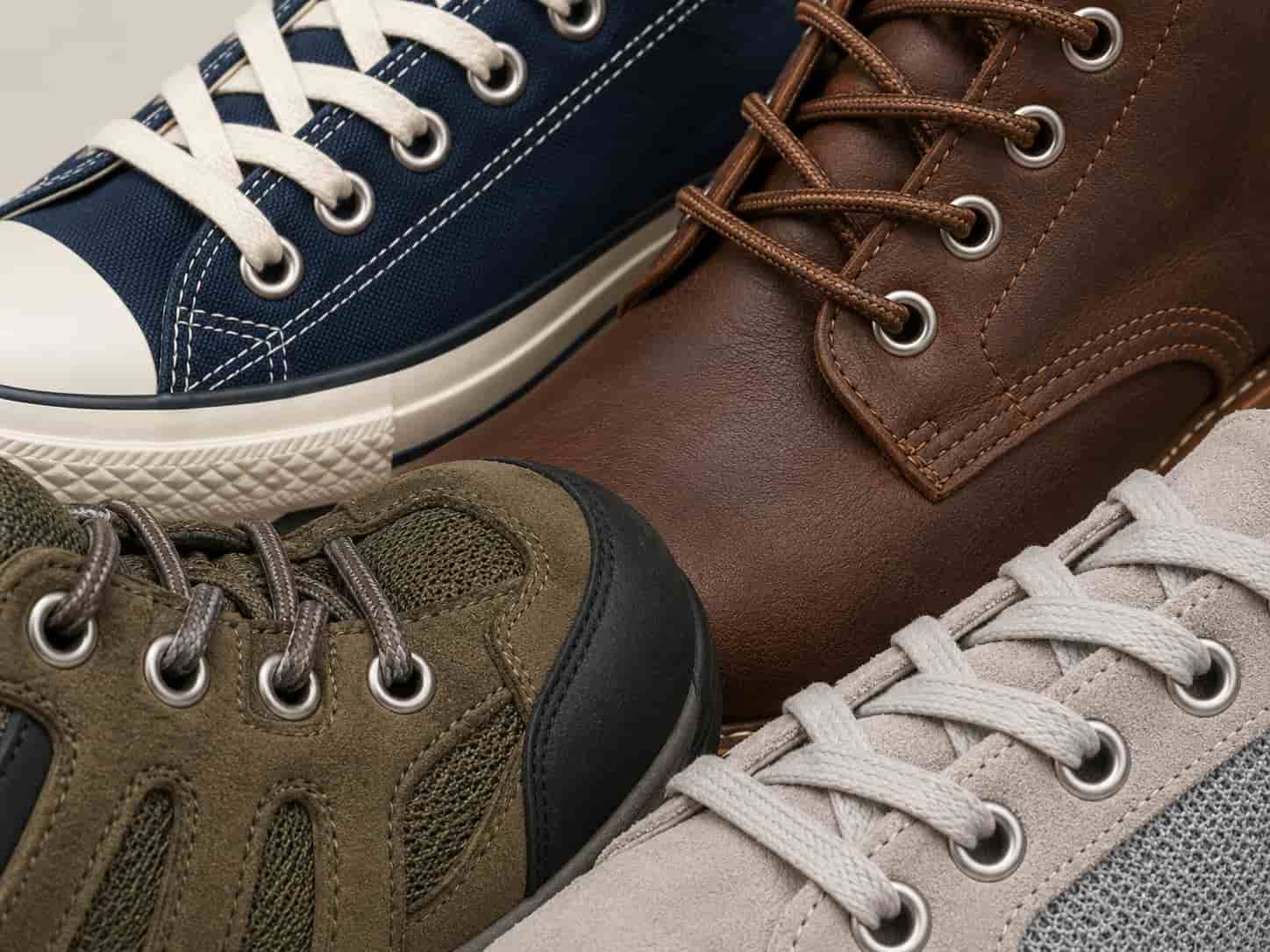
Why Eyelets Matter in Shoe Design
When consumers choose shoes, they usually notice the outsole, upper material, comfort, color, brand logo, and overall style. Few people pay attention to the small rings around the lace holes. These small parts are shoe eyelets, and they play a larger role than many buyers realize.
A shoe without eyelets may still look complete at first. The upper can be punched with holes, and the shoelace can pass through them. But after repeated tightening, loosening, walking, running, bending, and pulling, the material around the holes faces friction and stress. Fabric may stretch. Leather may deform. Synthetic upper materials may tear or crack. Once the lace hole becomes damaged, the shoe may lose fit stability.
A shoelace eyelet creates a protective layer between the lace and the upper. Instead of allowing the shoelace to rub directly against fabric or leather, the eyelet takes the friction. It also helps spread pulling force over a wider area, reducing stress concentration around the lace hole.
For footwear manufacturers, this is not only a small construction detail. A torn lace hole can become a consumer complaint. Rusted metal parts can reduce product value. Peeling finishes can make a premium shoe look cheap. Loose eyelets can make the lacing system unstable. Eyelets help protect the upper, support lace tension, improve product life, and strengthen user confidence.
The Basic Function of Eyelets in Shoe Construction
The main purpose of a shoe eyelet grommet is to strengthen the area where the lace passes through the upper. The lace system is one of the most active parts of a shoe. Every time the wearer puts on or removes the shoe, the lace holes experience pulling and friction. During walking or running, lace tension may also change constantly.
Without eyelets, the upper material absorbs this force directly. This may be acceptable for some lightweight or low-cost shoes, but it creates risk for products expected to last longer.
Eyelets reduce friction because the lace slides against the eyelet surface instead of cutting into the upper material. They also improve tension distribution because force is not concentrated only on the edge of the punched hole. They help maintain hole shape, so the opening stays cleaner and more stable over time. A smooth eyelet also improves user experience because the lace moves more easily when tightening or loosening.
For footwear brands, these benefits affect both function and quality perception. A shoe that laces smoothly feels better. A shoe that keeps its lace holes stable looks more durable. A shoe with clean, well-installed eyelets appears more professionally made.
Different Shoes Need Different Eyelet Solutions
Not all shoes require the same eyelet. A lightweight sneaker, a hiking boot, a leather dress shoe, and a safety boot may all use laces, but their requirements are very different.

Running shoes usually focus on comfort, weight, and flexible fit. The eyelets should support stable lace tension without adding unnecessary weight. Canvas shoes often use simple metal eyelets for shoes because the upper fabric needs reinforcement around the lace holes. Without eyelets, canvas may stretch or fray after repeated use.
Leather shoes need eyelets that protect the leather while maintaining a clean appearance. The surface finish matters more because the eyelets are visible. Outdoor shoes and hiking shoes require stronger performance. These shoes may be used in rain, mud, rocks, wet grass, and rough ground. Their eyelets must resist corrosion, pulling force, abrasion, and repeated lace movement.
Work boots and safety shoes have even higher requirements. Boot eyelets and eyelets for boots must handle strong lace tension, thicker uppers, heavier materials, and long working hours. In these products, eyelets are part of structural reliability.
Fashion footwear may use eyelets more creatively. Designers may choose antique brass, gunmetal, matte black, polished silver, or colored finishes to create a specific look. In this market, eyelets support both function and style.
This explains why footwear brands should not use one standard eyelet for every product. The correct eyelet must match shoe type, upper material, lace diameter, usage environment, brand positioning, and price level.
Common Types of Shoe Eyelets
When buyers ask about types of shoe eyelets, the answer usually depends on material, structure, installation method, and final application.
The most common category is metal eyelets. They are widely used in sneakers, boots, canvas shoes, work shoes, and outdoor footwear. Metal eyelets offer strength, wear resistance, and long service life. They are especially useful when the lacing system faces frequent pulling.
Plastic eyelets are another option. They are lightweight, cost-effective, and easy to match with sporty designs. However, plastic eyelets usually cannot provide the same wear resistance or long-term stability as metal eyelets. They are more suitable for light-duty footwear or products with strict cost control.
Decorative eyelets are used when appearance is a major selling point. They may have special colors, shapes, logos, or surface treatments. A fashion boot may use large eyelets to create a bold look. A sneaker brand may use colored eyelets to match the outsole or logo. A luxury shoe may use subtle polished eyelets to support a refined appearance.
There are also reinforced eyelets for boots and outdoor shoes. These are designed for thicker upper materials and stronger lace tension. In demanding footwear, heavy duty boot eyelets may be selected to improve strength and long-term reliability.
Why Metal and Stainless Steel Eyelets Are Widely Used
Metal eyelets for shoes remain popular because they balance durability, appearance, and production reliability. Compared with direct punched holes, metal eyelets provide better reinforcement. Compared with many plastic parts, they usually provide stronger wear resistance and a more premium feeling.
Metal eyelets can be customized in size, surface finish, shape, and material. A canvas sneaker may use a small silver or black eyelet. A hiking shoe may use stronger eyelets with better corrosion resistance. A fashion boot may use larger antique-finished eyelets to create visual impact.
Material choice still matters. Iron eyelets may be economical, but they can rust if the surface protection fails. Brass eyelets can offer good decorative appearance, but may have cost or strength limitations depending on application. Stainless steel eyelets are gaining more attention because they can provide better corrosion resistance and long-term stability.
Shoes may face moisture, rain, sweat, mud, cleaning agents, and temperature changes. Ordinary metal eyelets may rust or discolor after long-term use. Rust can stain the upper material and reduce product value, especially on light-colored shoes.
Stainless steel provides a more stable option. It resists corrosion better in many daily and outdoor environments. It also offers strength for repeated lace tension. For boots, outdoor shoes, and work footwear, this tension can be much stronger than in casual shoes. Stainless steel can provide stronger structural performance and better resistance to deformation.
The appearance is also useful for brands. Stainless steel has a clean and modern metal texture. It can be used in natural silver, polished, brushed, matte, dark, or plated finishes. This allows it to support different styles, from minimal sneakers to technical outdoor footwear.
Eyelets for Boots and Functional Footwear
Boots place heavier demands on eyelets than many other types of shoes. This is why boots with metal eyelets are common in workwear, outdoor, tactical, military-style, and hiking footwear.
A boot upper is usually thicker and stiffer than a sneaker upper. Lace tension is also higher because the shoe must support the foot, ankle, or lower leg. When the wearer tightens the boot, the eyelets must hold firmly without deforming, loosening, or damaging the upper.
For outdoor boots, eyelets may face water, mud, sand, snow, rocks, and repeated impact. For work boots, they may face dust, oil, sweat, mechanical friction, and long working hours. This is why heavy duty boot eyelets are important. They need suitable material strength, proper flange design, correct installation length, and stable surface treatment.
Boot eyelets must also work well with shoelaces. The inside edge should be smooth enough to avoid cutting or wearing down the lace too quickly. At the same time, the eyelet must be strong enough to hold repeated tension. Upper thickness, lace diameter, pulling direction, waterproof requirement, corrosion environment, and target price should all be considered before production.
Surface Finish and Design Value
Eyelets are functional components, but they are also visible parts of the shoe. This makes surface finish important.
A silver finish gives shoes a clean and classic look. Matte silver feels more modern and understated. Antique brass creates a vintage or outdoor style. Gunmetal is often used for technical, workwear, and urban footwear. Matte black can make the shoe look stronger, cleaner, or more minimalist.
For fashion footwear, eyelets can become a design highlight. Large eyelets create a bold look, colored eyelets can match brand identity, and dark finishes can make the lacing area look more technical. For performance footwear, finish also affects corrosion resistance, wear resistance, and user experience. A poor coating may peel under lace friction, while a rough inner edge may damage shoelaces.
How JSW20 Ultra-Low-Magnetic Stainless Steel Fits Footwear Hardware
For standard footwear projects, common metal eyelets may be enough. But for higher-performance or specialized products, brands may need more stable material options. This is where JSW20 ultra-low-magnetic stainless steel can provide value.
JSW20 is a special austenitic stainless steel designed for ultra-low magnetic performance after forming. For footwear hardware, this matters because eyelets are normally produced through stamping, forming, and pressing. Some ordinary stainless steels may show changes in magnetic behavior after cold working. JSW20 is designed to maintain extremely low magnetic response after controlled deformation.
JSW20 also offers toughness, forming adaptability, and corrosion resistance. These features are useful for precision-stamped footwear components that need clean edges, stable dimensions, and proper rolling or flanging performance.
Baocheng does not sell JSW20 as raw material. We manufacture finished products and customized metal components made from JSW20, including stainless steel eyelets, garment hardware, bag hardware, and precision stamped parts.
How Footwear Brands Should Choose the Right Eyelet
Choosing the right eyelet requires more than selecting a color from a catalog. Footwear brands should evaluate upper material, material thickness, lace diameter, pulling force, surface finish, installation method, use environment, and brand positioning.
Leather, canvas, mesh, synthetic leather, nylon, and composite materials all behave differently. Eyelet length must also match the thickness of the upper. If the eyelet is too short, it may not fasten properly. If it is too long, it may fold poorly or create an uneven appearance.
The eyelet hole must allow the lace to move smoothly. A hole that is too small makes lacing difficult. A hole that is too large may reduce lace control. Work boots and hiking shoes need stronger eyelets than fashion shoes because they face higher tension.
Installation must also be tested with proper tooling, molds, and pressure. Even a high-quality eyelet may fail if the installation process is wrong. For B2B footwear buyers, a professional RFQ should include shoe type, upper material, thickness, lace diameter, required finish, use environment, quality standard, and expected order quantity.
Small Eyelets Support Big Footwear Quality
Eyelets are small, but they affect the lacing system, upper durability, comfort, appearance, and long-term shoe performance. A good eyelet protects the lace hole, reduces friction, supports stable tension, and helps the shoe keep its structure during use.
Different footwear products need different eyelet solutions. Sneakers need comfort and weight control. Canvas shoes need basic reinforcement. Fashion shoes need appearance and finish consistency. Hiking shoes and work boots need stronger, more corrosion-resistant hardware.
Stainless steel eyelets are becoming more popular because they offer corrosion resistance, strength, durability, and a premium metal texture. For more specialized projects, JSW20 ultra-low-magnetic stainless steel can provide an additional material option for brands that need stable magnetic behavior, forming performance, and long-term reliability.
For footwear brands, importers, and OEM manufacturers, eyelet selection should begin before mass production. Material, size, surface finish, installation method, lace diameter, upper thickness, and use environment should all be considered together.
Focused FAQ
What are eyelets used for in shoes?
Eyelets reinforce lace holes, reduce friction between the shoelace and upper, help maintain hole shape, and support stable lace tension during repeated use.
Are shoe eyelets necessary?
They are not required for every shoe, but they are useful when the upper material needs protection from tearing, stretching, or abrasion around the lace holes.
What are the common types of shoe eyelets?
Common options include metal eyelets, plastic eyelets, decorative eyelets, reinforced boot eyelets, and eyelet-hook combinations used in hiking shoes and work boots.
Why are metal eyelets for shoes popular?
Metal eyelets offer strength, wear resistance, stable installation, and a more premium appearance. They are widely used in sneakers, canvas shoes, boots, and outdoor footwear.
Why choose stainless steel eyelets?
Stainless steel eyelets provide corrosion resistance, durability, strength, and long-term surface stability, making them suitable for premium shoes, work boots, and outdoor footwear.
What are heavy duty boot eyelets?
Heavy duty boot eyelets are stronger eyelets designed for thick uppers, high lace tension, outdoor use, workwear conditions, and long-term durability.
Can JSW20 be used for shoe eyelets?
Yes. JSW20 ultra-low-magnetic stainless steel can be evaluated for shoe eyelets that require corrosion resistance, forming stability, ultra-low magnetic performance, and reliable finished-part quality.
How should footwear brands choose eyelets?
Brands should consider upper material, thickness, lace diameter, pulling force, surface finish, installation method, use environment, and product positioning before choosing an eyelet.
#Shoe Eyelets, #Metal Eyelets for Shoes, #Shoe Eyelet Grommet, #Types of Shoe Eyelets, #Stainless Steel Eyelets, #Boot Eyelets, #Eyelets for Boots, #Heavy Duty Boot Eyelets, #Boots with Metal Eyelets, #Shoelace Eyelet, #Footwear Hardware, #Footwear Accessories, #Stainless Steel Footwear Hardware, #Non-Magnetic Stainless Steel Eyelets, #JSW20 Stainless Steel, #Custom Shoe Hardware, #B2B Footwear Accessories