






Footwear Hardware Guide: Eyelets, Rivets and Hooks Explained
Breaking Down a Modern Boot: Where Hardware Fits Into Footwear Construction
When consumers buy shoes, they often compare the outsole, upper material, lining comfort, and overall design. Few people realize that a pair of shoes is a complex product made from dozens, or even hundreds, of components.
For footwear manufacturers, a shoe is not just a combination of an outsole and an upper. It is a complete structural system. In this system, hardware parts play an important role in fastening, connecting, and reinforcing the shoe.
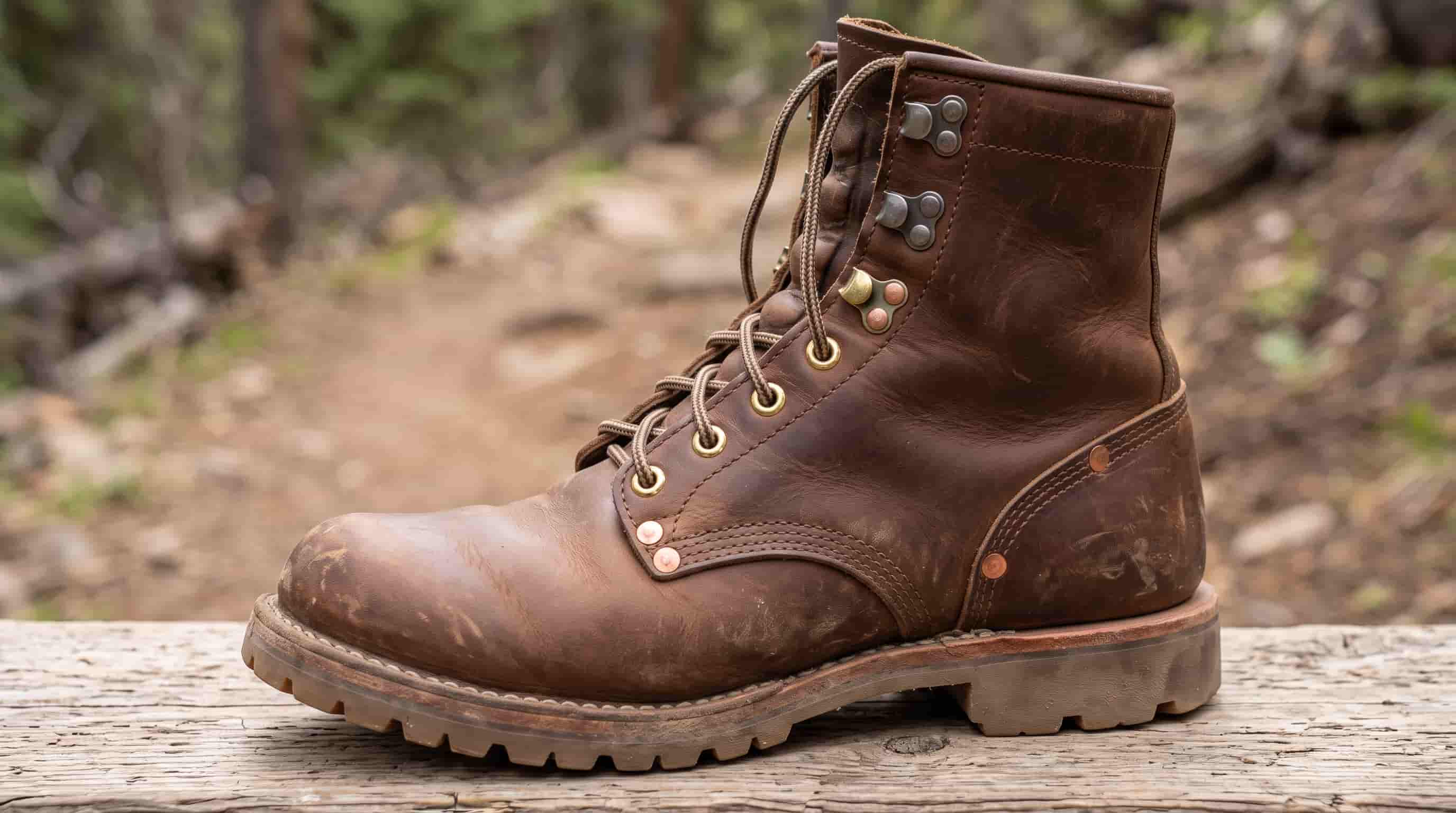
Take a typical work boot as an example. Its structure usually includes the outsole, midsole, upper, tongue, lining, and lacing system. The lacing system itself may include several hardware components, such as shoe eyelets, hooks, and rivets.
These parts are small, but they perform important tasks. Without them, the laces cannot work smoothly. The upper may also become loose or damaged after long-term use.
In the past, many shoes relied mainly on stitching for structural connection. As modern footwear design has developed, more brands have started using hardware parts for local reinforcement. The reason is simple. In high-stress areas, metal hardware is often more durable than stitching alone.
For example, the upper connection area of hiking boots, the lace fastening area of work shoes, and the ankle support area of outdoor boots often need extra reinforcement. In these areas, hardware can improve strength and help the shoe maintain its shape during repeated use.
Different footwear categories use different hardware configurations. Running shoes usually focus on lightweight construction, so they use fewer metal parts. Hiking shoes need both support and durability, so they often use eyelets and hooks together. Heavy-duty work boots face harsher environments, so they may use more rivets and reinforced components to increase overall structural strength.
For buyers, understanding where hardware fits into footwear construction is important. Hardware configuration affects not only product cost, but also durability, maintenance cost, and end-user experience.
In modern footwear manufacturing, hardware is no longer just a simple accessory. It has become part of product engineering.
Understanding Eyelets, Rivets and Hooks: Different Parts, Different Jobs
Eyelets, rivets, and hooks are all footwear hardware parts. However, they do very different jobs. If a shoe is like a team, each hardware part has its own role.
The first component is the eyelet. Eyelets are mainly used around lace holes. In footwear specifications, shoe lace eyelets define the reinforced path where the lace repeatedly moves through the upper. Their job is to provide a stable path for the shoelace and protect the upper material from long-term friction. For sneakers, canvas shoes, and most everyday footwear, eyelets are among the most common hardware parts.
Although an eyelet is small, it must handle constant pulling and friction. Shoe eyelet size must also match the lace diameter, upper thickness, and required pull-through strength. If the flange deforms, cracks, or pulls away from the upper, shoe eyelet repair may be needed to restore the lacing area. This is why material quality and production process are important.
For footwear projects that require stronger performance, many brands choose metal eyelets for shoes. Compared with simple punched holes or low-strength parts, metal eyelets can better protect the upper and improve the service life of the lacing system.
The second component is the rivet. Compared with eyelets, rivets work more like reinforcement parts in footwear construction. They are usually used in high-stress connection areas, such as the upper, tongue, lace tabs, and decorative structural parts.
Many consumers can see rivets in key areas of premium work boots and hiking boots. Their purpose is not only decoration. More importantly, they help improve structural strength and reduce the risk of seam opening or connection failure after long-term use.
The third common component is the hook. Hooks are mainly used in mid-cut and high-cut shoes, especially hiking boots, tactical boots, and safety shoes. Compared with traditional eyelets, hooks allow users to adjust lace tension more quickly. They also make the shoe easier to put on and take off.
In practical footwear design, shoe hooks are useful when users need faster lacing around the ankle area. This is especially important for outdoor footwear and work boots that are worn for long hours.
These three hardware parts do not work separately. They often work together.
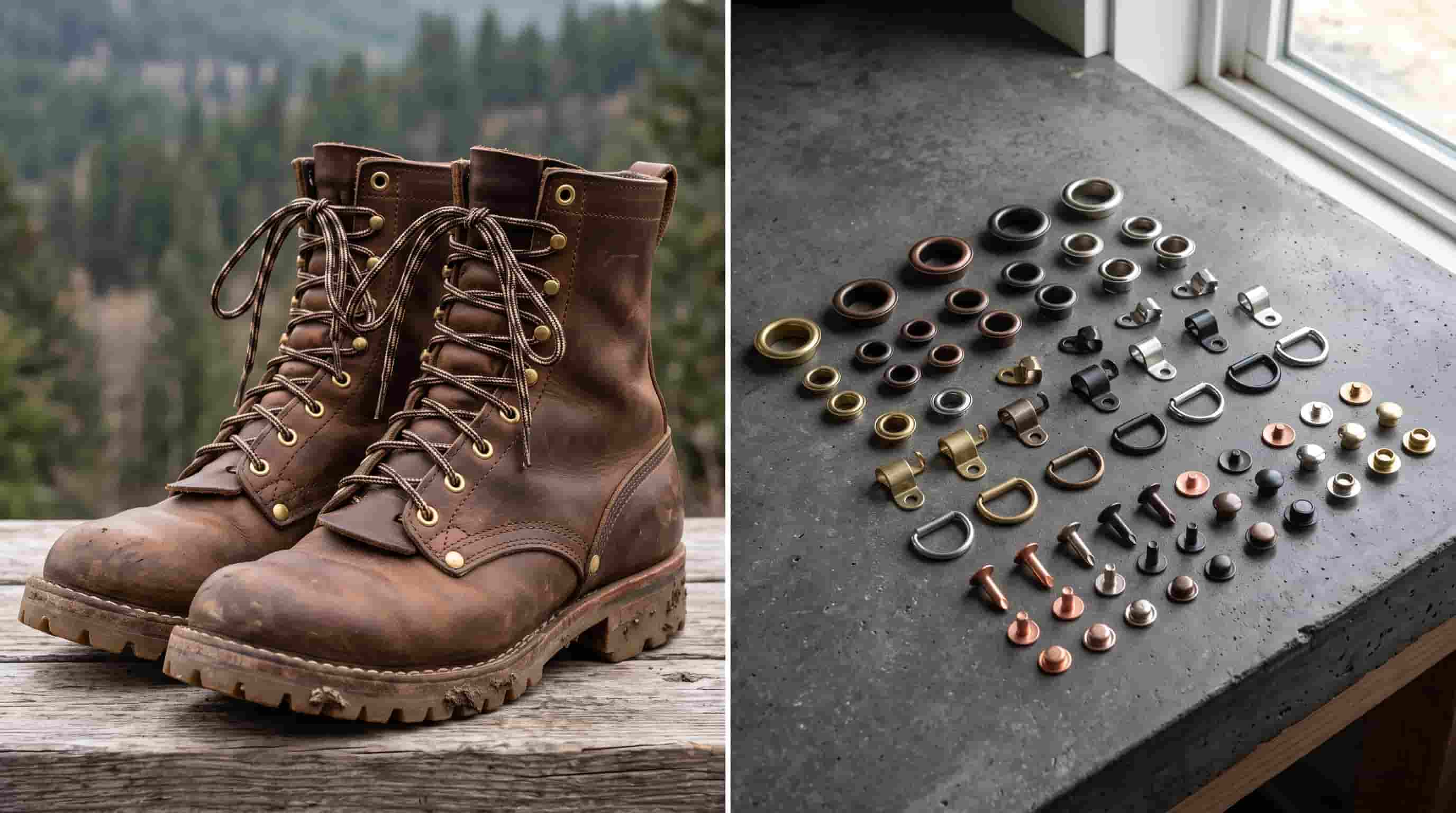
For example, a professional hiking boot may use eyelets, rivets, and hooks at the same time. Eyelets guide the shoelace. Hooks allow quick adjustment. Rivets reinforce key stress points. This combination helps the shoe stay stable in complex environments.
Some designs also use eyelet hooks to improve the efficiency of the lacing system. In other cases, one eyelet hook may be placed at a key position to help redirect lace tension and improve fit.
For brand developers and sourcing teams, understanding the function of each hardware part can help them make better decisions during product development. When evaluating a shoe eyelet manufacturer, sourcing teams should review material consistency, forming quality, coating adhesion, and dimensional control. A capable shoe eyelet supplier should also be able to match hardware performance with the upper material, lace diameter, and expected lacing load. This helps brands balance performance, cost, and durability.
Choosing the Right Hardware Materials for Footwear
For footwear manufacturers, choosing the right hardware structure is only the first step. The material behind the hardware often determines product life and quality.
Even when the shape looks similar, different materials can perform very differently. This applies to eyelets, rivets, and hooks.
Brass shoe eyelets are a traditional choice in footwear hardware. Many classic work boots and vintage shoes used brass hardware for many years. Brass offers a warm appearance and strong heritage style. However, as modern footwear requires higher strength and durability, brass may show limitations in some high-load applications.
Aluminum alloy is more common in lightweight products. It is light, so it can be useful for running shoes and some outdoor footwear. However, its strength and wear resistance are limited. For this reason, aluminum is usually not the best choice for areas that carry long-term heavy loads.
In recent years, stainless steel has become an important choice for high-quality footwear hardware. It offers good strength, wear resistance, and corrosion resistance. It can stay stable in complex environments. This combination of properties is especially important for outdoor shoes, hiking boots, and work shoes.
For precision hardware parts, material formability is also critical. Eyelets and hooks usually need stamping, drawing, and forming processes. If the material does not have enough toughness, cracks may appear during production.
This is why more manufacturers are paying attention to stainless steel solutions for boot eyelets and other small stamped parts. In high-cut boots, the lacing area often faces higher tension. The hardware must stay stable after repeated pulling.
Our patented JSW20 non-magnetic stainless steel offers strong corrosion resistance, good ductility, and excellent stamping performance. It can better meet the manufacturing needs of high-precision footwear hardware.
In our production practice, JSW20 can be used for stainless steel eyelets, rivets, and hooks. With advanced stamping processes and strict quality control, it helps customers achieve more stable product quality.
For some boot designs, brands may use boot eyelets and hooks together to improve ankle support and lacing efficiency. In this case, material consistency becomes even more important. The eyelets and hooks should have stable strength, matching finishes, and reliable assembly performance.
How Footwear Hardware Is Evolving with Modern Shoe Design
If we compare today’s shoes with products from twenty years ago, the biggest change may not always be outsole technology. In many cases, the bigger change is the way designers think about shoe structure.
As consumer needs continue to change, footwear designers are rethinking every component. Traditional hardware parts, such as eyelets, rivets, and hooks, are also evolving in this process.
In the past, footwear hardware had a relatively simple task. Designers mainly cared about whether these parts worked properly. They did not always spend much time thinking about how the hardware should fit into the overall product design.
Today, the footwear market is more competitive. Brands are developing products in a more detailed and systematic way. Hardware parts are moving from the background to the front of design.
Take the athletic footwear market as an example. In the 1990s, many sports shoes used standard hardware configurations. Differences between brands were limited. Today, many sports brands design special lacing systems for different sports scenarios.
Some trail running shoes use hidden eyelet designs to reduce mud buildup. Some basketball shoes use zoned lacing systems to improve foot lockdown. Some outdoor shoes use special hooks to make putting on and taking off faster. These changes all push traditional hardware parts to adjust their shape and structure.
Hiking footwear shows the same trend. Earlier hiking boots often used heavy metal parts to ensure strength. Modern outdoor shoes pay more attention to ergonomic design. Designers want to reduce weight while maintaining support. As a result, they optimize eyelet layout, reduce unnecessary rivets, and redesign hook structures.
For demanding products, heavy duty boot eyelets are still important. They provide stronger support in areas that face repeated pulling and harsh environments. At the same time, designers are trying to make these parts lighter, cleaner, and more integrated with the upper.
Fashion also influences footwear hardware. In the past, shoe hardware was mainly about function. Today, it often helps shape product style. Designers may adjust the size, outline, and surface finish of hardware parts according to the theme of the shoe.
A pair of vintage leather boots may use antique finishes. A tactical boot may use dark hardware. A premium sneaker may use a cleaner metal detail. In each case, the hardware must match the upper material, stitching, laces, and overall shape.
For many premium brands, hardware has become an important way to show detail quality and craftsmanship.
From a broader view, modern footwear design is moving from “part assembly” to “system design.” In this design logic, eyelets, rivets, and hooks are no longer separate functional parts. They are part of the whole shoe structure.
They need to work with the upper, shoelaces, support system, and use environment. For example, some products may combine shoe lace hooks with eyelets to improve speed and stability during lacing. Other products may use an eyelet grommet structure to improve durability around the lace hole.
The development of footwear hardware is no longer only about upgrading materials. It is also about the evolution of footwear design thinking. As shoes become more specialized, hardware must become more precise, more durable, and better integrated into the whole product system.
Focused FAQ
What types of hardware are commonly used in footwear?
Common footwear hardware includes eyelets, rivets, hooks, buckles, lace loops, and reinforcing metal parts used for lacing, fixing, strengthening, and decoration.
What do eyelets do in shoes?
Eyelets protect lace holes, guide shoelaces, reduce friction, and help the lacing system remain stable during repeated use.
What do rivets do in footwear?
Rivets reinforce high-stress areas such as upper connections, lace panels, tongue areas, and decorative structural parts.
What do hooks do in boots?
Hooks help users tighten and adjust laces more quickly. They are commonly used in hiking boots, tactical boots, work boots, and safety shoes.
Why do some shoes use eyelets, rivets, and hooks together?
Each part has a different role. Eyelets guide laces, hooks improve adjustment efficiency, and rivets strengthen the structure. Together, they improve footwear performance.
Why is material selection important for footwear hardware?
Different materials affect strength, corrosion resistance, wear resistance, forming performance, weight, and long-term durability.
Can JSW20 be used for footwear hardware?
Yes. JSW20 ultra-low magnetic stainless steel can be used for eyelets, rivets, hooks, and other precision-stamped footwear hardware that needs corrosion resistance and stable forming quality.
Why is footwear hardware becoming more important in modern shoe design?
Modern brands use hardware not only for function, but also for product identity, performance differentiation, durability, and premium design details.