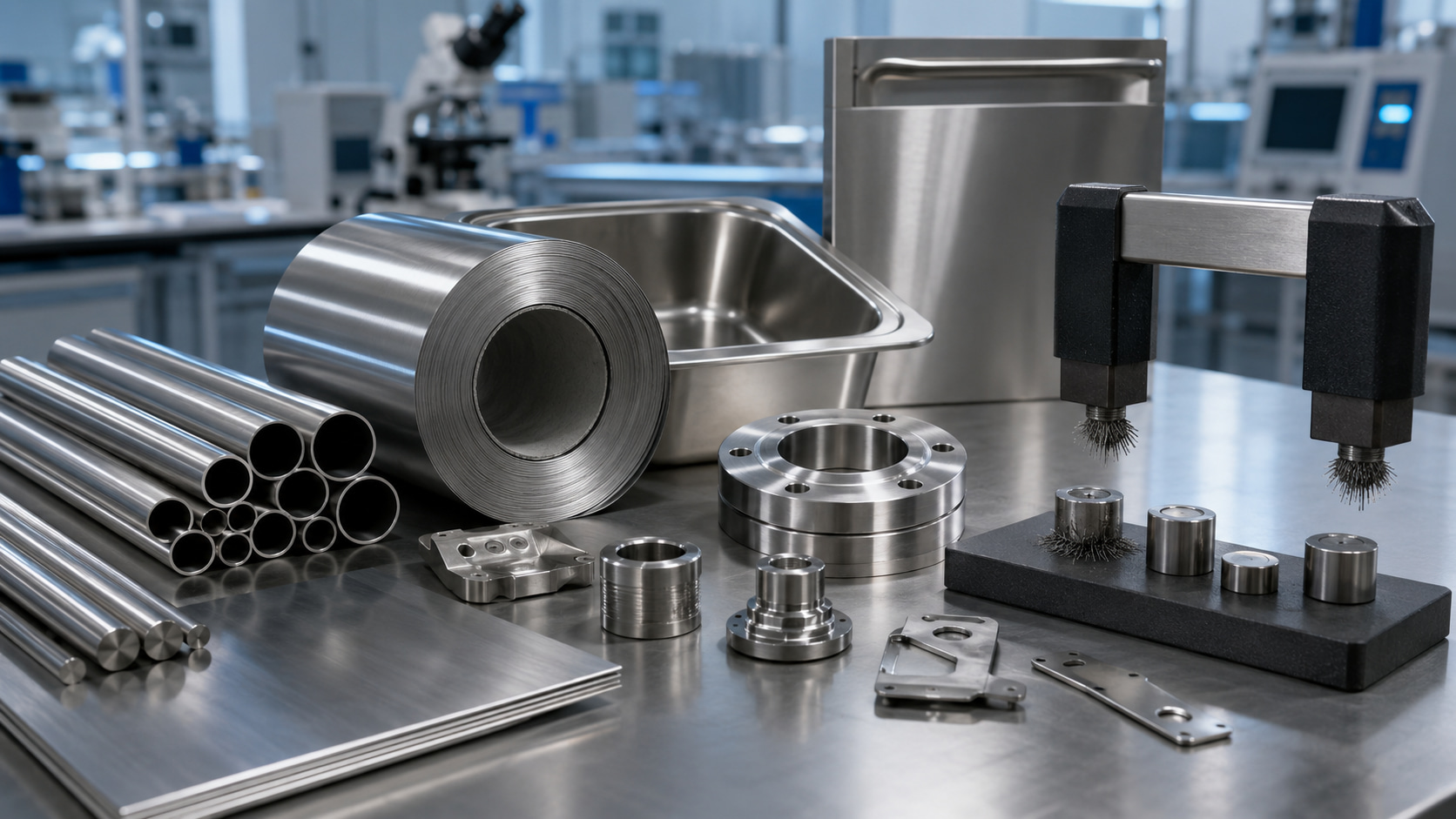
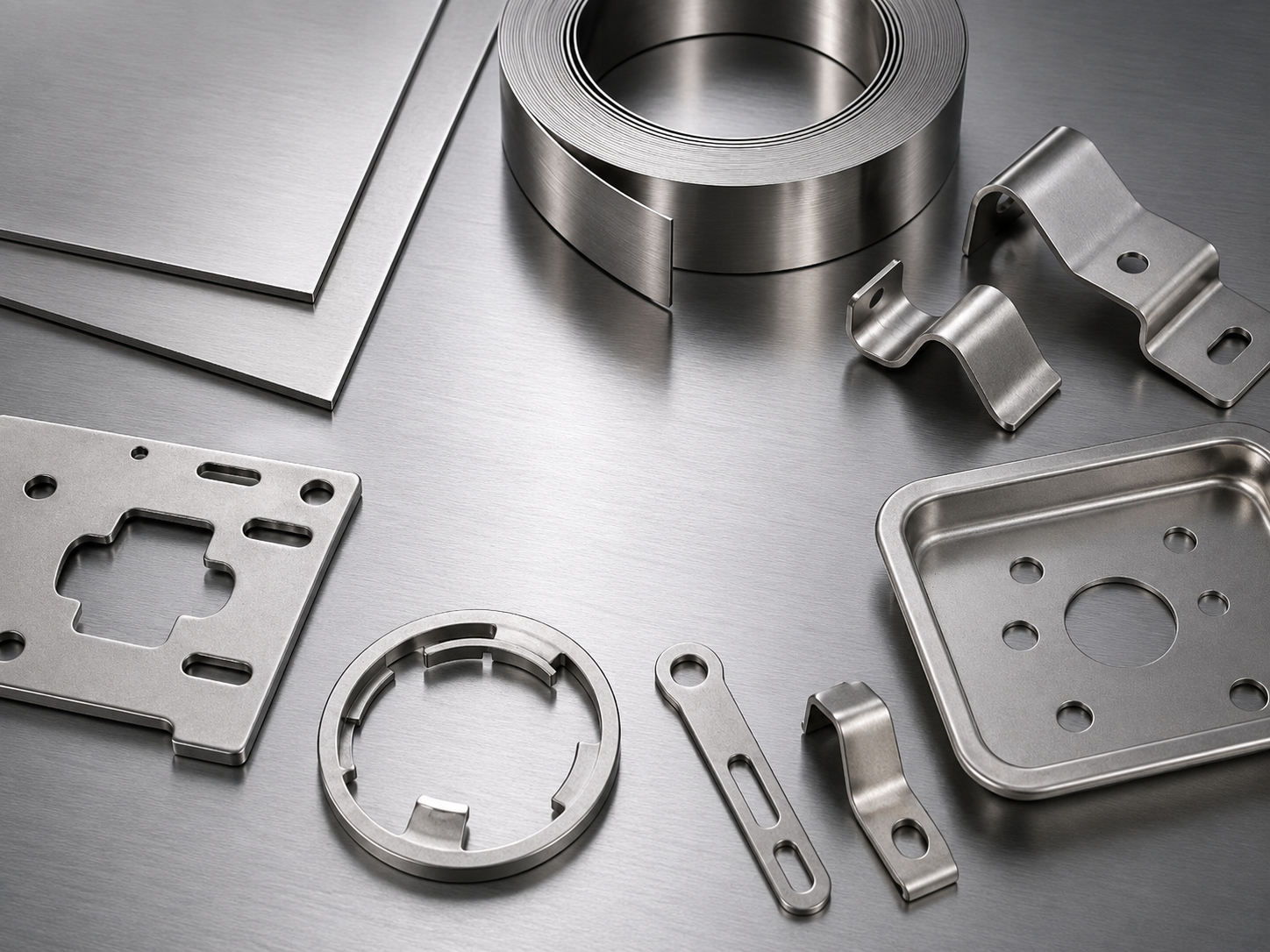
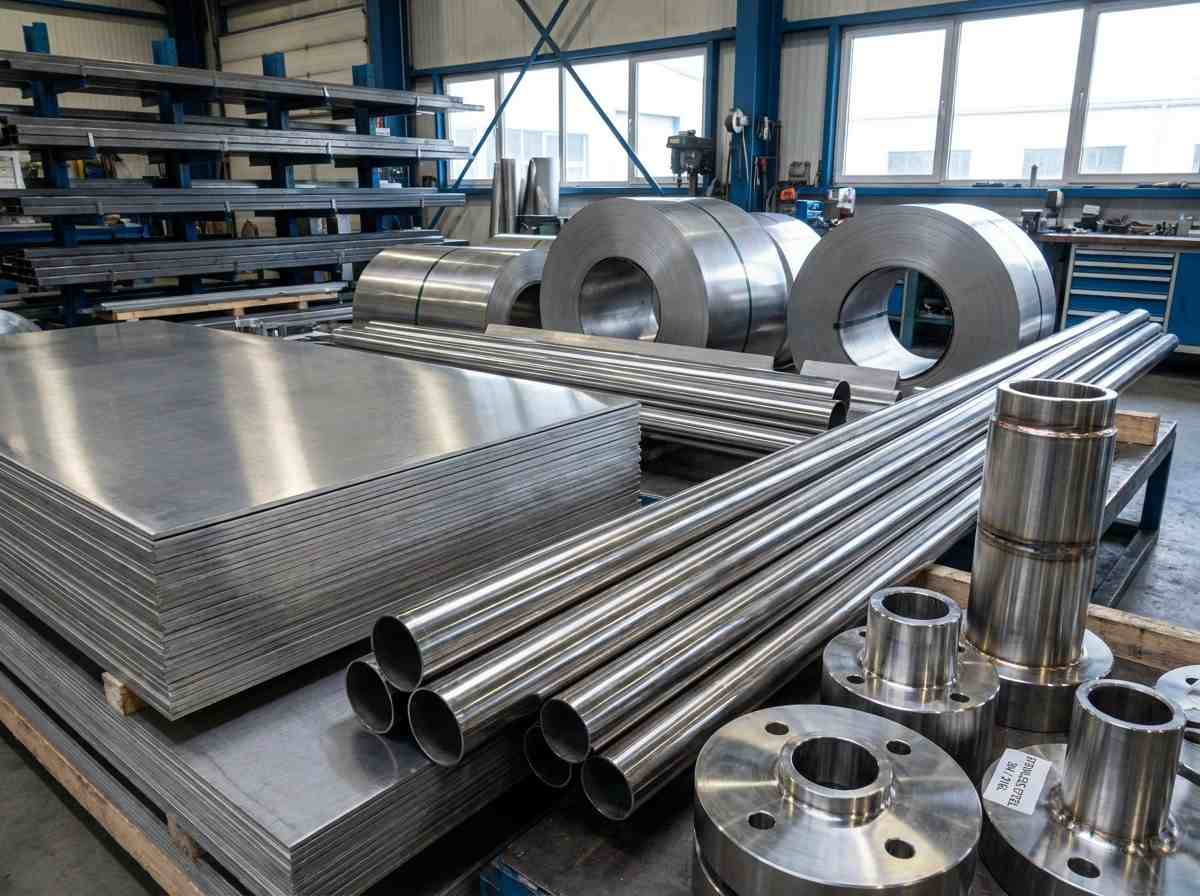
Non-magnetic stainless steel is more than a material that does not attract magnets. For buyers and OEMs, its value lies in low magnetic permeability, stable performance after stamping or forming, corrosion resistance, strength, and consistent part quality. This guide explains why some stainless steel becomes magnetic after processing and how to evaluate JSW20 for custom metal parts.
Why Industrial Buyers Care About Non-Magnetic Stainless Steel?
What Is Non-Magnetic Stainless Steel? A Practical Guide for Industrial BuyersWhen buyers search for stainless steel materials or custom stainless steel parts, they usually compare price, corrosion resistance, strength, surface finish, and delivery time. In some industries, magnetic performance becomes just as important.
At first, “non-magnetic stainless steel” sounds simple. Many people think it only means stainless steel that cannot be attracted by a magnet. This is partly true, but it is not enough for industrial purchasing. A simple magnet test gives only a rough result. In real B2B applications, metal parts often need stamping, bending, drawing, welding, polishing, plating, or assembly. Buyers need to know whether the finished part can still maintain low magnetic permeability after these processes.
A stainless steel sheet may show very low magnetism before production. After stamping, deep drawing, bending, rolling, riveting, or welding, its magnetic response may change. For common decorative parts, this may not matter. For garment accessories, electronic components, precision equipment, compressors, motors, and some new energy applications, unwanted magnetism can become a quality risk.
Garment exporters may need metal buttons, snap fasteners, rivets, or eyelets that can pass needle detection. Electronics buyers may need shielding covers or phone components that remain stable after precision forming. Industrial equipment buyers may need compressor valve plates or precision stamped parts that work reliably in sensitive environments.
For these buyers, non-magnetic stainless steel is not only a material name. It is a risk-control material. A buyer searching for supplier stainless steel may start with a broad material need, but the final purchasing decision often depends on the application. If a part must remain low-magnetic after forming, ordinary stainless steel may not be enough.
What Does “Non-Magnetic Stainless Steel” Really Mean?
Non-magnetic stainless steel means stainless steel with very low magnetic response. In professional material selection, this is related to magnetic permeability. The closer the relative magnetic permeability is to 1, the weaker the magnetic response.
This matters because “non-magnetic” does not mean the same thing in every application. Some buyers use a handheld magnet to check whether a part is magnetic. If the magnet does not stick, they may accept the material as non-magnetic. This may be enough for low-risk applications. But for stricter applications, such as garment needle detection, electronics, precision equipment, or magnetic-sensitive environments, a simple magnet test may not be enough.
Industrial buyers should ask more specific questions. What is the magnetic permeability before and after forming? Will the part be bent, drawn, welded, or assembled? Will the finished product need to pass a needle detector, magnetic tester, or customer-specific standard?
These questions help buyers avoid a common mistake. A stainless steel grade may not behave the same before and after processing. In many industries, the finished product is more important than the original sheet or coil.
For buyers purchasing industrial stainless steel products, this distinction is important. Industrial products need stable performance, repeatable quality, and batch consistency. If magnetic behavior becomes unpredictable after processing, the part may create quality problems even if the drawing and material name look correct.
Why Ordinary Stainless Steel May Become Magnetic After Processing?
A common misunderstanding in stainless steel purchasing is that all stainless steel is non-magnetic. In fact, stainless steel is a large alloy family. Some stainless steels are magnetic, some are weakly magnetic, and some are low-magnetic only under certain conditions.
Austenitic stainless steel is known for good corrosion resistance and low magnetic response in annealed or solution-treated condition. But cold working may change its magnetic behavior. Stamping, bending, drawing, pressing, and rolling can change the internal structure. As a result, a material that looks non-magnetic before processing may become weakly magnetic after forming.
This can create real problems. A garment accessory buyer may order stainless steel snap fasteners or jeans buttons for export garments. The raw material may pass a simple test. But after stamping, curling, assembly, polishing, and plating, the finished accessory may show magnetic response. If the part triggers a needle detector, the garment factory may face shipment delays, extra inspection costs, and customer complaints.
An electronics buyer may need a thin stainless steel part for a phone, laptop, tablet, or shielding application. These parts often need precision stamping and forming. If the finished part becomes more magnetic, it may fail to meet the design requirement or internal quality standard.
This is also important when buyers compare general suppliers, standard catalog parts, or stainless steel fasteners manufacturers. Standard hardware may work well for ordinary assembly. But if the final product must meet low-magnetic requirements, buyers need more than size, finish, and strength data. They need to confirm whether the material and process can keep the finished part low-magnetic.
JSW20: A Non-Magnetic Stainless Steel for Formed Components
JSW20 is a non-magnetic stainless steel material for parts that need to keep low magnetic behavior after processing. Its value is clear in products that need stamping, bending, forming, or welding before becoming finished components.
Many metal parts are not used as flat sheets. They are made into buttons, rivets, snap fasteners, shielding covers, phone components, valve plates, or other precision parts. The material must remain stable after manufacturing, not only before manufacturing.
JSW20 can remain non-magnetic under deformation below 60%. Its relative magnetic permeability is around 1.001, which means it has a very low magnetic response. After bending and welding, its magnetic permeability can also remain at a low level.
JSW20 also has useful mechanical performance. Its yield strength is not less than 350 MPa. Its tensile strength is not less than 650 MPa. Its elongation is not less than 40%. These properties matter because many custom parts must resist forming pressure, assembly pressure, pulling force, vibration, or repeated use.
Corrosion resistance is also important. JSW20 has good anti-rust performance in humid and water-vapor environments. This makes it suitable for parts that may contact moisture during storage, shipping, or use.
Many buyers compare common stainless steel grades before choosing a material. For example, buyers may search 304 vs 316 stainless steel strength to understand the difference between 304 and 316. This comparison is useful when the main concern is general strength or corrosion resistance. But if the finished part must remain low-magnetic after cold working, buyers need to go beyond common grade comparison.
Buyers may also search 316 vs 316l stainless steel to understand carbon content, weldability, and corrosion resistance. This information is useful, but it still does not answer one key question: can the stamped or formed part maintain low magnetic permeability?
This is where JSW20 becomes valuable. It is selected because it offers a practical balance of low magnetic response, forming suitability, strength, and anti-rust performance.
Where Non-Magnetic Stainless Steel Is Commonly Considered?
Non-magnetic stainless steel can be considered in several industries, but the material value is usually similar: it helps buyers reduce risk when finished parts must keep stable low magnetic behavior after processing.
In garment accessories, low-magnetic stainless steel can help reduce needle detector false alarms. This is relevant for snap fasteners, jeans buttons, rivets, eyelets, and other apparel hardware used in export garments.
In consumer electronics, small metal parts often require precision forming, clean surfaces, low burr levels, and stable batch quality. A supplier that only offers stainless steel cutting services may complete the cutting process, but many electronic components also require forming control, surface treatment, and finished-part testing.
In motors, compressors, pumps, valves, and appliance parts, buyers may need precision metal components that work near magnetic fields, moving systems, or vibration environments. Some buyers may search stainless steel industrial products to find these parts, but a general product description may not be enough if low magnetic behavior after processing is required.
In new energy applications, material selection may involve corrosion resistance, dimensional accuracy, forming stability, coating compatibility, and long-term reliability. Non-magnetic stainless steel is worth evaluating when low magnetic response, formability, corrosion resistance, and stainless steel strength are required together.
How to Compare Non-Magnetic Stainless Steel With Common Materials?
Industrial buyers often compare different materials before placing an order. Common options include 304 stainless steel, 316 stainless steel, 316L stainless steel, brass, aluminum, copper, titanium, and special non-magnetic stainless steel.
304 stainless steel is widely used. It is cost-friendly and suitable for many general applications. 316 stainless steel is often used when better corrosion resistance is required, especially in more demanding environments. Buyers who search stainless steel 316 composition usually want to understand why 316 performs differently from 304. Alloy composition can help explain corrosion resistance, but it does not automatically decide the magnetic behavior of the finished part after forming.
316L stainless steel has lower carbon content and is often used when weldability or corrosion resistance around weld areas is important. But if the application requires low magnetism, buyers still need to consider how the material behaves after cold working.
Brass is usually non-magnetic and easy to process, but it may not meet the required strength, stainless appearance, or corrosion resistance. Aluminum is lightweight and non-magnetic, but it may not fully replace stainless steel in strength or surface durability.
Special non-magnetic stainless steel such as JSW20 offers a different balance. It can keep low magnetic response after controlled deformation while providing stainless appearance, corrosion resistance, strength, and formability.
The best material depends on the final application. For general corrosion resistance, 304 or 316 may be enough. For welding-related corrosion resistance, 316L may be suitable. For decorative and low-load hardware, brass or aluminum may be considered. For parts that must remain low-magnetic after forming, JSW20 may be more suitable.
What Should Buyers Ask Before Ordering?
Before ordering non-magnetic stainless steel parts, buyers should prepare more than a target price. A clear inquiry helps the supplier recommend the right material and reduces quality disputes.
The first question is the final application. A garment snap fastener, phone shielding cover, compressor valve plate, battery component, and decorative metal part have different performance priorities.
The second question is whether the part needs to remain low-magnetic after processing. If yes, buyers should explain the expected processes, such as stamping, bending, drawing, welding, polishing, plating, or assembly.
The third question is the inspection method. A simple magnet test may be acceptable for some applications. For stricter projects, buyers may need magnetic permeability measurement, needle detector testing, or customer-specified testing.
The fourth question is the working environment, mechanical load, and surface finish. Will the part face sweat, humidity, salt spray, cleaning agents, vibration, burr control, flatness, or decorative requirements?
The fifth question is supplier capability. Can the supplier support finished-part manufacturing, not only raw material supply? Non-magnetic stainless steel parts depend on both material and process.
For buyers evaluating manufacturing of stainless steel parts, these questions can help separate basic processing from application-focused manufacturing.
Why Non-Magnetic Stainless Steel Is a Purchasing Risk-Control Tool?
Non-magnetic stainless steel is not only a material choice. It is also a purchasing risk-control tool.
For garment buyers, it can reduce the risk of needle detector false alarms. For electronics buyers, it can reduce material uncertainty after precision forming. For industrial equipment buyers, it can support stable performance in magnetic-sensitive environments. For distributors, it can create a more differentiated product supply. For importers, it can reduce quality complaints from downstream customers.
The lowest material price is not always the best choice. A cheaper material may lead to inspection failure, rework, shipment delay, rust claims, or unstable batch quality. In that case, the total cost may be higher.
Some buyers may compare local fabrication options, such as stainless steel fabrication los angeles, with overseas custom manufacturing. The right choice depends on lead time, quantity, complexity, cost, material availability, and application requirements. For low-magnetic custom parts, buyers should not compare suppliers only by location or price. They should also compare whether the supplier understands the material requirement and can deliver consistent finished parts.
In B2B sourcing, a material problem often becomes a business problem. Choosing the right non-magnetic stainless steel from the beginning can prevent many risks later.
The Value Appears in the Finished Part
Non-magnetic stainless steel is valuable because it supports finished parts that must keep stable low magnetic behavior after manufacturing.
The real question is not only whether the raw material is non-magnetic. The real question is whether the component can remain low-magnetic after stamping, bending, forming, welding, polishing, plating, or assembly.
For industrial buyers, this difference is critical. A finished garment accessory must pass inspection. A consumer electronics part must meet design requirements. An industrial part must work reliably. A distributor or importer must deliver stable quality to downstream customers.
JSW20 has practical value in this context. It combines very low magnetic permeability, stable behavior after controlled deformation, mechanical strength, formability, and anti-rust performance. It is suitable for applications that need higher stability than ordinary stainless steel can provide.
For buyers, a better approach is to define the final application first, then evaluate the material. Buyers should clarify whether the part must stay low-magnetic after processing, what environment it will face, what inspection it must pass, and what mechanical performance it must achieve.
Non-magnetic stainless steel is not just a simple metal category. It is a practical solution for custom components that need magnetic stability, corrosion resistance, strength, and manufacturing consistency.
Focused FAQ
What is non-magnetic stainless steel?
Non-magnetic stainless steel is stainless steel with very low magnetic response. In industrial applications, it is better evaluated by relative magnetic permeability, not only by a simple magnet test.
Is all stainless steel non-magnetic?
No. Stainless steel includes different alloy families. Some types are magnetic. Some are weakly magnetic. Some show low magnetism only under certain conditions.
Why does stainless steel become magnetic after stamping?
During stamping, bending, drawing, rolling, or other cold working processes, the internal structure of stainless steel may change. This can increase magnetic response.
Is 316 stainless steel always non-magnetic?
No. 316 stainless steel may show low magnetism in some conditions, but it cannot be guaranteed to remain fully non-magnetic after processing. Buyers should evaluate the finished part.
What is JSW20 non-magnetic stainless steel?
JSW20 is a non-magnetic stainless steel material for parts that need to keep low magnetic behavior after forming. It is suitable for applications that require low magnetism within a certain deformation range.
Is a magnet test enough for industrial purchasing?
A magnet test can be used as a quick rough check. But buyers should also consider magnetic permeability, processing method, final part shape, inspection standard, and application environment.
How should buyers choose a non-magnetic stainless steel supplier?
Buyers should choose a supplier that understands both material performance and finished-part manufacturing, including forming processes, corrosion resistance, surface treatment, inspection methods, sample testing, and batch consistency.
#Non-Magnetic Stainless Steel, #Low Magnetic Permeability Stainless Steel, #JSW20 Stainless Steel, #Non-Magnetic Stainless Steel Supplier, #Custom Stainless Steel Parts, #Stainless Steel Stamping Parts, #Needle Detector Friendly Hardware, #EMI Shielding Components, #Compressor Valve Plates, #Fuel Cell Bipolar Plates, #Industrial Stainless Steel Products, #B2B Stainless Steel Components