







Stainless Steel Rivets for Bags: Benefits and Applications
Stainless steel rivets improve bag durability by reinforcing handles, straps, corners, pockets, and bottom contact points. They help backpacks, luggage, handbags, outdoor gear, and tool bags withstand pulling, friction, moisture, and repeated use. This article explains why stainless steel and non-magnetic stainless steel are reliable choices for premium bag hardware.

Why Do Bags Need Rivets?
When people talk about bags, they usually think of fabric, leather, zippers, straps, and lining first. Rivets are often ignored. They are small and not very eye-catching. However, in bag construction, rivets play an important role.
The service life of a bag does not only depend on fabric thickness or stitching density. In many cases, the real weak points are the stress areas.
These areas include the strap connection, handle attachment, side hook position, bag opening corner, pocket edge, and bottom contact area. They face pulling, bending, friction, and weight every day. If these areas only rely on stitching, they may become loose, open, or deform after long-term use.
So what do rivets do in these positions?
Simply speaking, a rivet works like a small metal locking point. It can press several layers of material together and make the local structure more stable. When the strap is pulled, the force is not concentrated only on the stitching. It can be shared by the rivet and the surrounding material. This helps reduce the risk of loosening after long-term use.
In bag manufacturing, rivets are used not only for reinforcement but also for structural control. For example, if the handle of a business briefcase is not properly reinforced, users may feel that the bag is not secure. When the handle, corners, and strap areas are reinforced well, the whole product feels stronger and more reliable.
This is why many high-quality bags use metal rivets in key positions. They are not just decorative details. They are part of the structural design.
For consumers, rivets may look like small details. For manufacturers, they are closely related to durability, load-bearing performance, and after-sales risk. It is not difficult to make a bag look good in a store. The real challenge is to keep it stable after long-term use. Rivets are one of the important hardware parts that help bags maintain structural stability over time.
Why Are Bag Brands Paying More Attention to Stainless Steel Rivets?
In the past, bag hardware selection was often based on cost, color, and ease of processing. If the appearance was acceptable and the part could meet basic assembly needs, many brands would use it.
Today, the situation is changing.
Consumers use bags more heavily than before. A backpack may carry a laptop, charger, water bottle, documents, and daily items at the same time. A travel bag may go through airport check-in, car trunks, and outdoor environments. A commuter bag may contact sweat, rain, friction, and repeated opening every day.
These real use scenarios make hardware performance more important.
Why are stainless steel rivets gaining attention? One key reason is corrosion resistance. Ordinary metal rivets may develop rust, discoloration, or coating damage after long-term exposure to moisture, rain, or sweat. For bags, this affects not only appearance but also consumer trust in product quality.
Stainless steel rivets are more stable in these conditions. They are suitable for luggage, outdoor backpacks, sports bags, laptop bags, and leather handbags. In long-term use, frequent cleaning, or humid environments, stainless steel helps hardware maintain a better appearance and structure.
Another reason is strength.
Modern bags are becoming larger and more multifunctional. As bags carry more weight, straps, handles, and connection points face greater stress. High-quality stainless steel rivets can provide more stable fastening in these key areas. They are not easy to deform and can maintain better holding performance under repeated pulling.
Stainless steel also has a modern metal texture. It can show a natural silver finish. It can also be treated with brushed, matte, polished, or dark finishes. Whether the design style is business, outdoor, industrial, or minimalist, stainless steel rivets can fit well into the overall product design.
So the value of stainless steel rivets is not only durability. They also affect structure, appearance, touch, and brand quality.
In the premium bag market, consumers now pay more attention to details. A firm handle, a wear-resistant corner, or a metal part that does not fade easily can all influence how they judge a product. Rivets are small, but they are often one of the key details.
Applications of Stainless Steel Rivets in Different Types of Bags
Different bags require different rivet solutions.
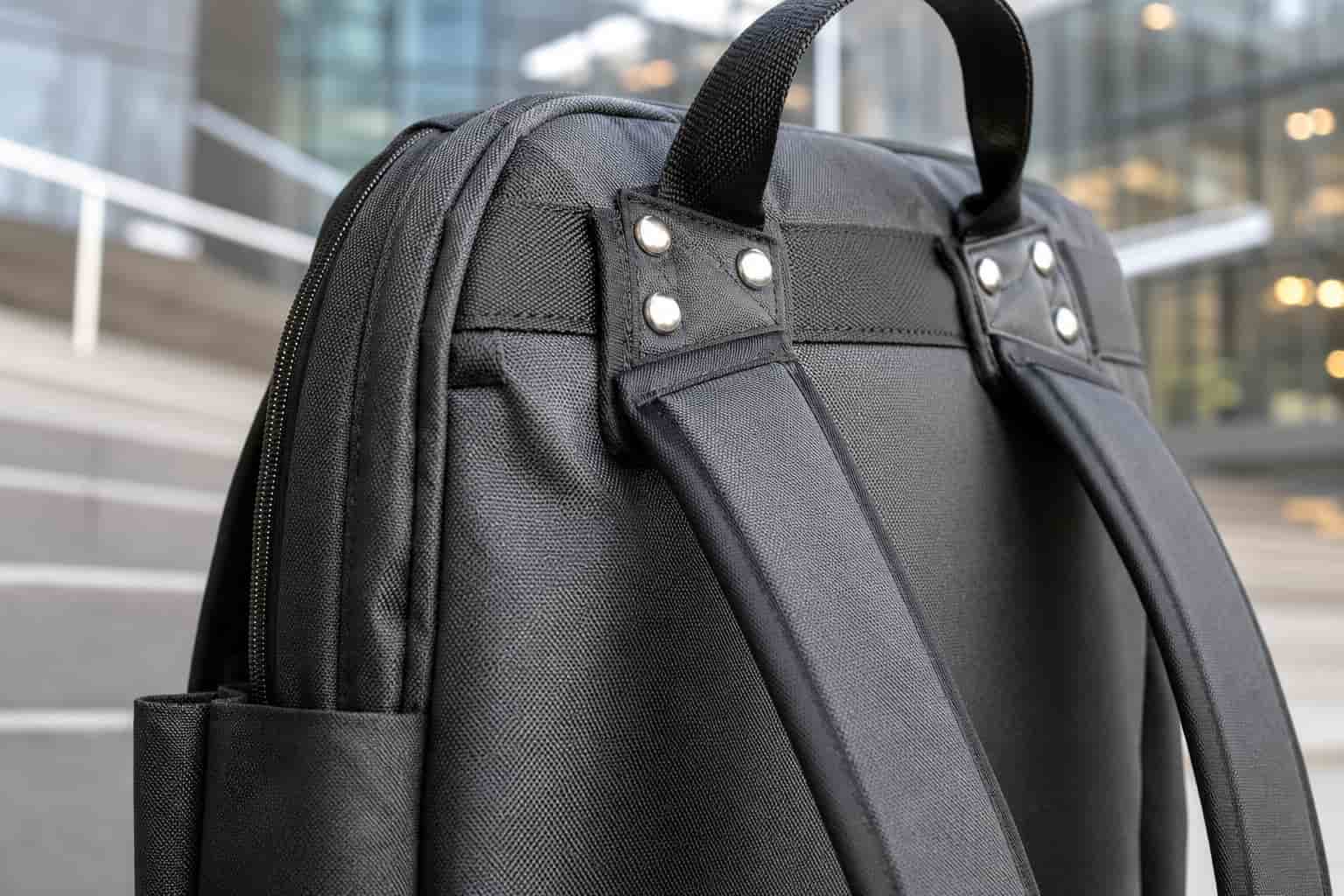
In backpacks, rivets are commonly used at the strap root and the connection area between the strap and the bag body. This position carries downward weight and outward pulling force every day. Student backpacks, laptop backpacks, and commuter backpacks are all high-frequency-use products. If the strap connection is not stable, the bag may suffer from seam opening or tearing. Reinforcement with stainless steel rivets can make the strap area more reliable.
In luggage and travel bags, rivets are often used for handles, pull-rod brackets, corner protectors, and edge structures. Travel bags face complex use conditions. They may be dragged, checked in, hit, or exposed to humid environments. In this case, rivets must not only fasten parts. They must also withstand impact and vibration. Stainless steel rivets offer better wear and corrosion resistance, so they are suitable for products designed for long service life.
In leather handbags, rivets have more than one function. They can reinforce the structure and also improve the visual design. Many leather bags use leather rivets around handle joints, flap areas, side structures, and bottom feet. These rivets can help stabilize the bag shape and add a more refined look.
For light luxury handbags and designer brands, the color, size, and surface finish of rivets can affect the overall visual style. A purse with rivets may look more structured, more decorative, or more distinctive, depending on the design.
In outdoor gear, rivets are more function-oriented. Hiking bags, tactical backpacks, camera bags, and camping equipment bags often face rain, mud, temperature changes, and long-term loading. These products require stronger hardware. Rivets must remain stable in complex environments. They should not rust easily or loosen under repeated pulling. Stainless steel rivets are suitable for these demanding applications.
In tool bags and professional work bags, rivets also help improve safety. Tool bags often carry heavy metal tools. If the connection parts are not strong enough, there may be a risk of failure during use. For this type of product, manufacturers usually pay more attention to rivet size, pressing strength, and material strength.
These applications show that bag rivets are not one single standard part. They must be selected based on product type, load requirements, appearance style, and use environment.
A fashion handbag needs refinement and balance. An outdoor backpack needs corrosion resistance and reliability. A travel bag needs impact resistance and long-term stability. A tool bag needs strong fastening.
This is an important point in bag hardware design: rivets should not be selected only by appearance or price. The right rivet should match the product positioning and the actual use scenario.
What Else Should Brands Consider When Choosing Bag Rivets?
For bag brands and manufacturers, rivet selection involves more than material.
The first factor is size. If the rivet is too small, it may not provide enough fastening force. If it is too large, it may affect the overall look of the bag or place too much pressure on the local material. Leather, canvas, nylon, and composite materials of different thicknesses need rivets with suitable length and diameter.
The second factor is installation. A good rivet must be made from the right material, but it must also be pressed correctly. If the pressing force is too weak, the rivet may loosen. If the pressure is too strong, it may damage the fabric or leather. In real production, rivets, material thickness, molds, and equipment must work together.
This is also why some manufacturers consider leather rivets and tools together during product development. The rivet itself matters, but the matching tool, mold, and pressing method also affect the final result.
For leather goods, some designers may use screw rivets for leather when the product needs a detachable or repairable structure. Others may choose fixed rivets when they need stronger permanent fastening. In handmade or small-batch production, leather craft rivets and leather working rivets are also common choices because they support both function and appearance.
The third factor is surface finish. Bag hardware is usually exposed, so consumers can easily see its color and texture. Bright silver fits modern and clean designs. Brushed finishes suit business bags. Gunmetal and matte black are good for outdoor and industrial styles. Antique brass is often used in vintage leather goods. Different finishes can change the overall character of the product.
The fourth factor is the use environment. If the product is mainly used for city commuting, design and surface texture may be more important. If it is used for outdoor, travel, or professional applications, corrosion resistance, load-bearing performance, and long-term stability become more important. If the product is exported or enters a special supply chain, brands may also need to consider how the hardware performs during inspection and quality control.
In this context, some premium or functional bag brands are paying attention to more stable material options, such as low-magnetic or non-magnetic stainless steel. These materials are not designed to replace all traditional bag hardware. They provide more options for specific products.
For example, outdoor bags exposed to moisture for long periods, premium handbags that need a clean appearance, and export products that require higher hardware stability may all consider higher-performance stainless steel materials.
Baocheng’s patented eco-friendly non-magnetic stainless steel can also be used for bag rivets, jeans buttons, snap buttons, and other metal accessories. It does not change the original product structure. Instead, it gives brands a more stable and durable hardware material option.
From a long-term perspective, bag hardware will not develop in only one direction. Vintage leather goods will still favor brass and antique finishes. Sports bags and outdoor bags will focus more on strength and corrosion resistance. Business bags and premium handbags will look for balance among texture, detail, and long-term stability.
The value of stainless steel rivets is reflected in these diverse needs.
They can be structural parts or decorative details. They can improve fastening strength and enhance product quality. For bag brands, choosing the right rivet is not only about selecting a small hardware part. It also affects how the product performs after long-term use.
A small stainless steel rivet may not be the first thing consumers notice when buying a bag. But during real use, it proves its value again and again. It makes the strap more stable. It makes the handle stronger. It makes the bag structure more reliable. It also helps the product stay in better condition over time and in different environments.
When brands compare different fastening options, they may also review solid rivet,rivet button, or rivet steel solutions depending on the required strength, material structure, and assembly method. The best choice is not always the most common one. It is the one that matches the bag’s function, design, and target market.
Focused FAQ
Why do bags need rivets?
Bags need rivets to reinforce high-stress areas such as handles, straps, corners, pockets, and bottom points. Rivets help spread pulling force and reduce the risk of loosening, tearing, or deformation.
Are rivets only decorative on bags?
No. Rivets can improve appearance, but their main value is structural reinforcement. In many bags, they help stabilize load-bearing areas and extend product service life.
Why are stainless steel rivets used in bags?
Stainless steel rivets offer corrosion resistance, strength, and long-term stability. They are suitable for bags exposed to moisture, sweat, rain, friction, cleaning, and frequent use.
What types of bags use stainless steel rivets?
Stainless steel rivets can be used in backpacks, luggage, travel bags, laptop bags, leather handbags, outdoor gear, tool bags, and professional work bags.
What should brands consider when choosing bag rivets?
Brands should consider rivet size, material thickness, installation method, surface finish, load requirement, use environment, and product positioning before choosing the right rivet solution.
Why does rivet installation matter?
Even a good rivet may fail if it is not pressed correctly. Rivet length, mold, equipment, material thickness, and pressing force must match to avoid loosening or material damage.
What is the value of non-magnetic stainless steel rivets for bags?
Non-magnetic stainless steel rivets provide better stability for premium, outdoor, export, and functional bag products that require corrosion resistance, durability, and low magnetic performance.
Can Baocheng’s non-magnetic stainless steel be used for bag rivets?
Yes. Baocheng’s non-magnetic stainless steel can be used for bag rivets, jeans buttons, snap buttons, and other metal accessories, giving brands a more durable and stable hardware material option.
#Stainless Steel Rivets for Bags, #Bag Rivets, #Metal Rivets, #Rivet Fasteners, #Custom Bag Hardware, #Leather Rivets, #Screw Rivets for Leather, #Backpack Rivets, #Luggage Hardware, #Travel Bag Hardware, #Handbag Rivets, #Purse with Rivets, #Outdoor Bag Hardware, #Tool Bag Rivets, #Corrosion Resistant Rivets, #Durable Bag Hardware, #Stainless Steel Bag Accessories, #Non-Magnetic Stainless Steel Rivets, #Low-Magnetic Bag Hardware, #Rivet Steel, #Solid Rivets, #B2B Bag Hardware Supplier, #Baocheng Metal Accessories
