







Metal Eyelets vs Plastic Eyelets: Performance, Appearance and Cost Trade-Offs
Metal and plastic eyelets can perform the same basic task: reinforcing an opening, protecting its edge and providing a controlled passage for a lace, cord, hook, strap or other component. However, they achieve that task through very different material properties and manufacturing methods.
Metal versions are generally selected for strength, dimensional stability, premium appearance and long-term mechanical performance. Plastic versions are valued for low weight, corrosion-free construction, electrical insulation, quiet operation and flexible molded colors.
Neither option is universally better. A metal eyelet can be unnecessarily heavy or expensive for a lightweight decorative product. A plastic eyelet can become the weak point in a high-load, high-temperature or long-term outdoor assembly.
The correct decision must therefore consider the substrate, expected load, environment, installation method, appearance and total installed cost.
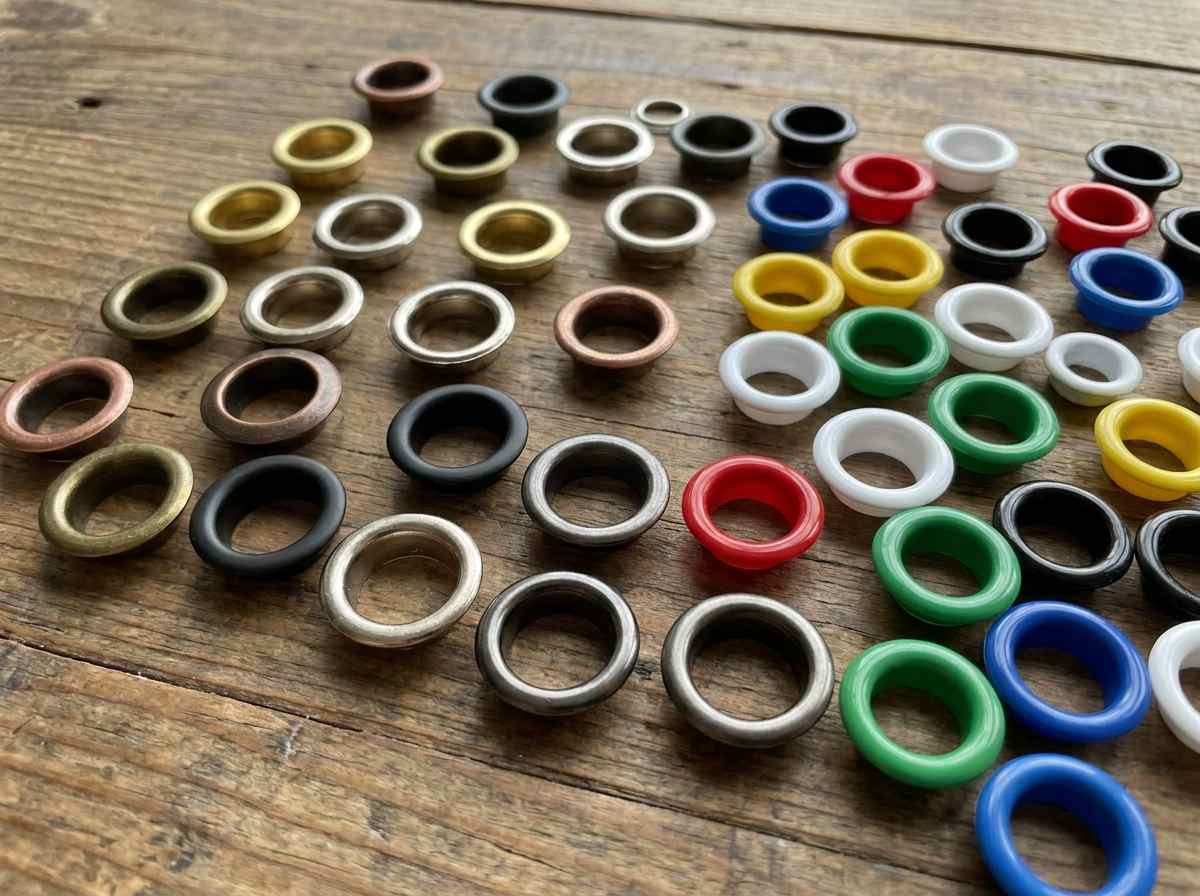
1. The Decision Is About the Complete Eyelet System
Metal and plastic represent two broad grommet types, but material alone does not determine performance. The complete system includes:
Flange diameter and profile
Inner diameter
Barrel or snap-fit structure
Backing washer or mating ring
Material-stack thickness
Hole diameter
Reinforcement
Setting or assembly method
Operating environment
Selecting a grommet material should begin with the failure that the eyelet must prevent. Is the main concern the eyelet pulling through the fabric, the opening deforming, corrosion, color fading, excessive weight or interference with needle-detection equipment?
Without defining that risk, comparing metal and plastic only by unit price can lead to the wrong conclusion.
2. Quick Comparison
|
Selection factor |
Metal eyelets |
Plastic eyelets |
|
Mechanical strength |
Generally higher |
Depends heavily on resin and wall thickness |
|
Dimensional rigidity |
High |
More affected by temperature, creep and molding conditions |
|
Weight |
Higher |
Lower |
|
Corrosion |
Depends on base metal and finish |
Polymer does not rust |
|
Magnetic response |
Depends on metal; special ultra-low magnetic materials are available |
Non-magnetic |
|
Electrical conductivity |
Conductive |
Usually insulating |
|
Heat resistance |
Generally higher |
Resin-dependent |
|
UV resistance |
Metal body is stable; finish still matters |
Requires suitable UV-stabilized resin |
|
Color options |
Plating, coating, painting or other finishing |
Molded color, coating or metallic decoration |
|
Premium appearance |
Strong metallic feel and luster |
Can be modern and colorful, but may look less premium in some markets |
|
Surface scratching |
May expose a different underlayer |
Through-color plastic can hide minor scratches |
|
Installation |
Usually crimped, rolled or flared |
Snap-fit, pressed, heat-staked or ultrasonically assembled |
|
Tooling cost |
Depends on stamping and setting dies |
Injection molds may require higher initial investment |
|
High-volume part cost |
Material and finishing remain important |
Can be economical at sufficient volume |
|
Recycling value |
Metal scrap usually has recovery value |
Depends on resin separation and recycling stream |
These are general tendencies. A reinforced engineering-plastic assembly may outperform a poorly designed thin metal eyelet, while a well-designed stainless steel eyelet can exceed the service life of ordinary plastic by a wide margin.
3. Strength and Pull-Out Performance
Metal eyelets
Metal provides high stiffness and strength in a relatively thin wall. This allows the flange and barrel to remain compact while supporting substantial forming and service loads.
During setting, the barrel can be rolled or flared into a permanent mechanical lock. With an appropriate washer, the load can be distributed over a larger rear-side area.
Metal is usually the stronger starting point for:
Repeated shoelace movement
Corset lacing
Bag straps and closures
Leather goods
Workwear
Outdoor covers
Tensioned banners
Curtain headings with frequent movement
However, metal strength does not automatically protect a weak substrate. If the surrounding fabric tears outside the flange or washer, using a harder metal will not solve the problem. Reinforcement, hole position and bearing area remain important.
Plastic eyelets
Plastic eyelets can perform well under moderate loads, especially when their flanges are wide and the substrate is stable. Because injection molding allows thicker sections and integrated ribs, a plastic design can distribute load without copying metal geometry.
Plastic performance depends strongly on the resin. Polypropylene, nylon, acetal, ABS and polycarbonate have different stiffness, impact resistance, moisture behavior, temperature limits and UV stability.
Long-term load is particularly important. Some plastics experience creep, meaning that they gradually deform under sustained stress even when the initial load is below the short-term breaking strength. An eyelet may therefore pass an initial pull test but loosen after months of continuous tension.
Buyers should request both immediate pull-out testing and, where relevant, cyclic or sustained-load testing.
4. Abrasion and Repeated Movement
Eyelets frequently interact with moving components. Shoelaces slide through footwear eyelets, curtain rods pass through curtain openings, and drawcords repeatedly rub against bag and apparel hardware.
Metal offers a hard, wear-resistant surface, but the inner edge must be properly rounded and free from burrs. A sharp metal edge can cut cords or damage fabric quickly.
Plastic generally creates a quieter and softer contact surface. It can be advantageous when:
The cord must move silently
The mating component has a delicate surface
Metal-to-metal contact should be avoided
The end product should not feel cold or hard
However, softer plastic can develop grooves after repeated rubbing. Reinforced plastics may resist wear better, but some fiber-filled materials can become abrasive if their surface wears and exposes reinforcement.
The choice should be based on the actual lace, cord, rod or hook rather than on the eyelet alone.
5. Moisture, Corrosion and Chemical Exposure
Plastic does not rust, which is a clear advantage in humid or wet environments. Nevertheless, “corrosion-free” does not mean unaffected by the environment. Resin can still absorb moisture, swell, soften, fade or become brittle depending on its chemistry.
Nylon, for example, can absorb moisture and experience dimensional change. Other polymers may resist water well but perform poorly against particular oils, cleaners or solvents.
Metal performance depends on the base material and surface treatment:
Brass offers useful corrosion resistance and good formability.
Plated steel can be economical but depends on coating integrity.
Stainless steel offers stronger inherent corrosion resistance.
Aluminum is lightweight but may need protection in certain environments
Decorative coatings must withstand both installation and service exposure.
Salt spray, perspiration, detergent, chlorine and industrial chemicals should not be treated as the same environment. A suitable eyelet for a washable garment may not automatically suit marine equipment or chemical-resistant covers.
6. Temperature, UV and Dimensional Stability
Metal normally maintains its shape across a wider temperature range than common plastics. It is often preferred near heat sources, during high-temperature processing or where tight dimensional stability is required.
Plastic expands and contracts more with temperature. It can soften under heat, become brittle in cold conditions or gradually distort under load. The actual limit depends on resin grade, additives and design.
Outdoor plastic eyelets should use an appropriate UV-stabilized material. Otherwise, prolonged sunlight can cause fading, chalking, loss of impact strength or cracking.
Metal itself is not degraded by UV radiation, but painted, coated or plated surfaces can still change color or lose adhesion. Outdoor approval should therefore cover the complete finished component rather than only the base material.
7. Appearance and Perceived Product Value
Material selection strongly affects how the finished product is perceived.
Metal provides genuine luster, weight and a cooler tactile feel. It is often associated with durability, premium fashion, leather craftsmanship and technical hardware. Plating can create nickel, gunmetal, antique brass, copper, gold, matte black and customized effects.
Plastic offers a wider range of molded colors and can match fabric, brand palettes or interior products without requiring electroplating. It can also create soft-touch, translucent, high-gloss or textured surfaces.
For black eyelets, plastic can be molded in a through-color material, so minor scratches may be less visible. A black metal finish can look more premium, but coating adhesion and barrel-forming resistance must be confirmed.
Similarly, silver eyelets may be stainless steel, nickel-tone plated metal or metallic-coated plastic. Color alone does not identify the base material. Buyers should specify both the required appearance and the underlying construction.
Plastic molding may leave gate marks, parting lines or slight color variation. Metal stamping can create draw marks, plating variation or forming marks. The acceptable surface standard should be established through approved physical samples.
8. Size and Dimensional Differences
Nominal grommet sizes should not be transferred directly between metal and plastic products.
Metal can normally achieve thinner walls and a smaller outside profile for the same functional opening. Plastic often requires greater wall thickness, larger snap features or reinforcement ribs.
Two products with the same inner diameter may therefore have different:
Flange outside diameters
Overall heights
Hole requirements
Backing structures
Edge distances
Material-stack ranges
Installed appearances
Plastic dimensions can also be affected by molding shrinkage and resin moisture. Metal dimensions can change during drawing, plating and setting.
Buyers should specify the finished inner diameter and allowable outside envelope rather than requesting only a nominal catalog number. An installed cross-section is especially useful when replacing a metal design with plastic or vice versa.
9. Installation and Tooling
Metal installation
Metal eyelets are generally inserted into a prepared hole and set by rolling, flaring or curling the barrel. The process may use:
Hand tools for prototypes
Manual presses
Pneumatic presses
Automatic feeding and setting equipment
Matched upper and lower dies
Stroke, alignment, barrel length and die geometry must be controlled. Excessive forming can split the barrel or crack the plating, while insufficient forming can leave the eyelet loose.
Plastic installation
Plastic eyelets may use:
Snap-together male and female rings
Press-fit structures
Flexible retaining tabs
Heat staking
Ultrasonic welding
Molded-in installation during another assembly stage
A snap-fit design may reduce the need for permanent deformation, but its retention depends on tab geometry, resin flexibility and stack thickness. Repeated removal is not always possible; some snap structures are damaged during disassembly.
Tooling must match the actual material and component design. A metal setting die should not be used on plastic unless the supplier has specifically validated the method.
10. Cost Should Be Evaluated as Total Installed Cost
Plastic is often assumed to be cheaper, but the answer depends on quantity, tooling, resin, color, geometry and assembly method.
A custom plastic eyelet may require an injection mold with a significant initial cost. At sufficiently high volume, a short molding cycle and molded-in color can produce a competitive unit price. At low volume, tooling amortization may make plastic less attractive than a standard metal size.
Metal cost can include:
Strip or coil material
Stamping and drawing
Deburring
Heat treatment, where required
Electroplating or coating
Color control
Inspection
Matched washers
Setting tools
Plastic cost can include:
Resin and additives
Color masterbatch
Mold development
Molding-cycle time
Runner or gate control
Secondary decoration
Assembly of mating rings
Dimensional conditioning
UV or flame-retardant formulation
Other costs include installation labor, reject rate, packaging volume, freight weight, repair risk and expected service life.
A lower-priced plastic component may become expensive if it deforms and causes product returns. A higher-priced metal component may be unnecessary if the application carries almost no load.
11. Copper-Based Materials and the JSW20 Alternative

Traditional brass grommets are widely used because brass combines formability, corrosion resistance and an authentic metal appearance. Their cost, however, is influenced by copper-based raw-material pricing.
Products described as copper grommets should also be checked carefully because the commercial name may refer to a copper-colored finish, a brass alloy or a true copper-rich base material. The metal composition should be confirmed rather than inferred from color.
When copper and copper-alloy input costs rise, buyers may seek a lower-cost material that still provides corrosion resistance, mechanical strength and very low magnetic response.
Conventional 304 and 316 stainless steel are generally considered low magnetic in their annealed condition. However, stamping, drawing and other cold-working operations can introduce weak magnetic response in the finished eyelet. This matters when customers evaluate the completed component with sensitive needle-detection or magnetic-control equipment.
Baocheng’s patented JSW20 ultra-low magnetic permeability stainless steel is designed to remain near non-magnetic after stamping and forming. For projects that need a metallic eyelet, affordable pricing and reliable low magnetic response, JSW20 can be an ideal alternative to copper-based materials when the required forming, corrosion and finish conditions are compatible.
Its practical value includes:
Ultra-low magnetic permeability in the formed component
Stainless steel corrosion performance
Mechanical strength
Compatibility with precision stamping
Reduced dependence on copper-based material pricing
A competitive solution for needle-detection-sensitive products
Baocheng holds a patent certificate for JSW20. The company supplies finished eyelets and customized hardware made from the material rather than selling raw JSW20 sheet or coil.
12. Application-Based Selection
Apparel
A fabric eyelet used only for ventilation or decoration may work well in plastic, especially when low weight, soft contact or an exact molded color is important.
Metal is usually preferred when the eyelet experiences repeated lacing, contributes to a premium appearance or must remain dimensionally stable through washing and extended use.
Footwear
Metal generally provides better resistance to repeated lace movement and concentrated side loading. Plastic can suit lightweight footwear, children’s products or designs where reduced weight and quiet contact are priorities. Cold-weather impact resistance should be considered.
Bags and luggage
Metal often supports premium appearance and high-load drawcord, strap or closure points. Plastic is useful for lightweight sports bags, packaging bags and designs requiring non-corrosive or color-matched components.
Curtains and interior textiles
Plastic rings are common in grommet curtains because they are lightweight, quiet on the rod and available in many molded colors. Metal alternatives can provide a more premium appearance and greater rigidity but may be heavier and noisier during movement.
Banners and outdoor textiles
Metal is usually the stronger starting point for tensioned openings and long-term outdoor use. Plastic can work for short-term displays or environments where rust prevention and low weight are more important than maximum pull resistance. UV stability must be confirmed.
Electronics and magnetically sensitive products
Plastic provides electrical insulation and is inherently non-magnetic. When a conductive, heat-resistant or mechanically strong metal component is required, JSW20 offers a low-magnetic option without changing to plastic.
Packaging and promotional products
Plastic can provide low weight, bright colors and economical high-volume molding. Metal can create a more premium feel and may be easier to source in standard sizes for smaller production runs.
13. A Practical Buyer Decision Framework
Choose metal as the starting point when:
The opening carries high or repeated load
Thin walls and compact geometry are required
The product needs a genuine metallic appearance
Heat resistance and dimensional stability are important
Long service life is expected
The eyelet must withstand aggressive installation
A plated, antique or polished finish is required
An ultra-low magnetic metallic solution such as JSW20 is appropriate
Choose plastic as the starting point when:
Low weight is important
Electrical insulation is required
The product must be inherently non-magnetic
Quiet sliding contact is desirable
Bright or fabric-matched molded colors are needed
The environment creates rust concerns
The load is moderate
Production volume supports injection-mold investment
Do not finalize the choice until the component has been installed in the actual substrate and tested under realistic use conditions.
14. What Buyers Should Include in an Inquiry
A useful inquiry should include:
Product application
Preferred metal or plastic construction
Actual substrate
Number of material layers
Minimum and maximum stack thickness
Required finished inner diameter
Maximum permitted flange diameter and installed height
Hole diameter
Load direction and target pull performance
Temperature range
Moisture, chemical and UV exposure
Desired color, gloss and texture
Metal plating or plastic color reference
Magnetic or electrical requirements
Existing installation equipment
Compliance-document requirements
Estimated order volume
For replacement projects, send the existing eyelet and an installed product sample if possible. A photograph alone may not show barrel length, wall thickness, washer structure or snap geometry.
15. Custom Metal and Plastic Eyelets From Baocheng
JiaShan BaoCheng Clothing Accessories Co., Ltd. is a factory-and-trading integrated supplier whose core manufacturing strength is stamped metal hardware. Baocheng provides metal eyelets in common and customized materials, including JSW20 ultra-low magnetic permeability stainless steel, conventional stainless steel, brass, steel and other suitable options.
Although Baocheng specializes in metal stamping, the company also provides plastic eyelets for projects where low weight, molded color, corrosion-free construction or electrical insulation is more appropriate.
Customization can include:
Inner diameter
Flange outside diameter
Barrel length or snap structure
Overall size
Washer or mating-ring design
Metal base material
Plastic resin selection
Molded color
Metal electroplating
Gloss, matte or antique appearance
Logo or decorative details where technically feasible
Packaging and inspection requirements
For a reliable comparison, customers should provide a drawing, existing sample, clear photographs and actual material swatches. Baocheng can evaluate whether metal, plastic or both should be sampled before bulk production.
Relevant documentation can be reviewed for applicable products and projects, including the JSW20 patent certificate, OEKO-TEX documentation, Intertek reports, RoHS, REACH and nickel-release-related documents. The precise scope must match the selected material, color, plating process and product construction.
Conclusion
Metal eyelets provide strength, rigidity, heat resistance and an authentic premium finish. Plastic eyelets offer low weight, molded colors, electrical insulation, quiet movement and freedom from rust.
The right choice depends on the application. Buyers should compare not only unit price but also tooling, installation, failure risk, service life and appearance.
For projects needing the performance of metal without the weak magnetic response that may develop in cold-worked conventional stainless steel, Baocheng’s patented JSW20 offers a cost-effective alternative—particularly when rising copper-based material costs make brass or copper solutions less attractive.
Focused FAQ
1. Are metal eyelets always stronger than plastic eyelets?
Metal generally offers higher stiffness and strength in a compact section. However, flange size, washer design, substrate strength and installation quality can allow a well-designed plastic eyelet to outperform a poorly installed metal one.
2. Can plastic eyelets be used outdoors?
Yes, if the resin has suitable UV, temperature and weather resistance. Ordinary plastic without UV stabilization may fade, lose impact strength or crack after prolonged outdoor exposure.
3. Which material is better for washable clothing?
Both can work. Metal requires suitable corrosion-resistant material and finishing, while plastic must tolerate washing temperature, detergent and repeated flexing. Installed-product testing is recommended.
4. Why are plastic eyelets commonly used for curtains?
They are lightweight, quiet when sliding on a rod and available in many molded colors. Their larger wall thickness and snap-together structure are also suitable for many curtain designs.
5. Can metal and plastic eyelets use the same dimensions?
Not automatically. Plastic usually needs thicker walls and different retaining features. Even if the inner diameter is identical, the flange, hole diameter, installed height and tooling may differ.
6. Is plastic always cheaper than metal?
No. Plastic can be economical at high volume, but custom injection-mold investment may make it expensive for smaller orders. Metal may be more economical when standard tooling, sizes and finishes are available.
7. Why can 304 or 316 stainless steel eyelets show weak magnetism?
Cold working during stamping and drawing can change the microstructure of conventional austenitic stainless steel, creating measurable magnetic response in the finished component.
8. How does JSW20 differ from conventional stainless steel?
JSW20 is Baocheng’s patented ultra-low magnetic permeability stainless steel. It is designed so that finished stamped and formed components remain near non-magnetic while retaining useful stainless steel strength and corrosion performance.
9. Can Baocheng customize plastic eyelets as well as metal ones?
Yes. Baocheng can supply customized metal and plastic eyelets, including different inner diameters, flange sizes, overall dimensions, colors, materials and suitable finishing options.
10. What should a buyer send before requesting samples?
Send a dimensional drawing or existing sample, clear product photographs, actual substrate, thickness range, color requirement, operating environment, load expectations and information about the intended installation process.
#Metal Eyelets, #Plastic Eyelets, #Eyelet Material Selection, #Custom Eyelets, #Apparel Hardware, #Curtain Hardware, #Bag Hardware, #Global Sourcing, #North America, #Europe, #United Kingdom, #Asia-Pacific
