






Metal Eyelets for Banners and Display Fabrics: A Practical Guide for B2B Buyers
Metal eyelets for banners are small but essential hardware parts that affect installation, durability, repeated use, and customer handling. For banner makers, printing companies, display fabric suppliers, event material manufacturers, and project buyers, choosing the right eyelets means considering material, size, spacing, edge design, finish, fabric thickness, fixing method, and use environment. This guide explains how quality metal eyelets help reduce tearing and deformation.
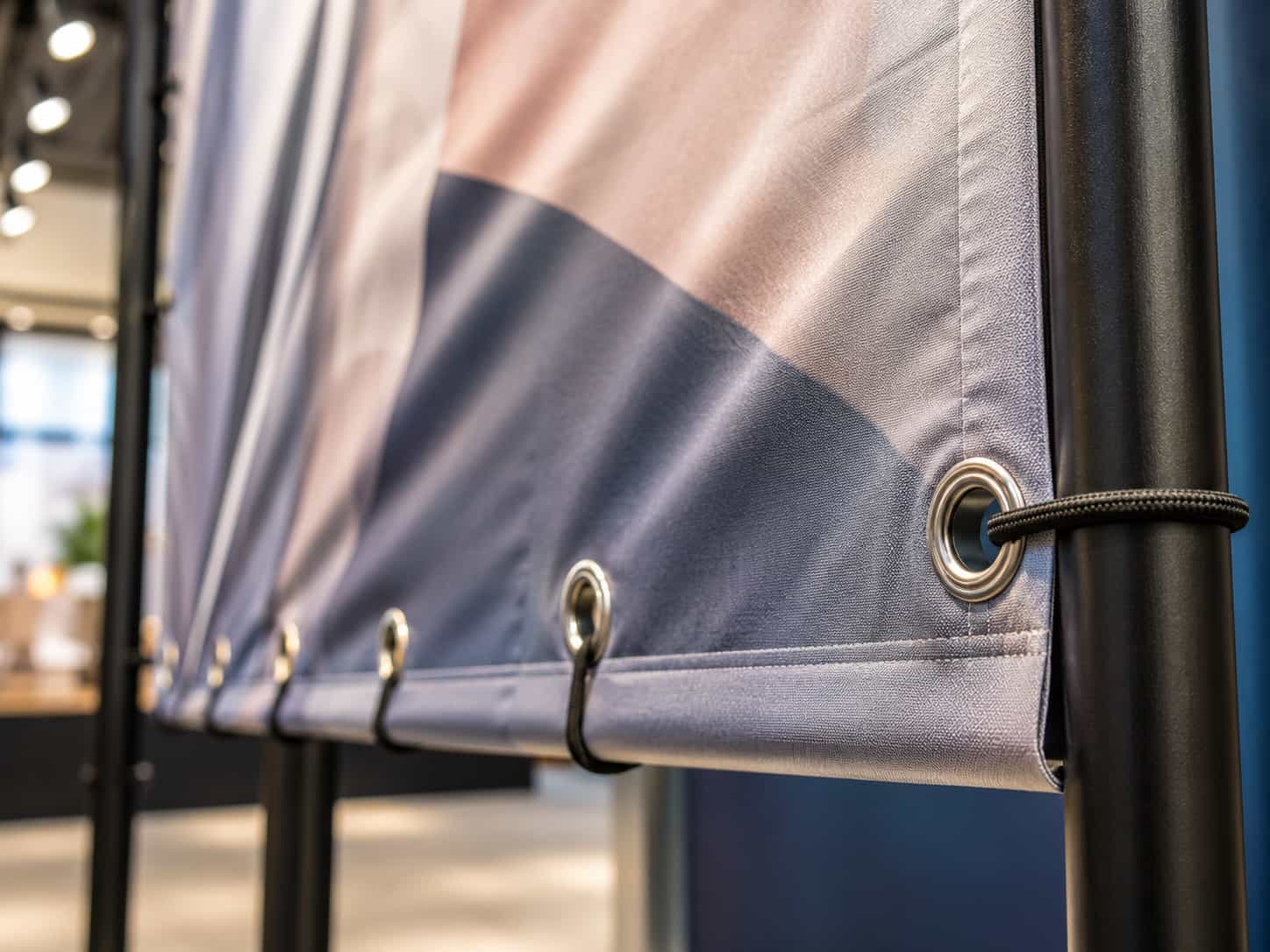
Why Banners Need More Than Good Printing
A banner needs clear printing, strong color, and a good design. But these are not enough to keep it in place during real use. In many cases, the small metal eyelets for banners along the edges decide whether the banner can handle wind, pulling, repeated installation, and long-term display.
This is especially important for outdoor advertising banners, trade show backdrops, mall hanging signs, construction banners, event displays, and printed display fabrics. These products are often installed, removed, folded, packed, transported, and installed again. During this process, the fixing points carry repeated stress.
If a banner is only punched with holes and ropes or zip ties pass directly through the fabric, the material around the holes may wear quickly. When wind pushes the banner, the pulling force concentrates around the holes. Over time, the holes may become larger. The edge may deform. In serious cases, the banner may tear.
This is why banner eyelets or grommets are widely used around fixing points. They create stronger, cleaner, and more stable holes. Ropes, zip ties, bungee cords, hooks, screws, or frame systems can pass through the eyelets instead of rubbing directly against the fabric.
For B2B buyers, this detail matters because eyelets affect more than installation. They influence delivery quality, final appearance, customer satisfaction, and after-sales risk. If the banner hole tears during use, customers may not complain about one small eyelet. They may think the whole banner was poorly made.
So the real value of eyelets for banners is not only helping the banner hang. They help the banner stay fixed longer, look cleaner, and perform better in real environments.
How Metal Eyelets Protect Banner Edges
The main function of fabric eyelets is to create a reinforced fixing point. A banner edge is usually one of the most stressed areas of the product. It is where the material is pulled, tied, hooked, tightened, and exposed to wind movement.
Without reinforcement, the fabric hole becomes a weak point. Even if the banner material itself is strong, the hole edge may fail because stress is concentrated in a small area. This is common in large outdoor banners, construction site banners, event fences, and temporary promotional displays.
A metal eyelet changes how force is distributed. Instead of allowing the rope or zip tie to pull directly against the fabric, the eyelet creates a hard, stable ring around the hole. The force is spread through the eyelet and the surrounding fabric area. This helps reduce tearing risk.
Eyelets also help keep the hole shape stable. In banners without eyelets, holes may stretch into uneven shapes after repeated use. This can make the banner look messy and difficult to reinstall. A well-pressed eyelet helps the hole remain round, clean, and usable.
Another benefit is installation convenience. Installers can pass ropes, hooks, or zip ties through the eyelets more easily. For trade shows and event projects, installation time matters. A banner that is easier to install and remove can reduce labor pressure and improve project efficiency.
For printing companies and display suppliers, this means metal eyelets for fabric should not be treated as optional accessories. They are part of the product structure.
Choosing Eyelets Based on Banner Material
Different banner materials require different eyelet solutions. If every banner uses the same eyelet, purchasing may seem simple, but production and installation problems may appear later.
Vinyl banners are one of the most common materials for outdoor advertising. They are strong, practical, and suitable for printed promotional content. However, vinyl thickness may vary. Thicker vinyl may require stronger eyelets, wider rims, or higher pressing strength.
Mesh banners are often used in windy environments. Their open structure reduces wind pressure, making them suitable for fences, building sites, stadiums, and outdoor events. However, mesh structure also means the eyelet must work well with the reinforced edge. If the edge is weak, the fixing point may still fail.
Fabric banners are often used indoors for exhibitions, retail displays, brand promotion, and trade show booths. They look softer and more premium than some outdoor materials. For these products, eyelet quality affects both function and appearance. A rough eyelet edge or uneven pressing can reduce the professional look of the display.
Canvas and PVC-coated fabrics are used in heavier-duty applications. They may require stronger metal eyelets for fabric because the material is thicker and the banner may be used in more demanding environments.
Display textiles may also require special attention. Some materials are softer, more flexible, or more sensitive to edge damage. For these fabrics, the eyelet size, rim width, and pressing process must be carefully matched.
The key point is simple: the eyelet must match the material. Buyers should not choose eyelets only by price or appearance. They should consider fabric thickness, flexibility, tear strength, coating type, edge structure, and installation method.
Eyelet Size, Spacing and Edge Reinforcement
Choosing the right eyelet grommet is not only about inner diameter. Size, spacing, rim width, and edge reinforcement should be considered together.
For small banners, eyelets at the four corners may be enough. These banners may be used indoors, in shops, or for short-term events. The load is usually limited.
For long banners, large outdoor banners, or banners used for longer periods, extra eyelets should be placed along the edges. If the spacing is too wide, pulling force may concentrate on a few points. This increases the risk of tearing, especially in windy conditions.
Good spacing helps spread the load more evenly. It also keeps the banner flatter and more stable after installation. This is important for outdoor advertising banners, construction banners, stage backdrops, and large event displays.
Edge reinforcement is equally important. An eyelet can protect the hole, but it cannot solve every structural problem alone. If the banner edge is too thin, or if there is no hem, heat-sealed edge, stitched edge, or reinforcing tape, the edge may still fail under long-term pulling.
For outdoor banners, eyelets for fabric and edge reinforcement should be designed together. A strong eyelet installed on a weak edge may not perform well. A reinforced edge with poor eyelets may also fail. The complete system matters.
Buyers should ask suppliers whether the eyelet size matches the material thickness, whether the rim can cover the hole properly, and whether the pressing process can hold the fabric securely without damaging it.
Matching Eyelets with Fixing Methods

Different fixing methods create different stress patterns. This is why banner eyelets should be selected according to the actual installation method.
Ropes are common and flexible. They can be used for fences, walls, frames, and temporary structures. However, if ropes are tied too tightly, they may create strong pulling force on the eyelets.
Zip ties are widely used because they are fast and convenient. They are common in construction sites, events, and temporary advertising. But zip ties may create strong local tension, especially if installers pull them too tight. For this reason, eyelet strength and edge reinforcement become important.
Bungee cords are useful for outdoor banners because they can absorb some movement caused by wind. Instead of forcing the banner to stay completely rigid, they allow slight movement and reduce sudden pulling stress.
Hooks and screws are often used in fixed display systems. They may create more stable support, but the eyelet must still be strong enough to resist long-term wear around the fixing point.
Frame systems may require more accurate eyelet spacing and size. If the eyelets do not align with the frame correctly, installation becomes difficult and the finished display may look uneven.
Because of these differences, the right grommets eyelets solution must match the fixing method. Buyers should explain how the banner will be installed before confirming hardware. The more clearly the supplier understands the application, the better the eyelet recommendation will be.
Why Eyelet Quality Matters in Bulk Production
For banner makers, printing companies, display fabric suppliers, and event material manufacturers, eyelet quality affects production efficiency as well as final performance.
The first issue is size consistency. Inner diameter, outer diameter, rim width, and height should remain stable from batch to batch. If size changes, workers may face uneven pressing results. Some eyelets may press firmly, while others may loosen. This increases rework and slows production.
The second issue is edge finishing. Many banner materials are made from PVC, coated fabric, mesh fabric, or functional textiles. If the eyelet edge has burrs or rough areas, it may scratch the material. It may also affect the final appearance. For trade show displays and brand promotion banners, clean appearance is very important.
The third issue is pressing stability. A good eyelet should press smoothly and hold the material firmly. If the eyelet deforms during pressing, the finished banner may look poor or fail during use.
The fourth issue is surface treatment. Outdoor banners, construction banners, and large display fabrics may face rain, humidity, sunlight, dust, and pollution. Low-quality eyelets may oxidize, discolor, or rust. Once rust appears, it may stain the fabric and damage the customer’s trust in the product.
This is why eyelets and grommets should be evaluated as production components, not only as small accessories. For bulk orders, stable hardware reduces defect rate, improves assembly speed, and supports consistent quality.
Why Stainless Steel Eyelets Are a Higher-Grade Option
Many standard banner eyelets are made from common metal materials. They can work well for short-term or low-cost applications. However, for outdoor, premium, long-term, or high-frequency-use projects, stainless steel eyelets can provide stronger performance.
The first advantage is corrosion resistance. Banners used outdoors may face rain, humidity, salt air, cleaning agents, or industrial pollution. If the eyelets rust, they may stain the banner and reduce its appearance. Stainless steel offers better long-term stability in many demanding environments.
The second advantage is strength. Large banners and display fabrics may face pulling, folding, packing, shipping, and repeated installation. Stainless steel provides better resistance to deformation than many lower-grade metal options.
The third advantage is appearance. Stainless steel has a clean, professional metal texture. It can support different finishes depending on the project requirement. For premium display fabrics, event materials, and brand promotion banners, hardware appearance can influence the perceived quality of the final product.
The fourth advantage is long-term reliability. For construction banners, outdoor advertising cloth, exhibition display fabric, and commercial display textiles, replacing damaged hardware can be costly. A better eyelet material can reduce maintenance and replacement risk.
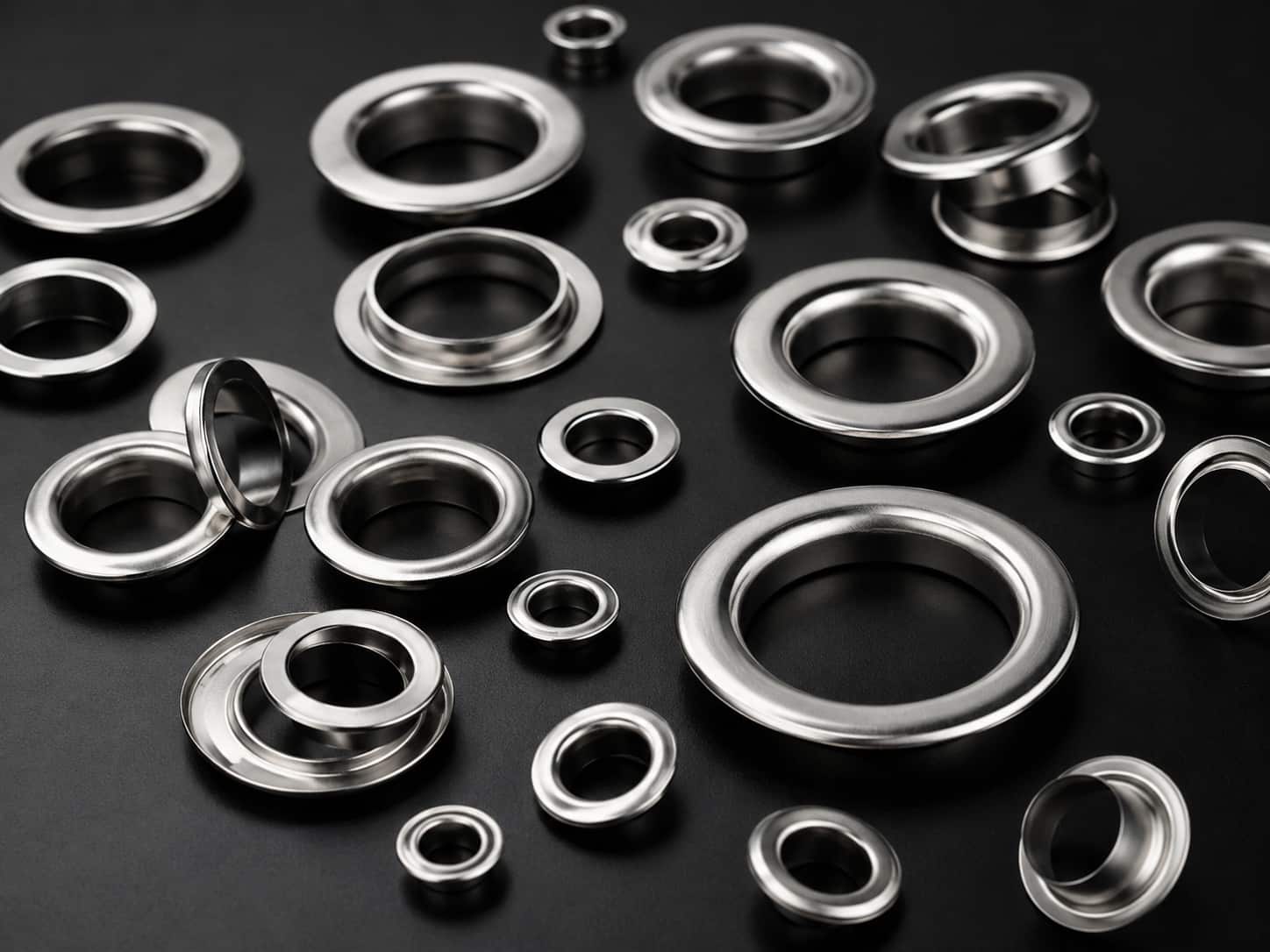
Baocheng’s patented JSW20 ultra-low magnetic permeability stainless steel can also be used for related hardware development. For projects that require corrosion resistance, stable dimensions, low magnetic performance, and long-term finished-part reliability, JSW20 can provide a more advanced material option.
Baocheng does not simply position this as raw material supply. We support finished eyelets and customized metal components based on customer drawings, material requirements, fabric thickness, hole requirements, surface finish, and application environment.
Custom Eyelets for Special Display Fabrics
Not all banner and display fabric projects can use standard eyelets. Some materials are thicker. Some are softer. Some have special coatings. Some are used outdoors for months. Some are used indoors where appearance is more important than extreme strength.
This is where custom development becomes useful.
Baocheng can develop custom banner eyelets and fabric metal eyelets based on actual product needs. For thick PVC-coated fabric, a stronger eyelet may be needed. For trade show display textiles, a cleaner edge and better surface finish may be more important. For outdoor advertising cloth, corrosion resistance and pressing strength may be the priority.
Custom eyelets can also help brands improve product differentiation. Instead of using the same standard hardware as competitors, display fabric suppliers can choose different sizes, finishes, and materials to match their own product positioning.
Surface finish can also be customized. Silver, nickel, matte black, gunmetal, brushed finishes, and other surface effects can help the eyelet match the display design. For visible banners and brand displays, this detail can improve the final look.
For B2B buyers, custom eyelet development should begin with clear information. The supplier should know the fabric type, material thickness, hole size, edge structure, fixing method, outdoor or indoor use, expected service life, and finish requirement.
Practical RFQ Checklist for Banner Eyelets
Before asking for a quotation, buyers should prepare practical details. This helps the supplier recommend the correct eyelet and avoid unnecessary back-and-forth communication.
First, provide the banner material. Is it vinyl, mesh, canvas, PVC-coated fabric, display textile, or another functional fabric?
Second, provide the material thickness and edge structure. Is the edge folded, stitched, heat-sealed, taped, or reinforced?
Third, provide the desired hole size and eyelet dimensions if available. If the buyer is unsure, the supplier can recommend based on the fabric and fixing method.
Fourth, explain the use environment. Will the banner be used indoors, outdoors, near the sea, in rainy areas, at construction sites, or for short-term events?
Fifth, explain the fixing method. Will customers use ropes, zip ties, bungee cords, hooks, screws, or frame systems?
Sixth, confirm the finish requirement. Does the project need silver, black, gunmetal, nickel, stainless steel natural finish, or another surface effect?
Seventh, explain the order type. Is it a sample order, trial order, project order, repeat order, or long-term product series?
A clear RFQ helps the supplier provide better technical support and a more accurate quotation. It also reduces production risk and helps the buyer receive hardware that fits the real application.
Conclusion
Metal eyelets for banners may look like small details, but they play an important role in banner performance. They protect fixing holes, improve installation convenience, reduce tearing risk, support repeated use, and help the final banner look cleaner and more professional.
The right eyelet should match the banner material, thickness, edge structure, fixing method, spacing, surface finish, and use environment. For simple indoor banners, standard eyelets may be enough. For outdoor advertising cloth, trade show backdrops, construction banners, display fabrics, PVC-coated materials, and long-term projects, better material and stronger quality control are more important.
Stainless steel eyelets and JSW20 ultra-low magnetic permeability stainless steel provide higher-grade options for projects that require corrosion resistance, stable dimensions, and long-term performance. Baocheng can support different eyelet sizes, surface finishes, and customized hardware solutions for banner makers, printing companies, display fabric suppliers, and project buyers.
A banner is judged by its final performance, not only by its printed design. The right eyelet helps it stay fixed, stay clean, and perform better in real use.
Focused FAQ
Why do banners need metal eyelets?
Banners need metal eyelets to create strong fixing points along the edges. Eyelets help ropes, zip ties, hooks, screws, or bungee cords hold the banner without directly damaging the fabric.
What happens if a banner only has punched holes?
If ropes or zip ties pass directly through punched holes, the fabric may stretch, deform, or tear under wind, pulling, and repeated installation.
What materials can use banner eyelets?
Vinyl banners, mesh banners, fabric banners, canvas, PVC-coated fabric, display textiles, and other functional fabrics can use eyelets depending on thickness and application.
How should buyers choose eyelet spacing?
Small banners may only need corner eyelets, while long or outdoor banners need additional eyelets along the edges. Proper spacing helps distribute pulling force more evenly.
Why is edge reinforcement important?
Eyelets protect the hole, but the banner edge also needs enough strength. Hems, heat-sealed edges, stitching, or reinforcing tape can improve overall performance.
Why choose stainless steel eyelets for banners?
Stainless steel eyelets offer better corrosion resistance, strength, and long-term stability, making them suitable for outdoor banners, coastal areas, and premium display fabrics.
Can JSW20 be used for banner eyelets?
Yes. JSW20 ultra-low magnetic permeability stainless steel can be evaluated for custom eyelets that require corrosion resistance, stable dimensions, low magnetic performance, and reliable finished-part quality.
What should buyers include in an RFQ for banner eyelets?
Buyers should provide material type, thickness, edge structure, hole size, fixing method, use environment, surface finish, and expected order quantity.
#Metal Eyelets for Banners, #Banner Eyelets, #Banner Grommets, #Fabric Eyelets, #Metal Eyelets for Fabric, #Eyelets for Fabric, #Eyelet Grommet, #Grommets Eyelets, #Eyelets and Grommets, #Display Fabric Eyelets, #Vinyl Banner Eyelets, #Mesh Banner Eyelets, #PVC Banner Eyelets, #Canvas Eyelets, #Outdoor Banner Hardware, #Advertising Banner Hardware, #Exhibition Display Hardware, #Trade Show Banner Hardware, #Corrosion Resistant Eyelets, #Stainless Steel Eyelets, #JSW20 Stainless Steel Hardware, #Custom Banner Eyelets, #B2B Display Fabric Accessories