






Metal Eyelets for Bags and Luggage: Drawcord, Ventilation, Drainage and Decoration
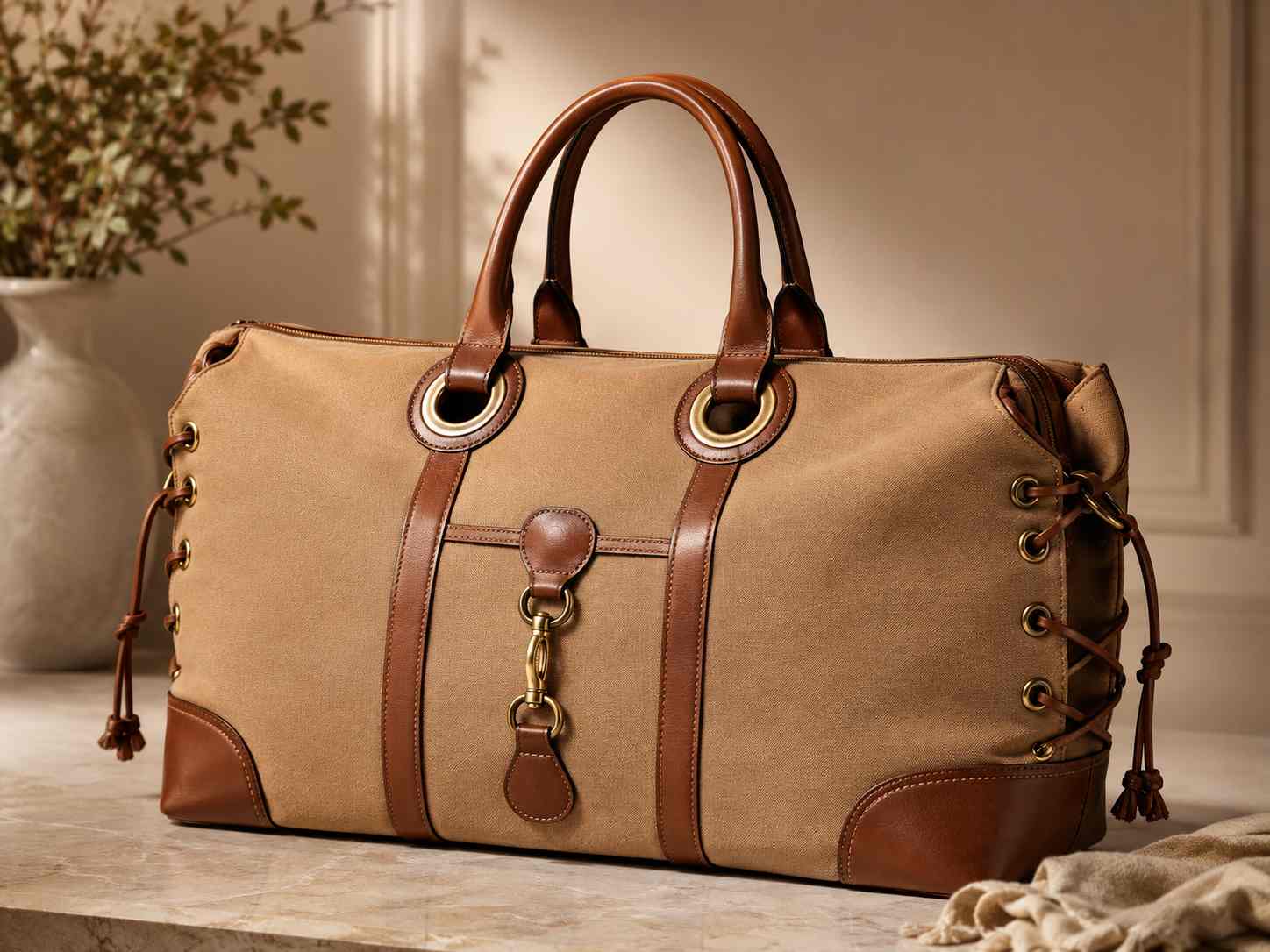
Bag Eyelets Are Small Components With Several Different Jobs
Metal eyelets on bags and luggage may guide a drawcord, allow air movement, release trapped water, reinforce an attachment point or create a visible decorative pattern. These functions look similar from the outside, but they place very different demands on the eyelet, washer, bag material and setting process.
A supplier should not recommend one universal part simply because its flange diameter matches a reference sample. Handbag grommets used around a soft leather drawstring experience repeated rubbing and angled pull. A drainage eyelet at the bottom of a sports bag sees moisture, detergent residue and floor contact. A decorative eyelet on a structured case may carry almost no direct load but must maintain color and alignment across the complete panel.
For buyers, the right approach is to define the function first and then specify the installed system. This guide explains how to select grommets for bags by load path, hole size, material stack, environment, appearance and production method.
Classify the Eyelet by Function Before Choosing a Size
| Function | Main design priority | Typical failure | What the buyer should validate |
|---|---|---|---|
| Drawcord guide | Smooth inner rim, suitable clearance and strong local reinforcement | Cord abrasion, rotation, panel distortion or pull-out | Cord movement, repeated opening, attachment strength and rear finish |
| Ventilation | Open area, distribution, mesh backing and corrosion resistance | Blocked holes, fabric fraying, water entry or finish staining | Air path, hole placement, lining construction and exposure conditions |
| Drainage | Lowest-point positioning, free water path and wet-condition durability | Trapped water, rust, edge wear or blocked outlet | Filled-bag orientation, internal layers, wet testing and cleaning |
| Decoration | Color consistency, spacing, flange shape and surface quality | Misalignment, shade variation, scratching or panel puckering | Master sample, layout fixture, post-setting appearance and packing protection |
| Strap or accessory point | Load distribution, washer engagement and edge distance | Elongated hole, upper tear, barrel split or washer pull-through | Actual load direction, cyclic use, installed geometry and failure mode |
Drawcord Eyelets: Protect the Cord and Stabilize the Opening
Drawcord openings are common on backpacks, duffel bags, dust bags, bucket bags and soft travel pouches. The cord rarely pulls straight through the centre. It rubs the inner rim at changing angles, so a smooth radius and adequate clearance matter as much as the nominal inner diameter.
The installed opening should be larger than the compressed cord at its thickest splice, knot or end-fitting transition. Too little clearance increases friction and can strip braided fibers or polish through the finish. Excessive clearance may look poorly proportioned and allows the cord to move sharply against one small area of the rim.
An eyelet bag design with a continuous top drawcord also needs sufficient spacing between eyelets. Centres placed too close together can create a perforation line that weakens the panel. On soft fabric, a backing strip or bonded reinforcement should extend beyond the complete eyelet pattern rather than sit only under individual holes.
Evaluate the finished bag through repeated opening and closing, not only a static pull. Inspect cord fuzzing, eyelet rotation, coating wear and material elongation. The rear barrel or washer must remain smooth because it may contact the lining, contents or the user’s hand.
Ventilation Eyelets: Design a Complete Air Path
Ventilation eyelets are used in sports bags, pet carriers, laundry bags and equipment cases. Air must enter, move through the compartment and exit elsewhere; lining, foam or an internal pocket can block the path even when the outside opening is clear.
Several smaller holes can distribute air more evenly, but each removes material. Keep them away from seams, corners and handle bases, and add internal mesh where fingers, claws or contents could reach the edge. Because the openings also admit water and dust, validate their placement on the complete carried bag rather than judging diameter alone.
Drainage Eyelets: Place the Hole Where Water Actually Collects
Drainage eyelets suit wet-gear bags, beach totes and washable utility pouches. Place them at a true low point when the filled bag is standing, hanging or compressed. Check the entire path through outer fabric, coating, foam, reinforcement and lining; a covered hole or thick seam can still trap water.
Salt water, perspiration, detergent and slow drying increase finish risk. Salt-spray testing can monitor coating consistency when the buyer defines the method, time and acceptable corrosion, but it does not directly predict field life. Test installed samples because rear-barrel forming can damage the protective layer.
Decorative Eyelets: Control Layout as Carefully as Finish
Decorative eyelets may form a border, lace-through detail or contrast feature. An eyelet purse can use the same component family as luggage yet need tighter limits for color, gloss, flange flatness and spacing.
Approve a dated master under agreed lighting because antique brass, gunmetal and black nickel are imprecise without a physical standard. Use a punching fixture for repeated patterns, then inspect panel puckering and shrinkage after setting.
Decoration still needs safe edges and secure attachment. Parts can catch clothing, rub adjacent panels or scratch the next bag in a carton, so packing protection may also be required.
Loaded Strap and Accessory Eyelets Need a Wider Load Path
An eyelet strap may provide lacing or a removable-accessory point. A loaded strap eyelet concentrates force near the edge, so its flange and washer must transfer load into stable material rather than only a decorative surface.
Methods used for leather belt grommets can inform shoulder straps, but bag straps also twist and change loading direction. A grommet leather specification should state thickness and temper because soft split leather, full-grain leather and bonded layers compress differently.
A keychain eyelet carries less weight but receives frequent tugging and rotation. Maintain edge distance, use a smooth inner profile and test it with the actual ring, hook or cord.
Hard and Semi-Rigid Panels Require Different Forming Control
Rigid shells and thermoplastic tabs may crack, whiten or remain loose when the hole and barrel are mismatched. Kydex eyelets illustrate constructions where sheet thickness, hole quality and rear rolling need close control. Use sufficient free barrel and an appropriate support or washer; extra press force cannot correct a barrel that is too short.
Match Eyelet Dimensions to the Complete Material Stack
Eyelet selection requires more than a flange diameter. Buyers should confirm the loose-part dimensions and the installed geometry.
| Dimension or feature | Why it matters | Common selection error | Recommended confirmation |
|---|---|---|---|
| Installed inner diameter | Controls cord clearance, airflow, drainage and visual scale | Using the loose barrel ID as the final opening | Measure a correctly set production sample |
| Flange outer diameter | Distributes load and defines visible proportion | Choosing a small flange for weak or fraying material | Compare with reinforcement size and edge distance |
| Barrel outer diameter | Determines punch fit and remaining material around the hole | Selecting a generic punch by catalogue size | Specify the actual punch and allowable hole condition |
| Barrel length | Provides free metal for rolling through the stack | Ignoring adhesive, lining or thickness tolerance | Trial minimum and maximum stack thickness |
| Washer ID and OD | Controls barrel engagement and rear load distribution | Mixing visually similar washers from another series | Approve the eyelet, washer and die as a matched set |
| Wall thickness and temper | Balance forming ability with service strength | Assuming thicker or harder is always stronger | Inspect the rear roll and test the installed assembly |
Choose the Material and Finish for the Real Environment
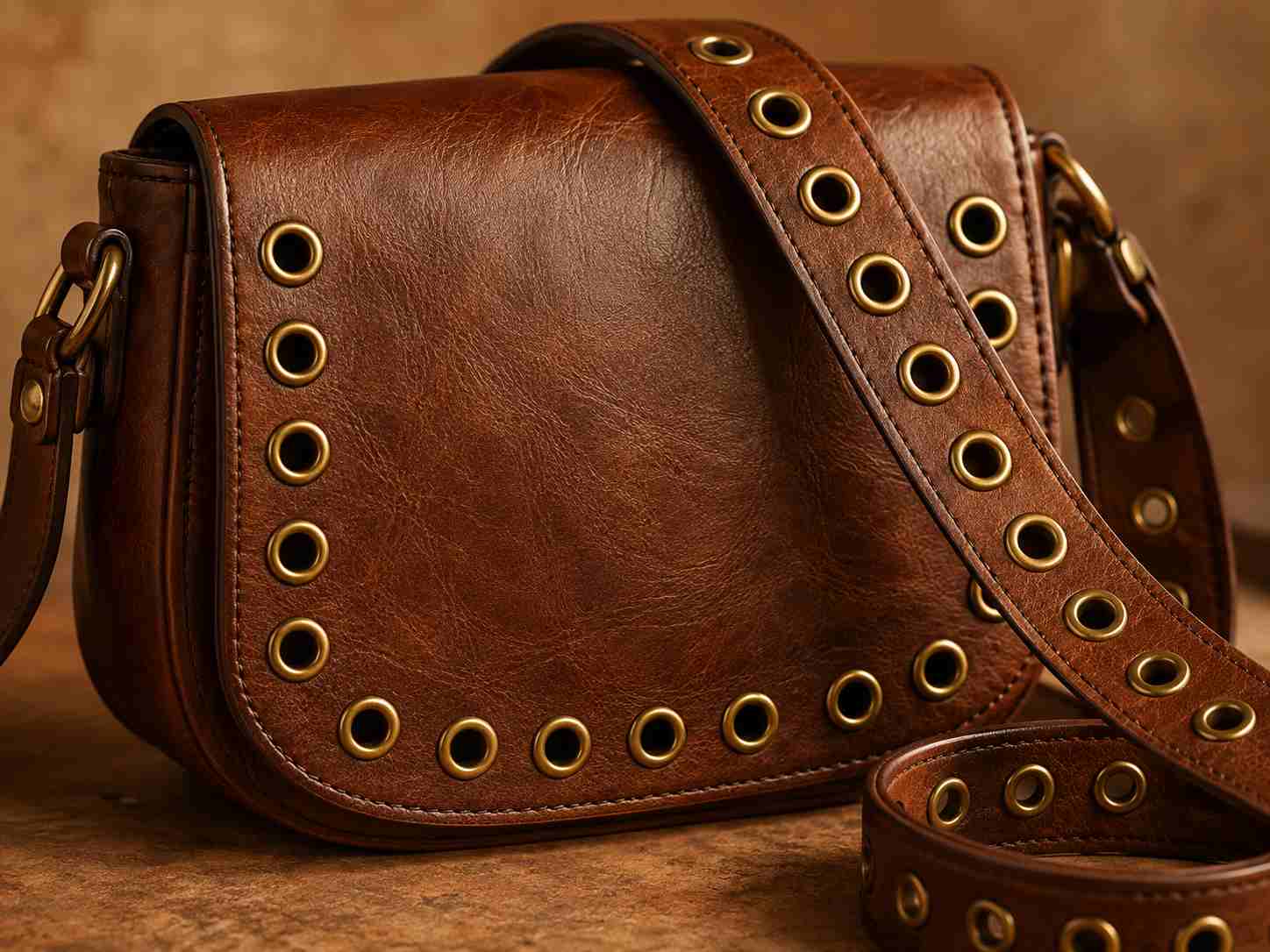
Steel offers economical strength and many finishes but needs suitable edge protection. Brass forms well and looks premium; aluminium is light but needs load and wear control. Stainless steel can suit wet service when its grade and forming condition match the project.
Specify color, gloss, adhesion, abrasion and corrosion, then inspect after setting. On light materials, check staining from lubricants, antique treatments and packing. Confirm project-specific restricted-substance and nickel-release requirements rather than relying on a generic certificate name.
Reinforcement, Washers and Edge Distance Prevent Pull-Through
A washer supports a wider rear area but cannot rescue a weak panel beyond its contact zone. Reinforcement must extend into stable bag material and remain registered during cutting and setting.
Wovens fray, coated fabrics delaminate, leather can split and foam may retain compression. Validate the actual stack, adhesive and stitching. Material tear or coating-adhesion tests characterize the substrate; attachment testing checks the installed interface. Also maintain distance from seams, edges, zipper tapes and neighboring holes.
Setting Quality Determines Whether the Specification Works
The upper die must support the visible flange without scratching or dishing it. The lower die must roll or flare the barrel concentrically. A similar-looking tool can produce an incomplete roll, a split edge or a tilted eyelet. Production settings should therefore be qualified with the exact eyelet, washer and bag stack.
Approve a first-off sample and record machine identity, die numbers, closing height or stroke, stack-thickness range and front/rear appearance. Repeat first-off approval after a tool change, material change, long stop or major adjustment. During production, inspect centering, rotation, rear shape, surface damage and periodic attachment strength.
SATRA TM150 provides a method for measuring the force needed to detach an eyelet from its base material and is applicable to eyelets attached to different materials. A buyer may use it or another agreed method, but the specification must state sample preparation, conditioning, fixture, test speed, minimum force and failure reporting. Record whether the eyelet released, the panel tore, the washer pulled through or the barrel split.
Application-Based Selection Matrix
| Bag or luggage application | Primary risk | Useful construction direction | Essential validation |
|---|---|---|---|
| Soft drawstring pouch | Fabric fraying and cord abrasion | Smooth rim, flexible backing and moderate flange | Repeated opening plus cord inspection |
| Leather bucket bag | Hole elongation and finish marking | Matched barrel, clean hole and rear washer | Thickness-range setting and cyclic drawcord use |
| Sports or wet-gear bag | Moisture, detergent and blocked drainage | Corrosion-resistant system at true low points | Wet conditioning, drainage trial and post-setting corrosion check |
| Ventilated pet/equipment bag | Blocked airflow and accessible edges | Distributed holes with protected internal mesh | Complete airflow path and touch-access review |
| Decorative handbag panel | Shade variation and visible misalignment | Master finish sample and positioning fixture | Full-panel appearance after setting and packing |
| Rigid case or reinforcement tab | Cracking and incomplete barrel roll | Hole and barrel matched to rigid thickness | Cross-section, pull-out and cyclic movement |
What Buyers Should Send With an RFQ
Provide a dimensional drawing, clear front/side/rear photos or a physical reference sample. Include the actual outer material, reinforcement, foam, lining and adhesive stack at its minimum and maximum production thickness. Identify whether the eyelet is functional, decorative or both.
State the cord diameter, expected load direction, bag category, wet exposure, target market, color master, washer requirement, visible rear-side requirement and desired tests. If the current design has failed, send failed pieces and describe whether the eyelet rotated, corroded, cut the cord, split during setting or tore out with the panel.
How BaoCheng Supports Custom Bag and Luggage Eyelets
BaoCheng is a Chinese metal stamping hardware manufacturer supporting custom eyelets for handbags, backpacks, duffel bags, luggage, leather goods and related accessories. We can customize flange diameter, installed opening, barrel diameter and length, wall thickness, washer structure and decorative profile. Materials, colors, electroplating and coating processes can also be developed around the approved project requirement.
Before bulk production, customers should provide drawings, photos or physical samples and the actual material stack. We evaluate dimension matching, hole preparation, free barrel length, washer engagement and setting-die geometry. Where feasible, sample pieces can be supplied free of charge, with freight paid by the customer. Bulk production begins after the sample appearance, setting result and required functional checks are confirmed.
BaoCheng can coordinate matched upper and lower setting dies and help establish inspection references for critical dimensions, color range, front/rear forming and attachment strength. Available documentation can be matched to the exact material and finish scope, including nickel-release, Intertek, OEKO-TEX-related, RoHS/REACH and JSW20 patent records where applicable.
For projects requiring ultra-low magnetic permeability after forming, finished custom eyelets can be produced from BaoCheng’s patented JSW20 special austenitic stainless material. It can provide an economical alternative when copper prices rise and conventional 304/316 components develop weak magnetism after cold forming. BaoCheng supplies JSW20 finished components only, not raw sheet or coil.
Final Selection Principle
The correct bag eyelet is the one that performs its intended function after installation. Buyers should define the load path, water or air path, material stack, hole quality, barrel engagement, finish and setting method as one system. A well-matched eyelet then becomes more than a decorative ring: it protects the bag material, supports repeated use and keeps bulk production consistent.
Focused FAQ
1. Should drawcord and drainage eyelets use the same size?
Not automatically. Drawcord size is driven by cord clearance, rubbing angle and pull load, while drainage size depends on water volume, blockage risk and the internal flow path. Both must still match the material stack and setting method.
2. Do larger ventilation eyelets always provide better airflow?
No. Airflow depends on total open area, distribution and an unobstructed path through the lining and compartment. One large opening may weaken the panel or admit more water without improving circulation through the complete bag.
3. Where should drainage eyelets be placed?
Place them at actual low points under realistic loading and carrying positions. Check every internal layer because foam, lining, reinforcement or a seam ridge can block an outwardly visible hole.
4. When does a bag eyelet need a washer?
A washer is useful when the rear material is soft, fraying, multilayered or exposed to meaningful pull. Its dimensions must match the eyelet barrel, and it should support—not cut—the backing material.
5. How much barrel length should remain for setting?
Enough free barrel must extend beyond the maximum stack to form the specified rear roll. The exact allowance depends on eyelet geometry, washer and die, so confirm it through trials rather than applying a universal number.
6. Can a decorative eyelet be used as a strap attachment?
Only after structural validation. A decorative part may have suitable appearance but insufficient flange area, wall condition, washer engagement or material support for repeated strap loading.
7. How should eyelet pull-out strength be tested?
Use an agreed attachment method on the actual bag stack and state conditioning, fixture, speed and minimum force. Record the failure mode because panel tearing and metal disengagement require different corrective actions.
8. Why does an eyelet rotate after setting?
Common causes include an oversized hole, a barrel that is too short, insufficient closing, excessive stack compression recovery or a mismatched washer. Inspect the complete installed geometry before increasing press force.
9. What finish is suitable for wet bags?
The choice depends on substrate, coating system, contaminants and exposure. Specify a corrosion test and acceptance rule for the exact installed component; color names alone do not define corrosion resistance.
10. What should be approved before BaoCheng starts bulk production?
Approve the drawing, material, finish, washer, matched dies and installed sample on the actual stack. Confirm critical dimensions, appearance, functional tests and required documentation before authorizing bulk production.
#Bag Eyelets, #Luggage Hardware, #Handbag Hardware, #Drawstring Bag Hardware, #Drainage Eyelets, #Ventilation Eyelets, #Leather Bag Hardware, #Custom Metal Eyelets, #Bag Manufacturing, #BC New Material