Why Does Stainless Steel Become Magnetic After Stamping or Cold Working?
July 1, 2026
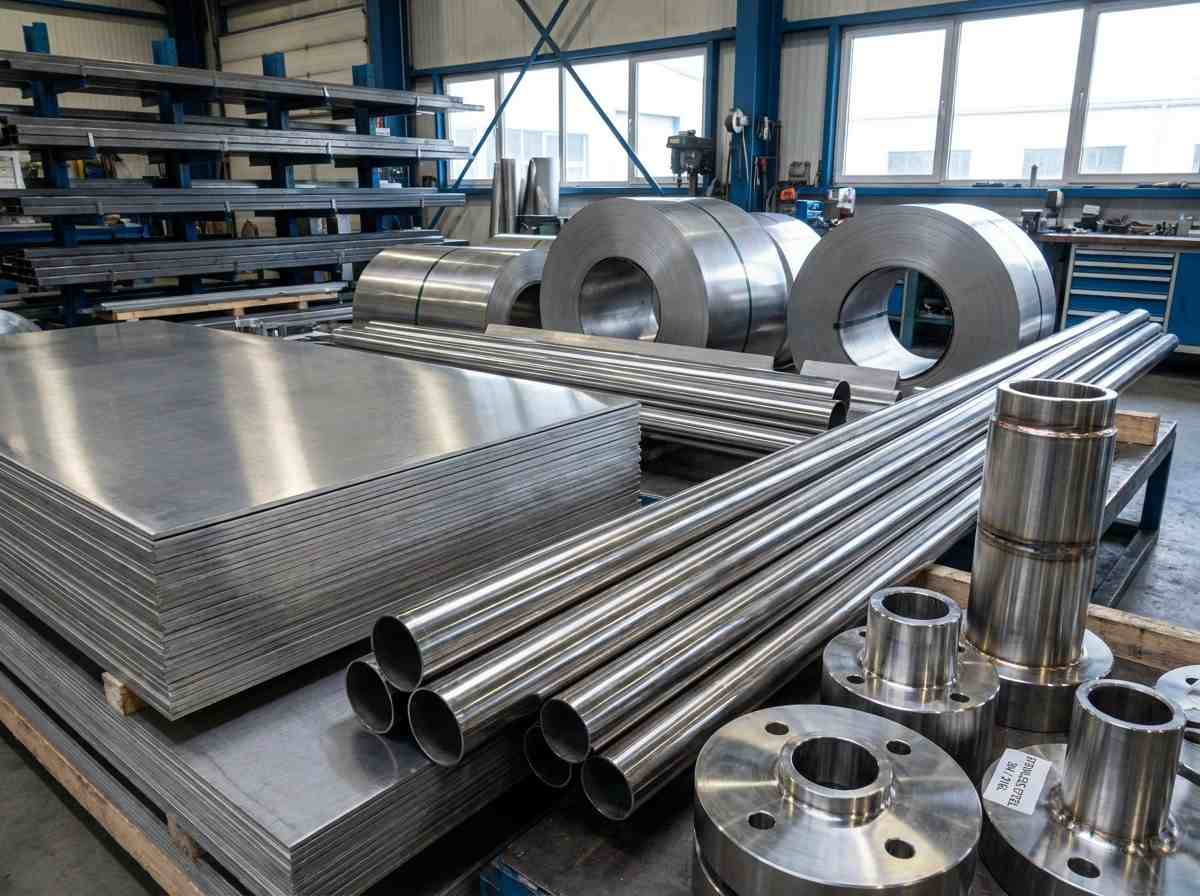
Stainless steel may look non-magnetic before production, but it can become weakly magnetic after stamping, bending, drawing, rolling, or other cold working processes. For industrial buyers, this matters because the finished part may need to pass needle detection, avoid magnetic interference, or meet strict quality requirements. This article explains why stainless steel becomes magnetic after processing, how this affects garment accessories, electronics, motors, compressors, and new energy components, and why non-magnetic stainless steel such as JSW20 can be useful for formed metal parts.
The Real Question Is the Finished Part
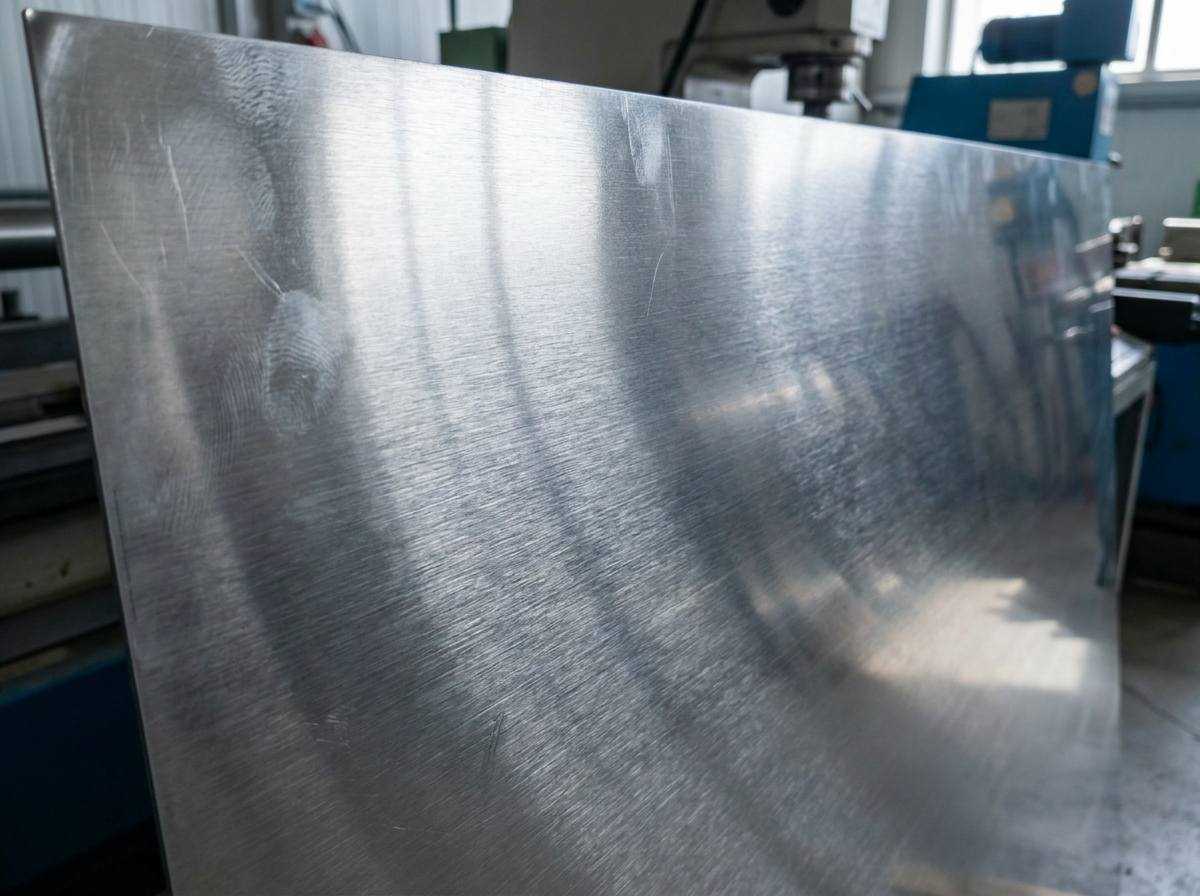
Many buyers assume stainless steel should be non-magnetic. This is common, but it is not always correct. A stainless steel sheet, strip, or coil may show very low magnetic response before production. It may also pass a simple magnet test in the raw material state. But after stamping, bending, deep drawing, rolling, welding, polishing, plating, or assembly, the finished part may show weak magnetism.
This difference creates real purchasing risk.
A garment factory may buy stainless steel snap fasteners or jeans buttons for export clothing. The raw material may look suitable. But after the hardware is stamped, curled, plated, and assembled, the finished accessories may trigger a needle detector. An electronics buyer may choose stainless steel for appearance, strength, and corrosion resistance. But after precision forming, the finished part may show a stronger magnetic response than expected. An industrial buyer may need formed parts for compressors, motors, pumps, valves, or precision equipment. In these applications, magnetic behavior can affect inspection, assembly, or working stability.
So the key question is not only, “Is the raw material non-magnetic?”
A better question is, “Will the finished part remain low-magnetic after processing?”
This is the core issue behind stainless steel magnetism after cold working. For importers, distributors, OEM manufacturers, and buyers asking is 316 stainless steel magnetic, the risk is not only technical. It can become a delivery risk, a quality dispute, or a hidden cost. If the wrong material is selected, the final part may fail inspection, require replacement, or delay production.
Is Stainless Steel Magnetic or Non-Magnetic?
Many buyers search the question: stainless steel is magnetic. The answer depends on the stainless steel type, processing condition, deformation level, and final product requirement.
Stainless steel is not one single material. It is a large alloy family. Ferritic and martensitic stainless steels are usually magnetic. Austenitic stainless steels are often considered non-magnetic or low-magnetic in annealed or solution-treated condition. Common grades such as 304 and 316 are widely used because they offer good corrosion resistance and good forming performance.
However, “austenitic stainless steel” does not always mean “the finished part will be completely non-magnetic.”
This is where buyers often make mistakes. A raw sheet of austenitic stainless steel may show very low magnetism. But if it is heavily cold worked, its internal structure may partly change. The finished part may become weakly magnetic.
For industrial buyers, the final part condition matters more than the original material condition. A flat sheet, a stamped shell, a deep-drawn cap, a curled button, a riveted component, and a welded assembly may all show different magnetic behavior. This is why material selection should not stop at the grade name.
What Cold Working Does to Stainless Steel?
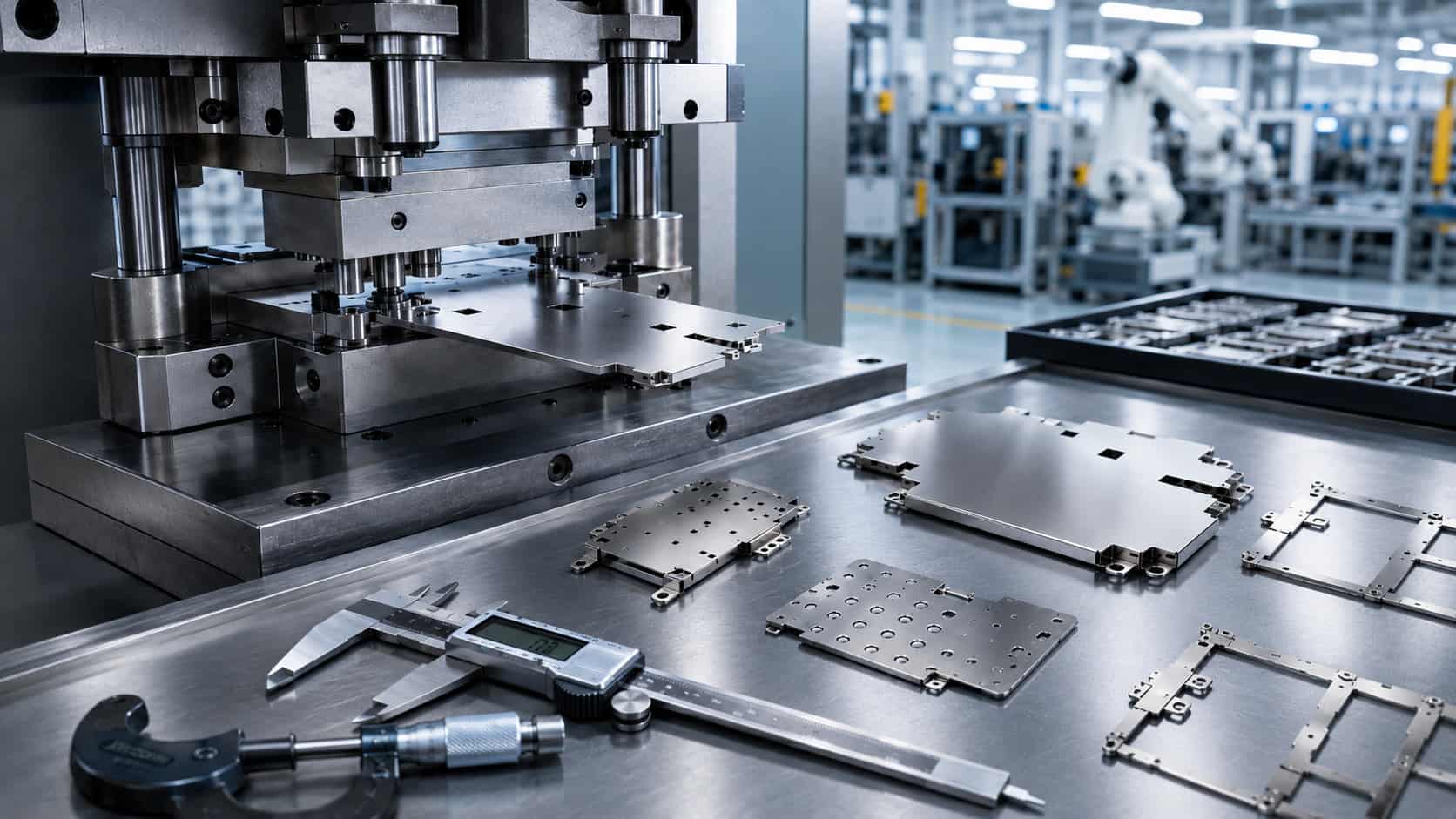
Cold working means deforming metal at or near room temperature. It includes stamping, bending, drawing, deep drawing, rolling, pressing, curling, riveting, forming, and edge folding. These processes are common in mass production because they help manufacturers create thin, light, strong, and precise parts.
But cold working also creates stress inside the material. The more the material is deformed, the more its internal structure may change. For some stainless steels, this change can increase magnetic response.
This is why a part may be low-magnetic before stamping but weakly magnetic after forming. The change may also be local. A flat area may remain low-magnetic, while a bend radius, drawn wall, curled edge, or sharply formed corner may show stronger magnetic response.
Two parts made from the same stainless steel grade may not show the same result, especially when annealed material is compared with cold worked stainless steel. The difference may come from the forming process, deformation level, material thickness, heat treatment condition, part shape, or surface process.
This is why buyers should not rely only on raw-material testing. If the final part must remain low-magnetic, the buyer should discuss the forming process, part geometry, and final inspection method before sample production.
Why This Matters for Buyers?
For some applications, weak magnetism after processing may not matter. A decorative fitting, kitchen part, or general bracket may still be acceptable. But for stricter applications, even weak magnetic response can create problems.
Garment accessories may need to pass needle detection. If buttons, snaps, rivets, or eyelets become magnetic after forming, they may trigger false alarms. This can delay shipment and increase inspection cost.
Consumer electronics parts may need stable material behavior after precision forming. A component may look correct, but if its magnetic response changes after stamping, it may not meet internal quality requirements. Engineers evaluating 304 stainless steel magnetic properties should consider the complete manufacturing process, because low-magnetic parts often need forming control and finished-part testing rather than raw-material checks alone.
Motors, compressors, pumps, and precision equipment may use parts near magnetic fields, rotating systems, vibration environments, or repeated mechanical cycles. If the material becomes unexpectedly magnetic after forming, the buyer may need new samples or material re-evaluation.
New energy components may also require stable material behavior after stamping, welding, coating, or assembly. The issue is not that every new energy part needs non-magnetic stainless steel. The point is that magnetic requirements should be defined early if they matter to the design.
This is why buyers researching 316 stainless steel magnetic properties or asking is 316l stainless steel magnetic should look beyond grade names alone. Standard descriptions may not be enough when low magnetic behavior after processing is required.
Why Material Grade Comparison Is Not Enough?
Material grade is important, but it does not tell the whole story.
Many buyers compare 304 and 316 stainless steel. Some search difference between 316 and 304 stainless steel to decide which grade is better. This comparison is useful. 304 is widely used and cost-effective. 316 usually offers better corrosion resistance in many environments because of its alloy composition.
Buyers may also search 304 stainless steel tensile strength when mechanical performance is the main concern. This helps with general material selection. But if the finished part must remain low-magnetic after cold working, strength comparison alone is not enough.
Another common search is 316l stainless steel properties. Buyers often use this information to evaluate carbon content, weldability, corrosion resistance, strength, and suitability for welded components, but these properties do not guarantee that a formed part will remain fully non-magnetic after processing.
Some buyers also search 316l stainless steel composition to understand the chromium, nickel, molybdenum, carbon, and other alloy elements in this grade. Composition is important, but finished-part magnetism still depends on processing, deformation level, and final condition.
For low-magnetic applications, buyers should compare materials based on raw magnetic permeability, magnetic behavior after forming, deformation level, corrosion resistance, mechanical strength, surface requirements, inspection method, and final application.
A common stainless steel may be suitable for many products. But when low magnetic permeability after forming is required, a specialized non-magnetic stainless steel may be the safer choice.
JSW20: Why a Specialized Non-Magnetic Stainless Steel Can Help?
Some applications need more than ordinary stainless steel. They need a material that can remain low-magnetic after forming. JSW20 is designed for this type of requirement.
JSW20 is a non-magnetic stainless steel material suitable for parts that go through stamping, bending, forming, or welding. It can maintain non-magnetic behavior under deformation below 60%. Its relative magnetic permeability is around 1.001. After bending and welding, the magnetic permeability can also remain very low.
This matters because many finished parts are not flat. They are shaped, curled, pressed, drawn, or assembled. A garment snap fastener may be stamped and curled. A jeans button may be formed and assembled. A rivet may be pressed and set. An EMI shielding cover may be stamped and bent. A phone component may need precision forming. A compressor valve plate may need thin-sheet stamping.
In these products, the material must perform after processing.
JSW20 also provides useful mechanical properties. It has a yield strength of at least 350 MPa, tensile strength of at least 650 MPa, and elongation of at least 40%. It also has good anti-rust performance in humid and water-vapor environments.
This balance makes JSW20 useful for buyers who need low magnetic response, formability, strength, and corrosion resistance at the same time. It does not mean JSW20 should replace every common stainless steel. For many ordinary applications, 304, 316, or 316L may be enough. But when the finished part must remain low-magnetic after cold working, JSW20 becomes a better option to evaluate.
This is especially relevant when buyers evaluate stainless steel work hardening, because finished-part performance matters more than raw-material appearance.
How Buyers Can Reduce the Risk of Magnetic Parts?
Buyers can reduce the risk of unexpected magnetism by asking the right questions before production.
First, what is the final application? Is the part used in garment accessories, electronics, compressors, motors, pumps, appliances, new energy systems, or precision equipment?
Second, what forming process will be used? Will the part be stamped, bent, drawn, deep drawn, rolled, welded, curled, or assembled?
Third, how much deformation is involved? Will the part have sharp bends, deep drawing, curled edges, or high-stress forming areas?
Fourth, how will the finished part be inspected? Will it need a simple magnet test, magnetic permeability measurement, needle detector testing, or customer-specific testing?
Fifth, what environment will the part face? Will it contact humidity, sweat, water vapor, salt spray, cleaning agents, heat, or industrial fluids?
Sixth, what surface process is required? Will the part need polishing, plating, cleaning, coating, or decorative finishing?
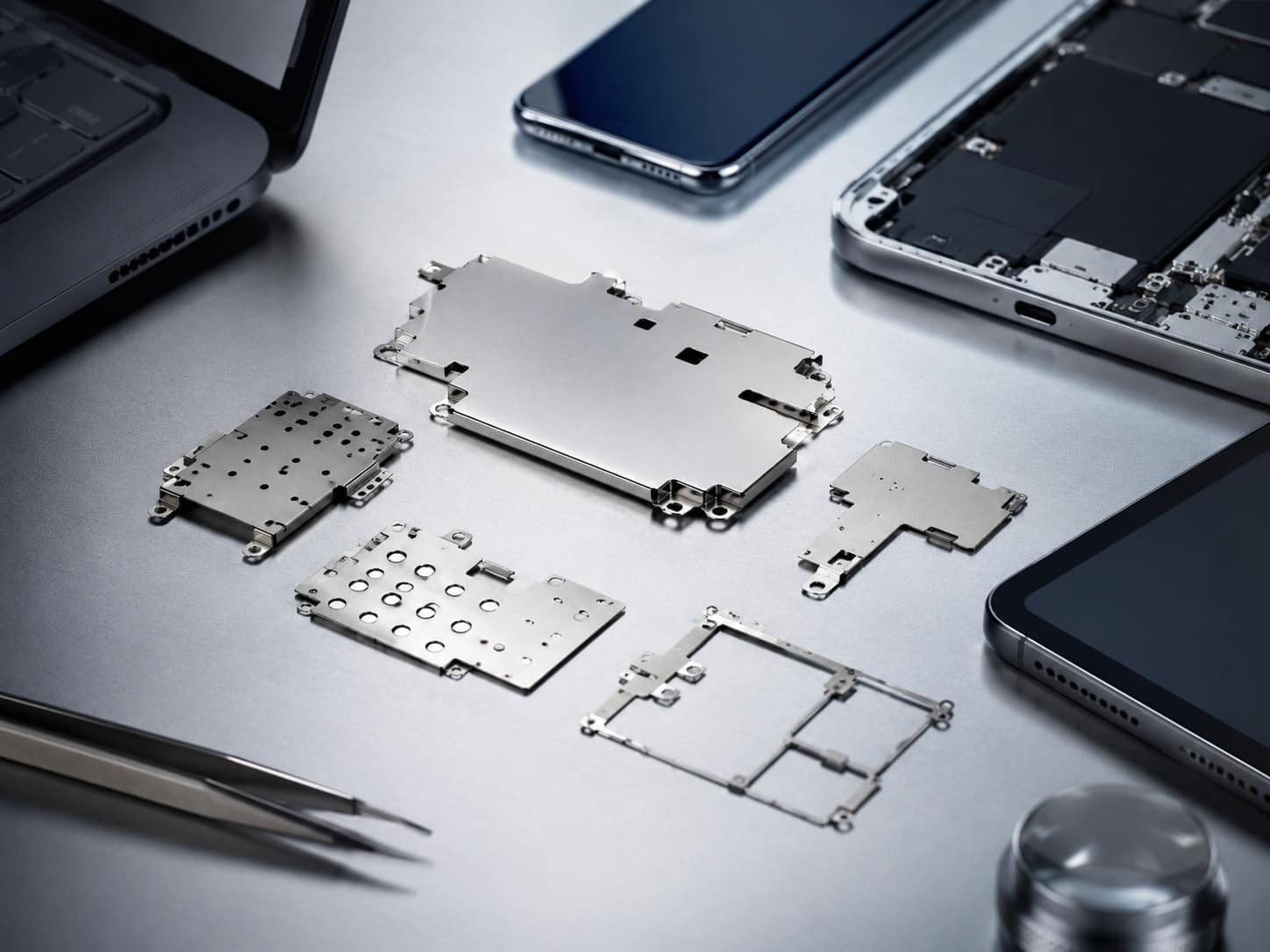
These questions help the supplier understand the real requirement. A good inquiry does not simply say, “We need stainless steel.” A better inquiry says, “We need a stainless steel part that remains low-magnetic after stamping and bending. It must pass inspection after surface treatment. It will be used in this application.”
This kind of inquiry reduces misunderstanding and improves sample quality.
Why Finished-Part Testing Is Important?
Raw material testing is useful, but it is not always enough. If a part will be heavily formed, the final magnetic behavior should be tested after production. This is especially true when the part must meet strict low-magnetic requirements.
Finished-part testing may include simple magnet checking, relative magnetic permeability measurement, needle detector testing, customer-specific inspection, or functional testing in the final assembly.
The correct test depends on the application. For garment hardware, needle detector testing may be more relevant than a simple magnet test. For electronics parts, buyers may care about magnetic response after forming and surface treatment. For precision industrial parts, a defined magnetic permeability range may be needed.
Testing standards should be agreed on early. If testing is discussed only after bulk production, the risk is much higher. If testing is defined before sample production, the supplier can select the material and process more correctly.
Finished-part testing also helps compare materials. A buyer may test 304, 316, 316L, and JSW20 under the same forming condition. The results can show which material is more suitable for the actual product. This is more reliable than comparing material names only.
When Ordinary Stainless Steel Is Enough, and When It Is Not?
Not every product needs specialized non-magnetic stainless steel. If weak magnetism does not affect the application, common grades such as 304 or 316 may be suitable. This can be true for general brackets, decorative parts, kitchen accessories, simple covers, low-risk hardware, and general corrosion-resistant parts.
This is important for cost control. Buyers should not select a higher-performance material unless the application needs it.
However, when the finished part must meet low-magnetic requirements, ordinary stainless steel should be evaluated carefully. The buyer should not assume that a common grade will remain non-magnetic after processing.
A specialized non-magnetic stainless steel is worth evaluating when the finished part must pass needle detection, work near electronic modules or sensors, avoid magnetic interference, go through heavy stamping or deep drawing, keep low magnetic permeability after bending or welding, or deliver repeatable performance across batches.
In these situations, selecting ordinary stainless steel only by grade name can be risky. A specialized material such as JSW20 may reduce that risk, especially for formed components where low magnetic behavior after processing is important.
Stainless Steel Magnetism Is a Finished-Part Issue
Stainless steel may become magnetic after stamping or cold working because deformation can change the internal structure of the material. This is especially important for austenitic stainless steels that may be low-magnetic before processing but weakly magnetic after forming.
For industrial buyers, the finished part matters most. A raw stainless steel sheet may pass a simple magnet test, but the final button, rivet, shielding cover, valve plate, motor part, or fuel cell-related component may behave differently after production.
If the part does not require low magnetism, common stainless steel may be enough. But if the part must remain low-magnetic after stamping, bending, drawing, welding, or assembly, a specialized non-magnetic stainless steel may be needed.
JSW20 is a practical option for applications where low magnetic behavior after controlled deformation is important. It also offers useful strength, formability, and anti-rust performance.
For buyers, the safest approach is clear communication before production. Define the final application. Explain the forming process. State the magnetic requirement. Confirm the inspection method. Test the finished part before mass production.
In B2B sourcing, stainless steel magnetism is not only a material issue. It is a finished-product quality issue.
Focused FAQ
Why does stainless steel become magnetic after stamping?
Stainless steel may become magnetic after stamping because cold deformation can change its internal structure. This can increase magnetic response, especially in areas with high forming stress.
Is stainless steel always non-magnetic?
No. Stainless steel includes different alloy families. Some types are magnetic, some are weakly magnetic, and some are low-magnetic only under certain conditions.
Can 304 stainless steel become magnetic after cold working?
Yes. 304 stainless steel may become weakly magnetic after stamping, bending, drawing, or other cold working processes.
Can 316 stainless steel become magnetic after forming?
Yes. 316 stainless steel may show low magnetic response in some conditions, but it can still become weakly magnetic after processing. Finished-part testing is important.
Is a magnet test enough?
A magnet test can be used as a rough check. But for strict industrial applications, buyers may need magnetic permeability measurement, needle detector testing, or customer-specific inspection.
What is JSW20 stainless steel?
JSW20 is a non-magnetic stainless steel material suitable for formed parts that need to maintain low magnetic behavior after controlled deformation.
When should buyers consider specialized non-magnetic stainless steel?
Buyers should consider it when the finished part must remain low-magnetic after stamping, bending, drawing, welding, or assembly, especially in garment accessories, electronics, precision equipment, compressors, motors, and certain new energy parts.
#Stainless Steel Magnetism, #Cold Working Stainless Steel, #Magnetic Stainless Steel After Stamping, #Non-Magnetic Stainless Steel, #Low Magnetic Permeability, #JSW20 Stainless Steel, #Stainless Steel Stamping Parts, #Needle Detector Friendly Hardware, #Garment Accessories, #EMI Shielding Covers, #Consumer Electronics Metal Parts, #Compressor Valve Plates, #Motor Components, #Fuel Cell Bipolar Plates, #Custom Metal Components, #B2B Stainless Steel Parts