






Eyelets for Pet Collars and Harnesses: Pull-Out Strength, Corrosion and Safe Edges
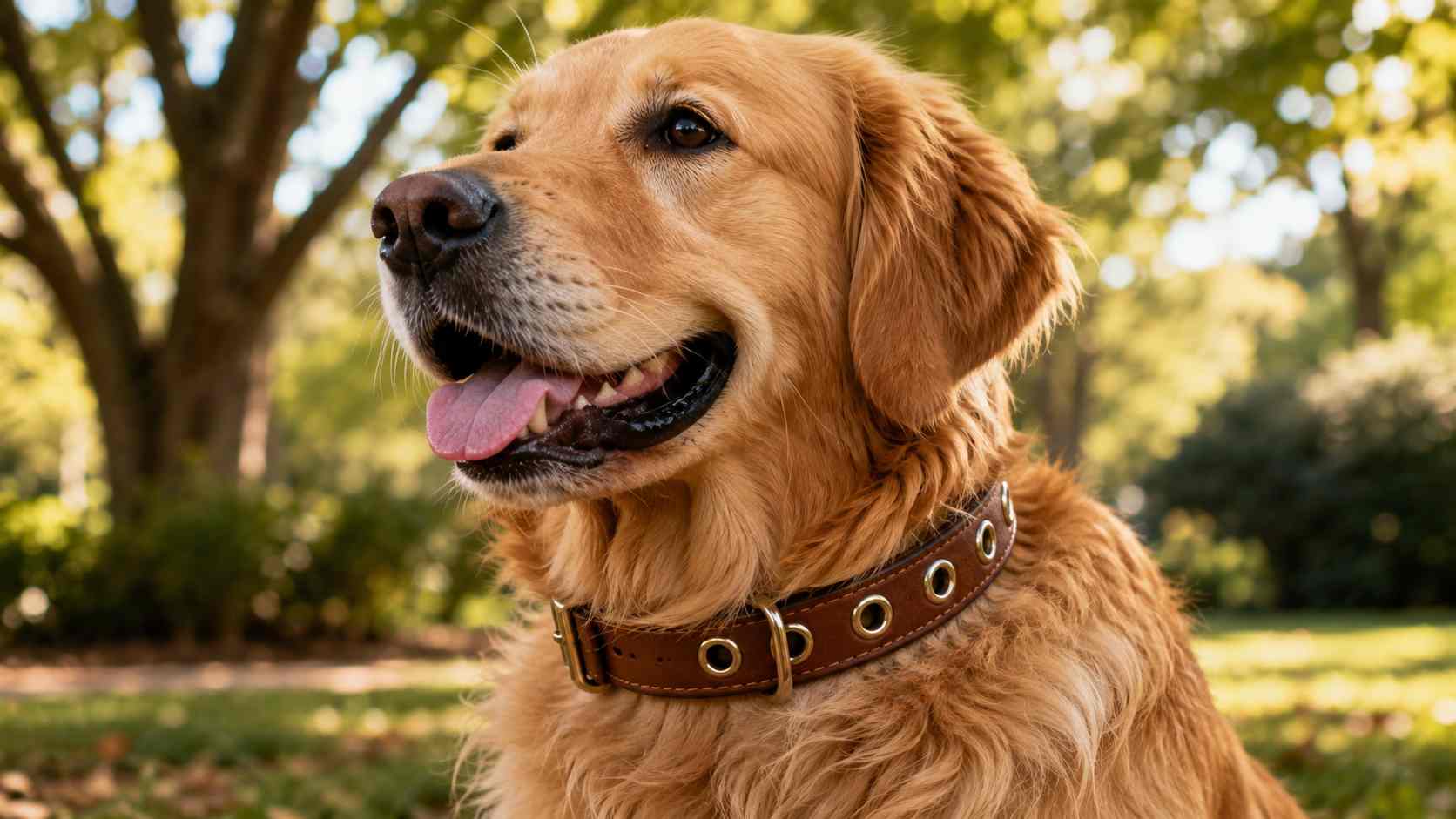 Pet Hardware Has a Different Working Environment from Fashion Accessories
An eyelet installed in a pet collar may look similar to an eyelet used in a belt, bag or garment, but the service conditions can be much more demanding. A collar can be pulled repeatedly, exposed to rain, saliva, sweat, mud and cleaning products, bent around the animal's neck and subjected to thousands of buckle adjustments during its service life.
Leather harnesses create additional challenges because several straps may move independently as the animal walks or runs. Hardware located near adjustment points can experience bending, twisting and repeated changes in load direction.
For this reason, B2B buyers evaluating dog collar eyelets should consider the eyelet as part of an assembled strap system rather than as an isolated decorative component.
The most important questions are not only what diameter or finish the eyelet has. Buyers need to know whether it remains securely attached, whether the surrounding strap material tears, whether the formed edges remain smooth and whether the metal surface can tolerate the expected exposure environment.
Where Eyelets Are Used in Pet Collars and Harnesses
Traditional buckle collars commonly use a row of adjustment holes. An eyelet can reinforce each opening and provide a consistent metal surface for the buckle tongue.
Leather harnesses may use similar reinforced adjustment holes at chest, neck or body straps. Eyelets can also appear in decorative panels, ventilation openings or other accessory details depending on the product design.
However, buyers should distinguish between an adjustment-hole eyelet and primary load-bearing hardware.
A leash attachment point, D-ring connection or structural harness joint carries a different type of load. A small eyelet should never automatically be assumed to replace hardware specifically engineered for restraint loads. The complete product should be designed and tested according to its intended function.
In other words, pet collar eyelets can reinforce a hole very effectively, but their performance depends on where the hole is positioned and what mechanical role it performs in the finished collar.
Pull-Out Strength Is an Assembly Property, Not Just an Eyelet Property
One of the most important sourcing mistakes is asking for the pull-out strength of an eyelet without defining the material into which it will be installed.
The same eyelet can perform very differently in thick full-grain leather, soft split leather, synthetic leather, coated webbing or a laminated strap.
Pull-out resistance is influenced by:
- eyelet flange diameter;
- barrel diameter;
- barrel length;
- backside rollover geometry;
- whether a washer is used;
- hole diameter;
- strap thickness;
- strap tensile and tear strength;
- distance from the eyelet to the strap edge;
- setting pressure; and
- direction of the applied load.
This is why the practical answer to how to stop grommets from pulling out is rarely to simply select a thicker metal component. The complete joint geometry must be improved.
A larger flange can improve load distribution
When the flange is larger, the applied force is spread across a wider area of material. This can be particularly helpful with relatively soft or flexible collar constructions.
However, flange diameter cannot be increased without limit. A large eyelet placed on a narrow collar can leave insufficient material between the hardware and the strap edge.
That remaining edge distance is important because even a strong eyelet cannot compensate for insufficient surrounding substrate.
The punched hole should not be oversized
If the punched hole is significantly larger than the eyelet barrel, the hardware has less material to grip after setting. Movement can begin between the eyelet and strap, eventually causing rotation, enlargement or pull-through.
Conversely, an excessively small hole can damage the strap during insertion or create uncontrolled compression around the barrel.
For production, the hole diameter and eyelet dimensions should therefore be developed as one tolerance system.
Barrel Length Must Match the Complete Collar Construction
Pet collars are frequently laminated. A premium collar may contain an outer leather layer, inner lining, adhesive and reinforcement. Some synthetic collars combine coated materials with woven textile layers.
The barrel length must accommodate this complete stack.
If the barrel is too short, there may not be enough metal to create a secure backside rollover. If it is too long, excessive material has to deform during setting, which can produce splitting, wrinkling or an unnecessarily bulky backside.
Over-setting also creates problems. Too much pressure can crush the collar material around the eyelet and weaken the fibers that are supposed to support the hardware.
Correct installation should form the eyelet securely without cutting into, excessively compressing or distorting the strap.
Why Edge Safety Deserves Special Attention in Pet Accessories
Hardware used near an animal's skin should be carefully controlled for burrs, sharp corners and irregular backside rollovers.
This is especially important because a collar moves slightly every time the animal turns its head. A harness can move even more as the shoulder and chest areas flex during walking and running.
A small sharp point that appears insignificant during visual inspection can repeatedly rub against leather, webbing, fur or skin.
Rolled edges reduce exposed sharp geometry
Well-designed rolled edge eyelets can create a smoother finished profile around the opening. The objective is not simply appearance. Controlled edge geometry reduces the chance of an exposed cut edge contacting surrounding materials.
However, calling an eyelet “rolled edge” does not automatically guarantee a safe finished assembly. Tooling condition and setting alignment still matter.
An eyelet that enters the die off-center can produce an uneven roll, split barrel or protruding edge even when the original component is manufactured correctly.
The backside should receive as much attention as the front
The visible flange often receives most of the cosmetic inspection, but the reverse side can be more important for pet comfort.
For collar and harness projects, the finished backside should be checked for:
- split metal;
- sharp burrs;
- uneven rollover;
- raised points;
- excessive height;
- damaged plating; and
- excessive compression of the strap.
If the hardware faces toward the animal, smooth backside geometry should be treated as a functional quality characteristic rather than merely a cosmetic preference.
Corrosion Is More Complicated Than Exposure to Rain
Pet accessories operate in a mixed environment. They may encounter water, humidity, perspiration, saliva, soil, road salt, coastal air and cleaning agents.
A wet collar may also remain damp for an extended period instead of drying immediately. Moisture can become trapped between the eyelet and the surrounding material.
Consequently, selecting rust resistant eyelets should involve more than evaluating the visible surface when the component is new.
The buyer should also consider what happens after the eyelet is set. Forming can stretch or alter the surface coating at the barrel and rollover area. If the protective finish is damaged during installation, corrosion may begin at the formed edge even while the visible flange still looks acceptable.
Corrosion-Resistant Metal Options for Pet Hardware
The required material depends on the product price level, exposure environment, design and technical specification.
Stainless steel
Stainless steel is attractive for many outdoor and moisture-exposed accessories because corrosion resistance comes substantially from the base alloy rather than only from a decorative surface coating.
For demanding projects, 316 stainless steel grommets may be considered where increased corrosion resistance is required, especially when chlorides or frequent moisture exposure are important design factors.
Some buyers searching for marine grade stainless steel grommets are specifically trying to address saltwater, coastal or severe outdoor conditions. In these projects, material grade should be defined explicitly on the drawing or purchase specification rather than relying only on the commercial phrase “marine grade.”
Surface condition and manufacturing quality still matter. Stainless steel does not eliminate the need for good stamping, forming, cleaning and proper finished-product handling.
Brass and plated hardware
Brass is also widely used in leather accessories and can provide attractive decorative finishes. Depending on the project, plated brass, solid brass or other metal systems may be suitable.
When decorative plating is involved, the buyer should evaluate whether the coating can withstand barrel deformation during setting and continued abrasion during collar use.
Steel and other cost-oriented materials
Other metal options can be appropriate when cost, appearance and indoor use are more important than severe corrosion resistance. In this case, coating performance becomes especially important.
The material should therefore be selected according to the real exposure condition rather than using one universal specification for every pet accessory.
What Does “Corrosion Resistant” Actually Need to Mean?
The phrase corrosion resistant grommets can describe very different performance expectations.
An indoor decorative collar that occasionally becomes wet does not require the same corrosion performance as an outdoor working-dog harness used near the coast.
Before sampling, buyers should define realistic exposure conditions:
- indoor or outdoor use;
- freshwater exposure;
- saltwater or coastal exposure;
- frequent washing;
- high humidity;
- contact with sweat or saliva;
- expected product life; and
- required appearance retention.
This information helps the supplier select a base material and finish combination that is technically appropriate without unnecessarily increasing cost.
Skin Contact Makes Material and Finish Specifications Important
Pet collars and harnesses may remain in contact with fur and skin for many hours. Brands therefore often pay particular attention to surface chemistry, plating and restricted substances.
For projects specifying nickel free eyelets, the buyer and supplier should first define what “nickel free” means in that particular specification.
It may refer to the absence of nickel plating, a specific base-material composition or a defined nickel-release requirement. These are not automatically equivalent.
The specification should therefore use measurable requirements whenever possible rather than relying only on a marketing description.
The same principle applies to lead free eyelets. Material declarations, finish chemistry and project-specific testing should be coordinated according to the customer's market and compliance requirements.
BC New Material can support project-specific documentation and testing requirements such as RoHS, REACH, OEKO-TEX, Intertek or nickel-release-related testing where applicable to the selected material, finish and customer specification.
Eyelet Positioning Can Determine Whether a Strong Component Still Fails
Even a mechanically strong metal eyelet can fail if it is positioned too close to the edge of the collar.
When load reaches the eyelet, force transfers into the surrounding leather or webbing. If there is insufficient material between the eyelet and strap edge, the substrate may tear before the eyelet itself deforms.
For adjustable holes, engineers should consider both longitudinal spacing between holes and transverse distance from each hole to the strap edge.
A narrow collar with oversized eyelets may look visually strong while actually reducing the amount of supporting material around each opening.
This is why pet hardware should be developed from the complete strap geometry rather than selecting the eyelet first and fitting the collar around it later.
Repeated Loading Matters More Than a Single Pull Test
A single high-force pull test can provide useful information, but collars and harnesses usually experience repeated lower-level loading throughout their service life.
The buckle pin enters the same holes repeatedly. The strap bends. The animal moves. The collar becomes wet and dries again. Dirt can enter the joint.
Over time, these cycles can gradually enlarge the substrate hole or loosen a poorly set eyelet.
For higher-performance projects, useful validation can therefore include repeated adjustment or cyclic loading in addition to static pull testing.
Buyers should inspect whether:
- the eyelet begins to rotate;
- the substrate hole becomes elongated;
- the backside rollover changes shape;
- the finish cracks or peels;
- corrosion begins around formed areas; and
- the surrounding leather or webbing tears.
Wet Testing Can Reveal Problems That Dry Samples Hide
Leather, textile and synthetic strap materials may change behavior after absorbing moisture.
Some materials become softer when wet, which can reduce the support they provide around an eyelet. Others may swell and create additional pressure on the hardware.
Adhesive layers in laminated collars may also respond differently to prolonged moisture.
For outdoor pet accessories, evaluating only dry samples can therefore provide an incomplete picture.
A project-specific test program can compare dry and conditioned samples to determine whether the eyelet remains secure after realistic environmental exposure.
Why the Setting Tool Is as Important as the Eyelet
Eyelet quality cannot compensate for incorrect setting tooling.
The upper and lower dies determine how the flange is supported and how the barrel is expanded, rolled or clinched. Incorrect die geometry can split the barrel, scratch the finish or create an asymmetric backside edge.
Setting pressure must also be repeatable. Low pressure may leave the hardware loose, while excessive pressure can damage both the metal and surrounding strap.
During production qualification, buyers should inspect samples taken from normal machine production rather than relying only on carefully hand-prepared development samples.
Common Failure Modes in Pet Collar Eyelets
Eyelet pulls through the material
This normally indicates that the surrounding substrate, flange size, backside support, hole diameter or setting condition is not sufficient for the applied load.
Eyelet begins rotating
Rotation may indicate inadequate grip between the barrel and strap, an oversized hole or insufficient setting pressure.
Leather tears from the hole toward the strap edge
This often indicates inadequate edge distance, excessive local loading or insufficient substrate tear strength.
Backside barrel splits
Possible causes include excessive setting force, incorrect tooling, unsuitable barrel length, excessive material hardness or inconsistent component geometry.
Rust appears after the collar becomes wet
The material or finish may not be appropriate for the actual exposure environment, or surface protection may have been damaged during setting.
The eyelet feels sharp after installation
This can result from burrs, an uneven rollover, barrel splitting or tool misalignment and should be treated as a functional defect in hardware positioned near the animal.
Custom Eyelets for Different Pet Collar Constructions

A lightweight decorative collar and a heavy working-dog collar should not automatically use the same hardware.
Custom development allows the eyelet geometry to be adapted to:
- collar width;
- finished thickness;
- hole diameter;
- buckle-tongue dimensions;
- leather or webbing construction;
- required edge distance;
- desired flange appearance;
- backside profile;
- corrosion environment; and
- surface finish.
The same principle applies to leather harnesses. Because harness straps may vary in thickness and orientation across the product, one harness can potentially require more than one eyelet specification.
Material Options for Customized B2B Pet Hardware
BC New Material supports custom eyelet and grommet production for B2B projects using materials including stainless steel, brass, zinc alloy and other project-specific metal options.
For specialized applications requiring extremely low magnetic permeability, finished components can also be produced using JSW20 ultra-low-magnetic-permeability austenitic stainless steel.
JSW20 is particularly relevant where the finished formed component must retain an extremely low magnetic response. Material selection should still be based on the complete project specification because magnetic permeability, corrosion resistance, surface finish, mechanical properties and cost are separate design variables.
BC New Material supplies finished and customized components rather than raw JSW20 coil material.
A Better RFQ for Pet Collar and Harness Eyelets
Instead of sending only a photo and asking for “a metal eyelet for dog collars,” buyers can shorten development time by providing engineering information.
A useful RFQ should include:
- finished eyelet drawing or target dimensions;
- collar or harness application;
- strap material;
- total material thickness;
- punched-hole diameter;
- buckle-tongue diameter where relevant;
- required flange diameter;
- preferred backside structure;
- base material;
- surface finish;
- expected moisture or salt exposure;
- compliance requirements;
- target quantity; and
- physical samples when available.
Actual strap samples are particularly useful because thickness alone does not describe compressibility, tear resistance or behavior during setting.
Pet Eyelet Quality Should Be Judged After Installation
Visual inspection of loose components is necessary but not enough.
Many of the most important risks appear only after the eyelet has been installed: plating cracks, barrel splitting, sharp rollover edges, loose setting and excessive compression of the surrounding strap.
Final inspection should therefore include the installed joint.
For high-volume projects, critical dimensions can be controlled before assembly, while finished samples are evaluated for rollover geometry, security, surface integrity and interaction with the collar material.
Pull-Out Strength, Corrosion and Safe Edges Must Be Designed Together
A pet collar eyelet cannot be optimized by focusing on only one specification.
A thick eyelet may still pull out if the hole is oversized. A corrosion-resistant material may still create an unsafe edge if it is set incorrectly. A perfectly smooth component may still loosen if its barrel length does not match the strap thickness.
The most reliable design considers the eyelet, collar substrate, punched hole, edge distance, setting tooling, buckle geometry and environment as one system.
For B2B buyers, this system approach is especially important because product quality must remain consistent across thousands of collars or harnesses rather than only on a small number of prototypes.
When component geometry, material selection, forming, surface treatment and assembly control are coordinated from the beginning, metal eyelets can provide durable reinforcement, clean appearance and controlled edges for pet collars and adjustable harness systems.
Focused FAQ
1. Why are eyelets used in pet collar adjustment holes?
Eyelets reinforce the punched opening and create a controlled metal contact surface for the buckle tongue. Correctly designed dog collar eyelets can reduce direct wear on the collar material and improve dimensional consistency around the adjustment holes.
2. What determines the pull-out strength of a pet collar eyelet?
Pull-out resistance depends on the complete assembly, including flange diameter, backside geometry, hole diameter, strap material, thickness, edge distance and setting quality. It should not be judged from eyelet thickness alone.
3. Are stainless steel eyelets better for outdoor dog collars?
Stainless steel can be advantageous for moisture-exposed applications, but the appropriate grade depends on the actual environment. Frequent saltwater or chloride exposure may justify a more corrosion-resistant specification than occasional freshwater exposure.
4. When should 316 stainless steel be considered?
316 stainless steel can be considered for projects requiring stronger resistance to chloride-containing or demanding outdoor environments. The final choice should still account for forming, cost, finish and complete product requirements.
5. What makes an eyelet edge safe for a pet collar?
The installed component should be free from burrs, split metal, raised points and irregular rollovers. Both the visible flange and backside should be checked, particularly where the hardware faces the animal.
6. Can an eyelet be used as the main leash attachment point?
A conventional small adjustment eyelet should not automatically be treated as primary restraint hardware. Leash attachment points and structural harness joints should be separately engineered and validated for their intended loads.
7. Why do eyelets sometimes become loose after repeated use?
Possible causes include an oversized punched hole, insufficient rollover, incorrect barrel length, excessive substrate compression, poor setting control or gradual enlargement of the surrounding strap material.
8. Does nickel free mean the same thing as low nickel release?
No. “Nickel free,” absence of nickel plating and compliance with a specified nickel-release limit are different requirements. Buyers should define the exact measurable requirement for their project.
9. Should pet collar eyelets be tested when wet?
For outdoor or washable products, wet or conditioned testing can be useful because leather, textile and synthetic materials may change strength or compressibility after moisture exposure.
10. What information is required for a custom pet collar eyelet quotation?
Provide the application, eyelet dimensions, strap material and thickness, hole size, base metal, finish, expected environment, backside requirement, compliance needs, quantity and preferably drawings or physical strap samples.