






Donut, Tack, Fixed or Swivel How to Choose the Right Jeans Button Structure
The First Decision Is to Separate Structure From Appearance
Donut, tack, fixed and swivel are frequently placed in one list, but they do not describe exactly the same feature. Donut usually identifies an open-centre face style. Tack describes the fastening principle in which a metal nail or pronged fixing passes through the garment and locks into the button body. Fixed and swivel describe whether part of the assembled button can move relative to its base. A donut button can therefore use a tack attachment, and a full-face tack button can have either a fixed or movable construction.
This distinction matters to brands, garment factories and wholesalers. A front-view photograph may show the right logo but hide the wrong shank, tack length or internal construction. The result can be puckering, leaning, low pull-out strength or failure after garment washing.
Some databases group products under mens jeans buttons, but gender does not determine the engineering choice. Button position, material stack, garment fit, wash process and installation equipment do.
A Quick Comparison for Buyers
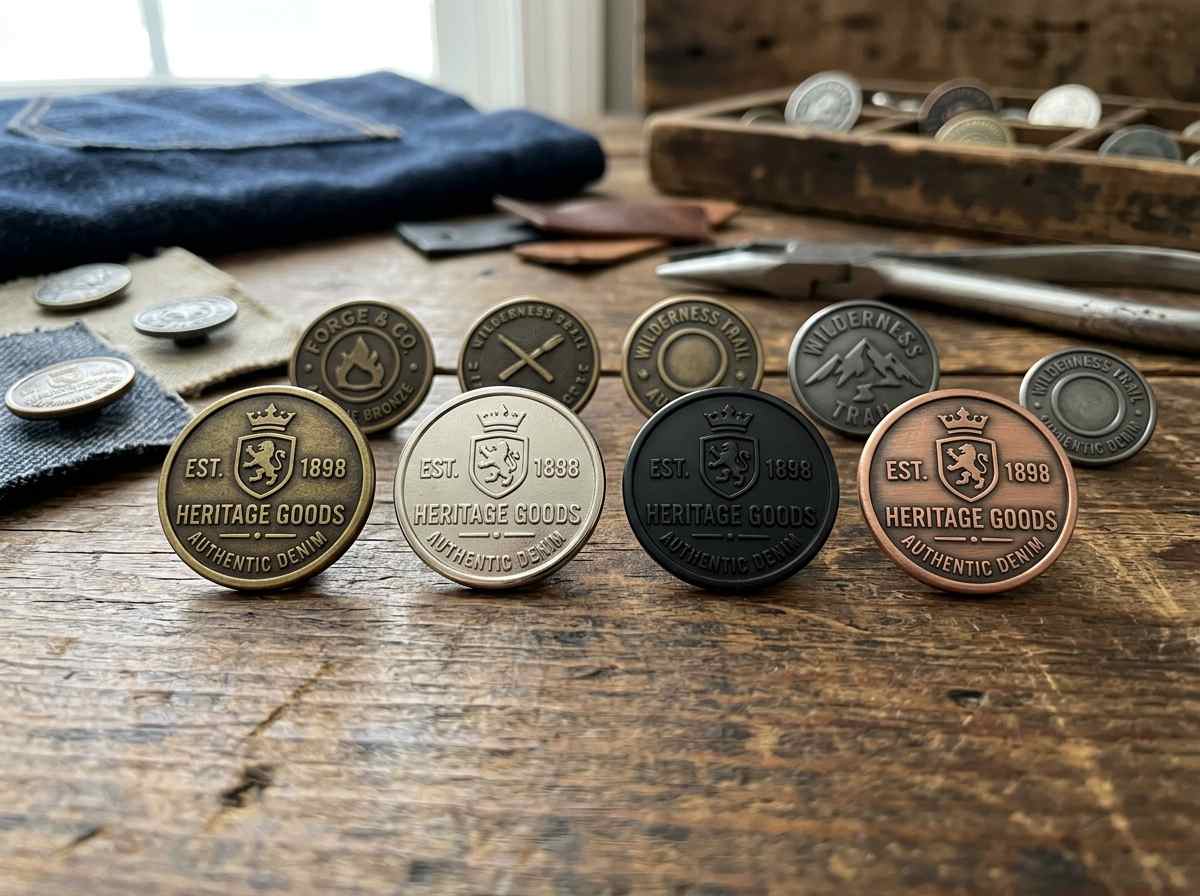
| Structure or style | What it actually describes | Typical strengths | Main limitations to check | Suitable starting applications |
|---|---|---|---|---|
| Donut | An open-centre face using a compatible one- or two-prong fixing | Heritage appearance and distinctive detail | Less logo area; opening and prongs must remain smooth | Selvedge denim, vintage-inspired jeans, button flies and denim jackets |
| Full-face tack | A solid face attached by a tack locked into the shank or insert | Large branding area and efficient production | Pull-out depends on the complete installed system | Main waistband buttons, fashion denim, skirts, shorts and workwear |
| Fixed | Cap and shank remain rigidly oriented | Stable logo direction and firm feel | Receives direct twisting under off-axis loading | Logo-led top buttons, rigid denim and controlled waistband constructions |
| Swivel | A joint lets the cap or cup move within a designed range | Accommodates limited angular movement | Movement must not be confused with looseness | Fitted garments, curved waistbands, jackets and designs requiring controlled movement |
What Makes a Jeans Button Different From a Sew-Through Button?
A conventional sew-through button is held by thread. A jeans button is normally a mechanically attached two-part system: the visible button body sits on the face of the garment, while a tack passes from the reverse side through the textile and locks into the button shank. The rear tack head spreads load on the inside of the waistband or fly.
In export enquiries, jeans buttons metal is only a broad description. It does not identify the cap material, shank insert or one- versus two-prong fixing. Those details affect weight, corrosion, wash compatibility and attachment performance.
A complete jeans-button specification should identify:
- Cap diameter, profile and face design
- Open-centre or full-face construction
- Fixed or swivel internal structure
- Shank material and insert, if used
- Single-prong tack, two-prong fixing or another approved attachment
- Tack head, post length, point and base metal
- Finished colour, plating, coating and logo process
- Compatible dies, press setting and permitted dimensional tolerances
Donut Buttons: Best When Heritage Character Is Part of the Product
A donut button is recognized by its centre opening. It creates a lighter, mechanical appearance associated with vintage workwear and heritage denim. Depending on the supplier’s system, it may be secured with two prongs folded across an internal bar or with a suitable single fixing formed through the centre. The open face, not one universal attachment method, is what defines the visual category.
Donut structures support period-inspired denim and work well on button flies, jackets, chore coats and overalls. The trade-off is branding space: decoration is limited to the ring rather than a full cap.
Buyers must inspect the inner edge and formed prongs. Exposed points or uneven folding can damage the buttonhole or scratch the wearer. When an RFQ groups tack buttons denim buttons together, state whether an open-centre donut, a full-face button or both are required. A section drawing or physical sample is more reliable than front photographs alone.
Full-Face Tack Buttons: Best for Branding and Broad Production Use
In denim sourcing, “tack button” commonly refers to a solid-face button fixed with a single tack. Its broad cap supports embossed, debossed, laser-marked, printed or colour-filled branding and multiple face profiles.
The structure is widely used for a main jean pants button because it balances recognizable branding, efficient press installation and dependable attachment when the component set is correctly matched. It is also practical for skirts, shorts, overalls, jackets and casual workwear.
“Tack button” does not guarantee one strength level. Engagement, insert design, tack length, fabric, reinforcement and press setting all matter. Compare installed samples rather than loose pieces.
Fixed Buttons: Stable Orientation and a Firm Hand Feel
In a fixed construction, the cap and shank do not intentionally move relative to each other. The firm feel and stable logo orientation suit rigid or moderately flexible denim with a controlled waistband.
A curved waistband or off-centre buttonhole can transmit twisting directly into the shank. This does not predict failure, but it makes realistic opening, closing and wear-cycle testing important.
For branded metal jean buttons, define the permitted logo orientation after setting. Automatic feeders and dies must handle the cap consistently if an upright mark is a critical quality characteristic.
Swivel Buttons: Controlled Movement, Not Uncontrolled Looseness
A swivel button lets the cap, cup or upper body move relative to its attached base. Controlled movement may help a curved waistband or a button pulled from different angles.
Swivel does not automatically mean stronger or more durable. The joint adds variables such as clearance, rotational resistance, cap retention and wash stability. It suits fitted jeans, shaped waistbands and selected jacket positions, but may conflict with a directional logo.
Buyers comparing jean button fasteners should ask the supplier to distinguish intentional swivel movement from tack rotation inside the fabric. If the whole installed button spins because the hole has enlarged or the setting is incomplete, that is an installation defect—not a swivel function.
Choose by Garment Position, Not by One Catalogue Sample
Main Waistband Button
The top button crosses outer denim, folded waistband, interlining and sometimes seam allowance. A full-face fixed button suits directional branding; compare a swivel option for strongly curved waistbands, or a donut for heritage styling.
Button Fly
Fly buttons are smaller and work as a group. Low profiles reduce bulk; donuts add vintage character, while full faces add branding space. Check spacing, overlap and rubbing during laundering.
Denim Jackets and Chore Coats
Jacket fronts and cuffs experience multidirectional movement. Either structure can work on a reinforced panel; keep the rear tack away from pressure points and pocket contents.
Skirts, Shorts and Lightweight Denim
Thin stretch denim can compress sharply and tear around weak attachment zones. Select the tack from the compressed stack, add compatible reinforcement and check for tilt after wear cycling.
Workwear and Heavy Denim
Workwear needs pull-out strength, abrasion resistance and wash-compatible finishes. A fixed full-face or special pronged system may suit a validated fabric. Do not transfer ordinary hardware to protective clothing without compliance review.
Size and Tack Length Must Match the Installed Material Stack

About 17 mm for a waistband and 14–15 mm for a fly are common starting points, not universal standards. Ligne-based codes and nominal diameters can still conceal different profiles and shanks.
| Garment position | Practical starting diameter | Key structural question | What to validate |
|---|---|---|---|
| Jeans waistband | 16–18 mm | Fixed or swivel; sufficient tack engagement through the folded waistband | Pull-out, rocking, buttonhole fit and wearer comfort |
| Button fly | 13–15 mm | Low profile and spacing compatible with fly construction | Bulk, rubbing, repeated opening and wash damage |
| Denim jacket front | 15–20 mm | Visible proportion, movement and backing-layer thickness | Panel distortion, hand feel and multidirectional loading |
| Jacket cuff or pocket | 14–17 mm | Rear clearance and local reinforcement | Snagging, pressure points and repeated flexing |
Measure the compressed production stack. The tack must engage without bottoming out, bending or leaving the button loose. Never substitute a tack from another series based only on post length.
Denim Weight Is Only One Part of Fabric Compatibility
Weight is useful, but weave density, stretch content, shrinkage, reinforcement and folded layers are equally important. Two 12 oz denims may behave differently when pierced and compressed.
The visible buttons on jeans should be sampled on the actual stack at each position. A waistband swatch cannot prove that the same setting works on a fly or cuff.
Unless the button system specifically requires a prepared hole, do not pre-punch the fabric by habit. Many tack systems are designed to pierce or move through the weave. An oversized pre-cut hole removes holding material and can lead to rotation or pull-out.
Material and Finish Must Survive the Garment Process
Buttons may combine brass, steel, stainless steel, zinc alloy, aluminium tacks and polymer inserts. Choose by forming, cost, weight, corrosion, magnetic requirements and finish.
Stone or enzyme washing, bleaching, garment dyeing and industrial laundering can alter finishes. Paint may chip, dark plating may mark pale denim and mixed metals may corrode. Put approval samples through the bulk garment process.
For projects requiring finished hardware with very low magnetic permeability after stamping, BaoCheng can manufacture selected custom components using patented JSW20 special austenitic stainless steel. This option can be useful for needle-detection-sensitive or magnetically controlled production environments, subject to validation of the complete button assembly. BaoCheng supplies finished products and customized parts made from JSW20; it does not sell JSW20 sheet or coil.
Installation Dies and Press Settings Decide Whether the Design Works
Even high-quality jeans buttons fail with approximate dies. The dies must support the cap and locate the tack while the press creates full engagement without cutting the textile.
Bulk installation controls should include:
- Correct button, tack and die identification at the workstation
- Material-stack thickness and reinforcement position
- Cap orientation and tack centring
- Press stroke or closing-height setting
- Front appearance, tack seating and shank stability
- Installed height, rotation and pull-out checks at defined intervals
- Separate records by machine, operator, shift and production lot
A button that feels loose should not be corrected by adding force without diagnosis. The cause may be the wrong tack length, incompatible insert, worn die, off-centre setting or excessive fabric compression.
Testing Should Reproduce the Life of the Garment
Loose parts cannot prove garment performance. Test the installed system before and after the intended wash, using a plan matched to the product risk and market.
- Inspection of cap, shank, tack and installed height
- Axial pull-out against a defined minimum force
- Side loading, repeated opening and rotational evaluation
- Fabric tearing, hole enlargement and distortion
- Garment wash, dry-cleaning or industrial-laundry simulation as applicable
- Corrosion, colour change, coating adhesion and denim staining checks
- Sharp-edge, exposed-point and rear-surface inspection
- Needle-detection or magnetic-permeability verification when specified
For children’s apparel or detachable-small-part risks, the responsible brand must define and verify the applicable pull-off, sharp-point and material-safety requirements. For direct and prolonged skin contact in regulated markets, nickel-release and chemical documentation should correspond to the exact base material, plating colour and finishing process.
How Procurement Teams Can Make a Defensible Choice
Evaluate installed cost, not only unit price. Slow setting, rejection, wash damage and rework can erase a small purchase-price saving.
| Priority | Recommended starting direction | Reason |
|---|---|---|
| Vintage or heritage identity | Donut with validated attachment | Open centre creates a period-inspired detail |
| Maximum logo area | Full-face fixed tack button | Stable solid cap supports larger, directional branding |
| Curved or close-fitting waistband | Compare fixed and swivel samples | Controlled movement may improve seating, but must be tested |
| Heavy workwear | Fixed or special pronged system | Prioritizes attachment strength and process durability |
| Light stretch denim | Moderate-size button with compatible reinforcement | Controls local distortion and distributes attachment load |
| Strict low-magnetic requirement | Validated low-permeability finished assembly | Raw-material name alone does not prove final magnetic performance |
What to Put in a Jeans Button RFQ
For a reproducible quotation, avoid sending only denim jeans button. Give the factory enough information to engineer the complete set:
- Garment type and exact button position
- Donut or full-face appearance
- Fixed or swivel requirement
- Finished cap diameter, profile and dimensional tolerances
- Logo artwork, orientation and embossing or engraving depth
- Denim, reinforcement and compressed stack thickness
- Tack style, head, post length and rear profile
- Base material, colour, plating, coating and approved finish sample
- Garment wash, bleaching, dyeing and drying conditions
- Pull-out, corrosion, chemical and magnetic criteria
- Setting machine, required dies, annual volume and packaging method
BaoCheng Custom Jeans Button Support
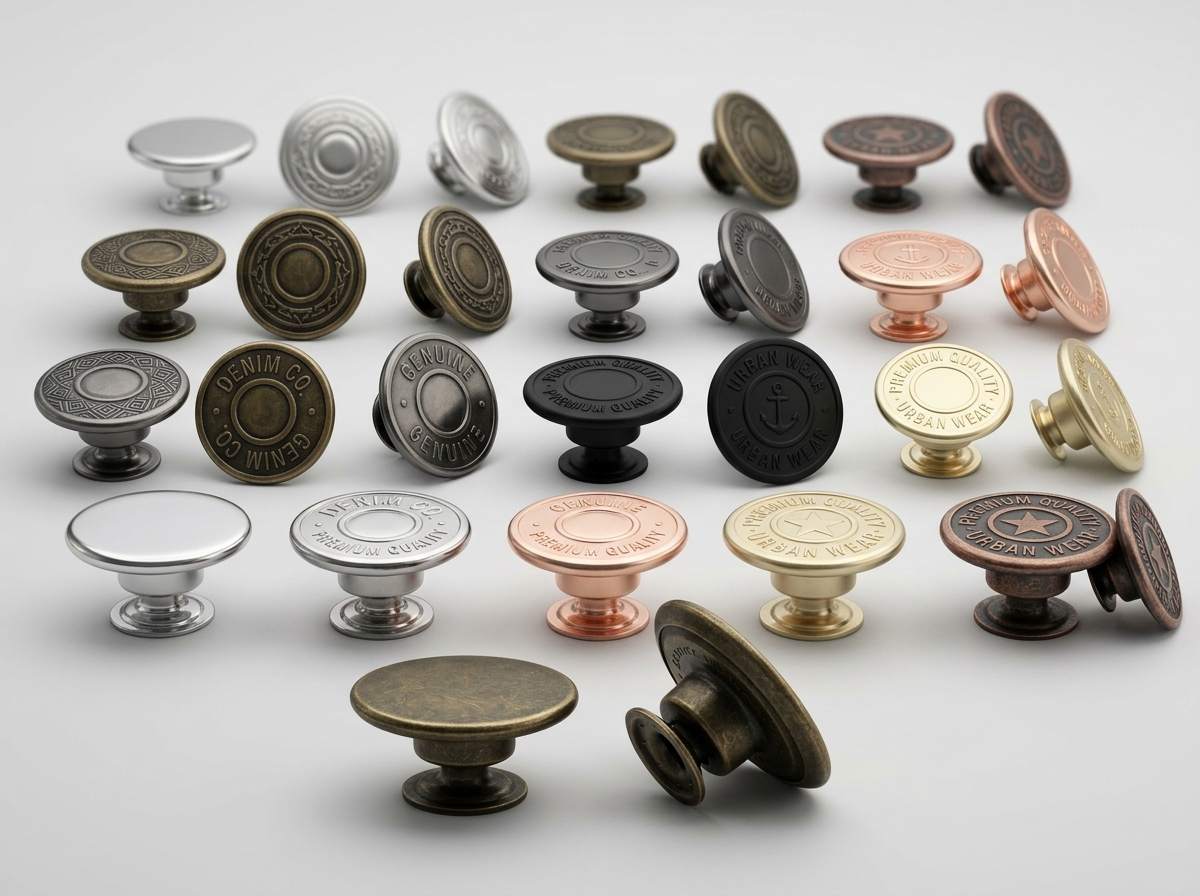
JiaShan BaoCheng Clothing Accessories Co., Ltd. develops custom tack, donut, fixed and swivel denim-button systems for B2B buyers. Options include cap profile, open or closed face, shank structure, tack length, logo, colour, plating, painting, antique effects and project-suitable materials.
Customers should provide a drawing, clear front-and-rear photographs or a physical component, plus actual denim, reinforcement and wash conditions when possible. BaoCheng can review the stack, match the button and tack, and recommend dies.
When design and tooling permit, BaoCheng can provide development samples without charging for the sample pieces; freight is paid by the customer. Bulk manufacturing starts after confirmation of the structure, dimensions, logo, finish, installed appearance and agreed tests.
Depending on the product and project scope, documentation may include the JSW20 patent certificate, OEKO-TEX-related documentation, RoHS, REACH, Intertek reports and nickel-release testing. Each document must match the actual component and finish; one plating report cannot cover every button programme.
Conclusion
Donut describes an open-centre face, tack describes attachment, and fixed or swivel describes post-assembly movement. The categories overlap, so buyers must specify the complete combination.
Use donut styling for heritage character, full-face fixed construction for prominent directional branding, and compare swivel designs for curved garments. Tack length, fabric stack, dies, washing and installed tests ultimately decide bulk performance.
Focused FAQ
1. Is a donut button different from a tack button?
Donut describes an open-centre face; tack describes attachment. A donut may use a compatible single- or two-prong fixing.
2. What is the main advantage of a fixed jeans button?
It provides a firm feel and stable logo orientation, useful for rigid denim and branded waistbands.
3. Does a swivel button mean the installed button is loose?
No. Swivel movement is designed into the button. Rotation inside an enlarged fabric hole is a defect.
4. Which structure is best for a jeans waistband?
A 16–18 mm full-face fixed button is a common start. Test donut or swivel options for heritage styling or curved waistbands.
5. Can the same button be used for the waistband and button fly?
Not always. Fly buttons are usually smaller and lower-profile, with different spacing and material stacks.
6. How should tack length be selected?
Measure the compressed stack and use the tack designed for that shank. It must engage without bottoming out or remaining loose.
7. Should denim be punched before setting a jeans button?
Only when the approved system requires it. An oversized prepared hole can reduce pull-out resistance.
8. Why do jeans buttons fail after garment washing?
Common causes include incompatible finishes, wrong tacks, incomplete setting, shrinkage, aggressive chemicals and wash impact.
9. Can BaoCheng customize logos and finishes?
Yes. Options include cap profiles, logos, laser marking, colour, plating, painting and antique effects, subject to feasibility.
10. What must be approved before bulk production?
Approve the drawing, button-and-tack set, material, logo, finish, dies and installed sample after the intended wash.
#Jeans Buttons, #Tack Buttons, #Donut Buttons, #Fixed Jeans Buttons, #Swivel Jeans Buttons, #Denim Hardware, #Custom Jeans Buttons, #Denim Manufacturing, #Apparel Hardware, #BC New Material