







Why American Consumers Prefer Jeans Buttons: The Evolution of Tack Buttons from Workwear to Premium Denim
American denim culture is shaped by durability, workwear history, brand identity, and material trust. This article explains how jeans buttons evolved from practical waistband fasteners into important denim branding details, and why buyers are paying more attention to button weight, finish, logo design, brass, stainless steel, and non-magnetic stainless steel options.
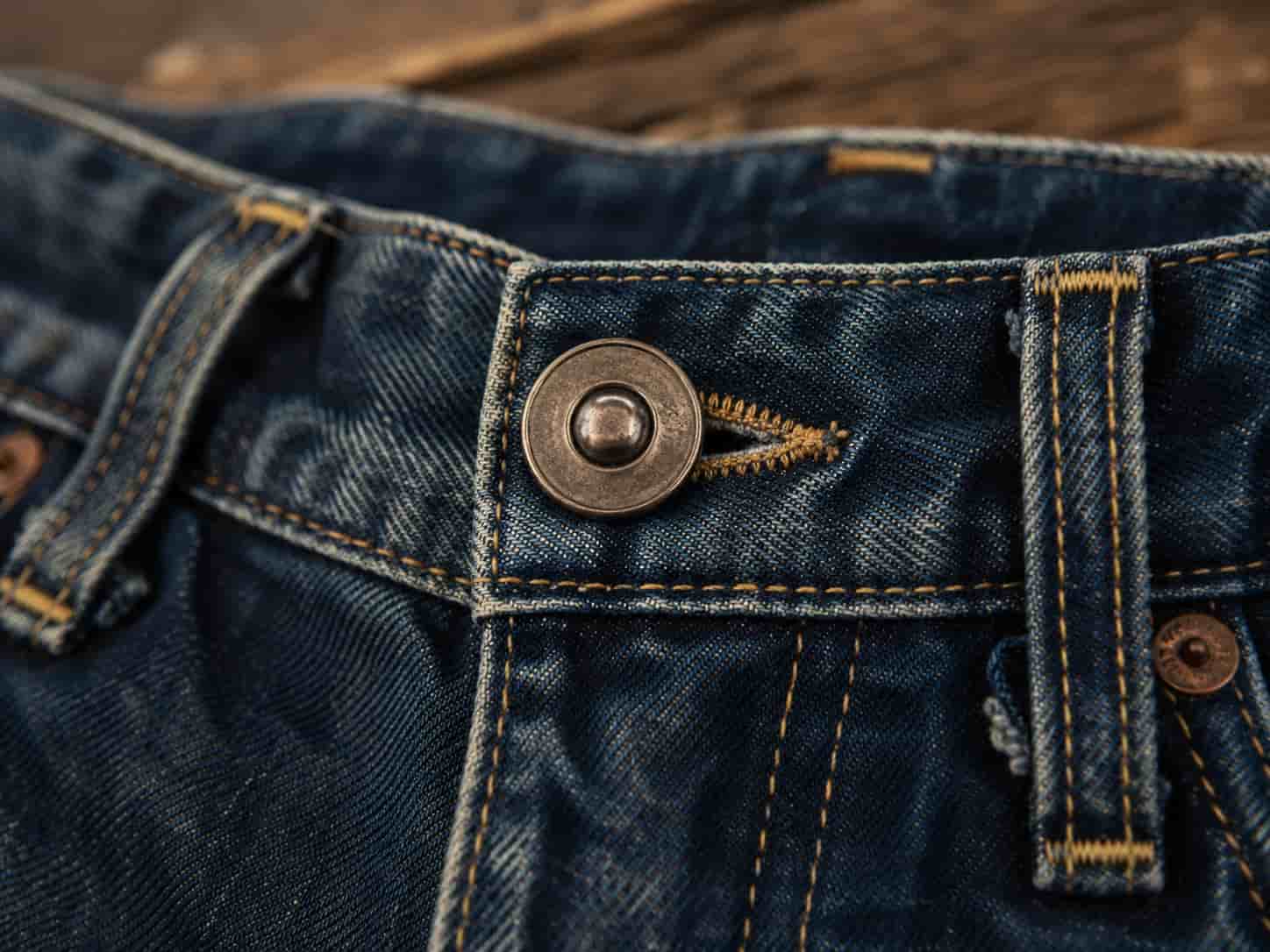
Why a Small Jeans Button Matters in the U.S. Market
A jeans button looks small, but in American denim culture it carries much more meaning than its size suggests. It is a fastener, a stress-bearing component, a brand mark, a material signal, and often a visual reminder of workwear history. For consumers, a button may be touched every day. For brands, it can quietly communicate quality before a customer reads the label.
This is why American consumers often pay attention to denim stud buttons in ways that may surprise new buyers. They may not know the technical name. They may simply call them jean buttons, denim buttons, or metal buttons. But when they hold a pair of jeans, they notice weight, finish, color, edge feel, logo depth, and how firmly the button is fixed.
For manufacturers and trim buyers, this creates a practical lesson. A jeans button should not be treated as a basic accessory only. It is part of the customer’s judgment of the whole garment. If the button feels thin, loose, too light, poorly finished, or easy to rust, consumers may question the quality of the jeans themselves.
In the U.S. market, the preferred jeans button style has been shaped by more than fashion. It has been shaped by mining, railroads, ranching, factory labor, economic hardship, Hollywood, heritage culture, workwear revival, sustainability, and premium branding. To understand what American buyers prefer today, it is necessary to understand how these preferences formed.
Strength Came First: The Workwear Origin of Jeans Buttons
In the late 19th century, jeans were not originally purchased as fashion pieces. They were work garments. Many early wearers were miners, railroad workers, cowboys, farmers, and laborers. Their clothing had to survive pulling, friction, mud, rain, sunlight, tools, saddle contact, and repeated washing.
In that environment, failure of a button was not a small inconvenience. A broken waistband button could make a pair of pants unusable during work. For a worker, durable clothing was part of daily survival and productivity. This is why early metal denim buttons focused first on strength.
The button needed to hold firmly against thick denim. It had to resist pulling at the waistband. It needed a strong tack or nail structure that could lock the button to the fabric. Decoration mattered far less than reliability.
This practical requirement shaped the American idea of jeans hardware. A strong button became associated with honest work, durability, and value. Even today, many consumers still feel that heavier hardware suggests better quality. This does not always mean heavier is technically better in every application, but the perception is powerful.
For B2B buyers, this historical preference matters. American denim customers often expect hardware that looks and feels capable. A button that is too thin, too bright, or too delicate may not match the visual language of traditional denim, especially in workwear, heritage denim, or outdoor apparel.
From Functional Hardware to Brand Identity
During the early growth of the denim market, hardware was mainly functional. Over time, brands realized that metal hardware could also carry identity. A button sits at the center front of the garment. It is visible when the jeans are handled, worn, folded, photographed, or displayed in retail.
This made the button a natural branding surface.
Embossed brand names, symbols, numbers, and decorative rings began to appear on the button face. A simple fastener became a small metal label. Consumers learned to connect these details with authenticity and reputation.
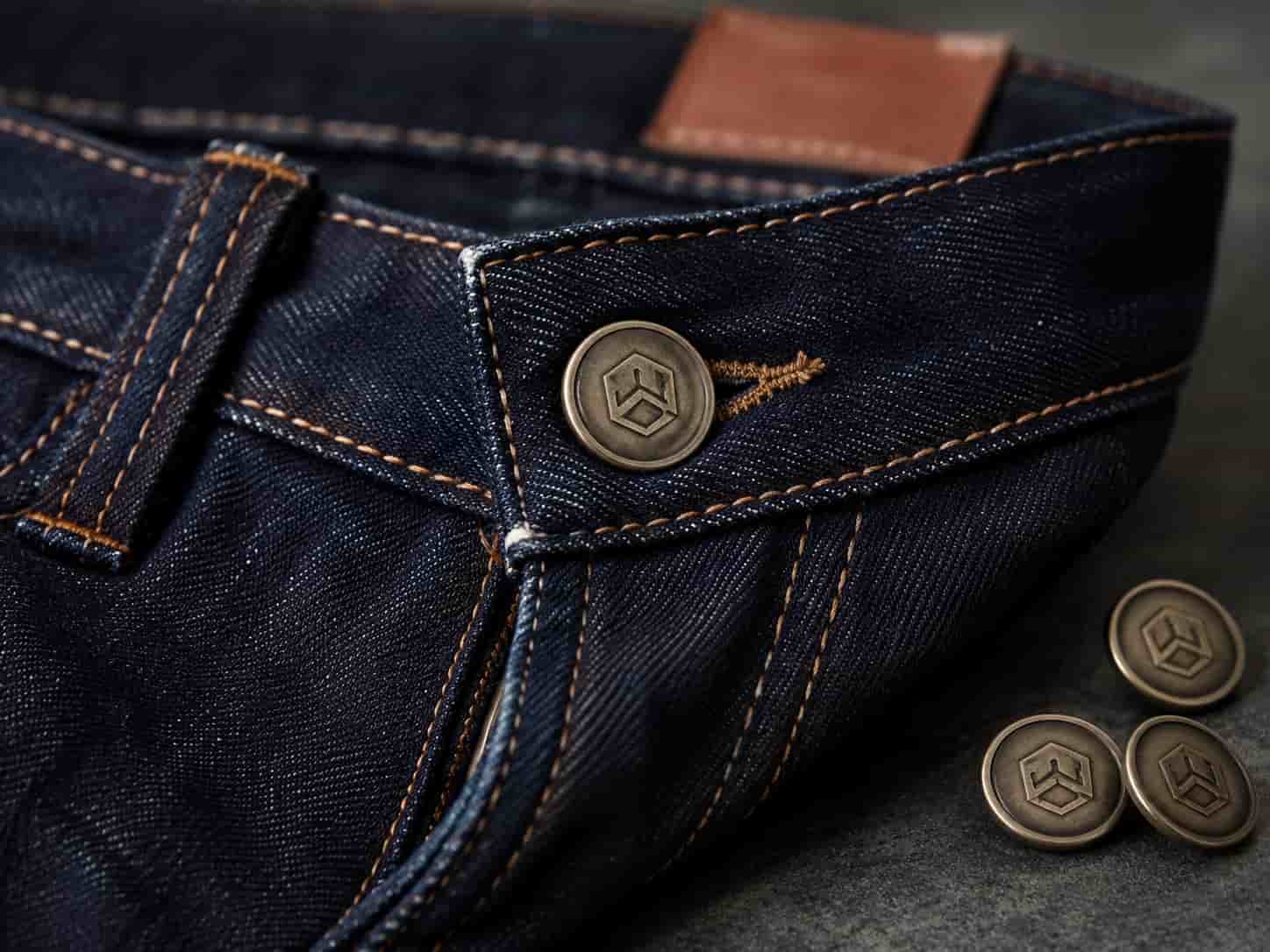
This shift is important for buyers of custom jeans buttons. In premium denim, the button is not only selected by size and material. It is selected by how well it expresses the brand. A deep logo, clean edge, consistent plating, and stable color can make the garment feel more complete.
The same logic applies to denim button fasteners used across different denim collections. A fastener is not only judged by whether it closes the waistband. It is also judged by whether it matches the garment’s identity, supports the fabric weight, and maintains a stable appearance after washing and wear.
The button also works together with rivets, zipper pulls, leather patches, woven labels, pocket stitching, and wash effects. Denim brands use these details to create recognition. A good button design should not look isolated. It should match the brand’s fabric weight, wash style, price position, and target consumer.
For American consumers, this is a familiar part of denim culture. They may not analyze every detail consciously, but they often read quality through hardware. A button with a weak logo, uneven surface, or poor finish can reduce the perceived value of the entire pair of jeans.
Why Brass Became a Classic Denim Material
Brass has played a major role in denim hardware because it offers a strong historical and visual identity. A brass jeans button gives a warm metal tone that fits denim’s workwear roots. It can look classic, rugged, vintage, or premium depending on the finish.
Brass is also easier to form than many stainless steel materials. This makes it suitable for stamping, embossing, polishing, plating, and antique finishing. For brands that want a traditional denim look, brass remains an attractive choice.
In the U.S. market, antique brass, dark copper, and aged finishes have become strongly connected with vintage denim. These finishes suggest that the jeans have a story. They match faded indigo, heavy cotton, leather patches, chain stitching, and worn-in styling.
This is why many American consumers prefer brass-like tones for classic denim and heritage collections. A bright mirror finish may look too modern or too decorative for certain jeans. An aged brass finish can make the garment feel more authentic.
However, brass is not perfect for every product. It is softer than stainless steel. It may wear faster under repeated stress. In humid, sweaty, salty, or outdoor environments, unprotected brass may oxidize, discolor, or develop patina. For some fashion products, this aging can be desirable. For uniforms, outdoor garments, bags, or light-colored fabrics, it may become a quality issue.
So brass should be understood as a strong style material, not a universal answer. It works best when the brand wants warmth, heritage, and classic appearance. It may be less suitable when the product needs stronger corrosion resistance, longer service life, or more stable performance in demanding environments.
The Rise of Stainless Steel in Modern Denim Hardware
As denim moved beyond traditional workwear, material expectations also changed. Consumers began asking for products that last longer, resist corrosion better, and perform in more use environments. This opened more opportunities for stainless steel jeans buttons.
Stainless steel offers a different value from brass. It has a clean modern appearance, good corrosion resistance, higher strength, and better durability in many environments. For outdoor apparel, workwear, uniforms, travel clothing, and functional denim, this can be important.
From a brand perspective, stainless steel also supports a more understated look. It can be polished, brushed, plated, darkened, or treated for different finishes. It can support premium minimalism as well as industrial workwear style.
In recent years, American fashion has shown interest in two seemingly opposite directions. One direction is heritage style, where antique brass and aged copper remain strong. The other is cleaner premium styling, where natural stainless steel, matte black, gunmetal, and subtle metal finishes are attractive. Stainless steel fits this second direction well.
For buyers of metal denim buttons, the choice between brass and stainless steel should depend on product positioning. A vintage denim brand may still choose brass because it supports the story. A workwear brand may prefer stainless steel because it suggests strength and long-term use. A sustainability-focused brand may prefer materials that support longer product life and reduce replacement needs.
This is why modern jeans button purchasing is no longer only about appearance. It is also about use environment, brand image, testing requirement, and long-term product performance.
Why American Consumers Like Vintage Finishes
Vintage finishes are not only a design preference. They reflect a cultural idea. Many American consumers admire products that appear practical, worn-in, and connected to real work. Denim is one of the strongest examples of this mindset.
The popularity of vintage denim grew through several cultural forces. Western films, motorcycle culture, rock music, workwear revival, and the heritage movement all helped turn utilitarian clothing into lifestyle fashion. Jeans were no longer just durable pants. They became symbols of freedom, authenticity, rebellion, and everyday independence.
Buttons followed this shift. A new, bright, perfect button may look less emotional than one with aged texture. Antique brass, dark copper, gunmetal, and matte black create the feeling of history. They make the hardware appear less like decoration and more like a part of the garment’s life.
This is especially important in vintage button fly jeans. Exposed buttons become part of the design. Each button must look consistent, feel strong, and support the garment’s old-school identity.
For buyers, this means finish selection should match the story of the product. A heritage denim line may need antique brass, deep logo embossing, and a heavier button feel. A fashion line may choose cleaner black nickel or gunmetal. A premium minimalist line may prefer natural stainless steel or matte finishes.
American consumers are not only buying a button. They are buying the culture that the button helps represent.
Size, Weight, and Touch: Why Hardware Feel Matters
The physical feel of a jeans button is part of the customer experience. American consumers often judge denim by touch. They feel the fabric weight, waistband firmness, pocket structure, rivets, and button. If the button feels weak, the garment may feel less trustworthy.
Traditional jeans commonly use buttons around 17mm. Larger sizes, such as 20mm, may be used for workwear, jackets, heavy denim, or designs that need stronger visual impact. Smaller sizes may appear in lightweight denim, women’s fashion, children’s clothing, or more refined premium products.
The right size should match the fabric and function. A heavy denim waistband needs a button with enough structure and holding strength. A lightweight fashion garment may need a smaller button to avoid bulk. A jacket button may need a different profile from a pants button.
Weight also matters, but buyers should not treat weight as the only quality standard. A heavier button may feel stronger, but material, structure, tack design, plating quality, and assembly strength are equally important. A well-designed button can feel solid without being unnecessarily heavy.
For sourcing teams, this means sample evaluation should include more than visual approval. Buyers should test attachment strength, surface durability, finish consistency, corrosion resistance, and user feel. The button must look right, feel right, and perform correctly in production.
Non-Magnetic Stainless Steel: A Newer Direction for Premium Hardware
Brass and standard stainless steel still dominate many denim hardware decisions. However, some buyers are beginning to evaluate non-magnetic jeans buttons for specialized and premium applications.
This trend is connected to several needs. First, some brands want better corrosion resistance and longer service life. Second, export and industrial garment buyers may need better control of magnetic behavior during inspection. Third, premium apparel brands are paying more attention to material stories that support quality and durability.
Non-magnetic stainless steel is not just stainless steel that looks clean. The important question is whether the finished button remains magnetically stable after stamping, forming, and assembly. Some ordinary stainless steels may develop weak magnetism after cold working. This can matter in applications where magnetic response affects inspection or customer requirements.
This is where ultra-low magnetic permeability stainless steel, such as JSW20, becomes relevant. It gives buyers a way to combine stainless steel durability with stable non-magnetic behavior after processing. For denim buttons, this can be useful in outdoor garments, workwear, uniforms, humid environments, technical textiles, or products with stricter inspection expectations.
Baocheng does not sell JSW20 as raw material. We manufacture finished products and customized metal components made from JSW20. For denim brands and sourcing teams, this means the material advantage is connected directly to product manufacturing, not separated from it.
Although non-magnetic stainless steel jeans buttons are still a more specialized category, they fit the direction of premium, durable, and function-driven apparel hardware.
What This Means for B2B Buyers
For B2B buyers, American consumer preference should not be reduced to one finish or one material. The market is too diverse. Heritage denim, luxury denim, workwear, outdoor apparel, uniforms, streetwear, and sustainable fashion all require different button strategies.
A better approach is to match the jeans button to the product line.
For heritage denim, buyers may choose brass or antique brass finishes because they support vintage culture and traditional appearance.
For workwear and outdoor apparel, stainless steel or non-magnetic stainless steel may be more suitable because the product needs strength, corrosion resistance, and long-term reliability.
For premium minimalist denim, buyers may choose natural stainless steel, gunmetal, or matte black finishes with subtle logo design.
For fashion denim, buyers may focus on color, custom logo, surface detail, and seasonal design.
For export or inspection-sensitive orders, buyers should also consider whether the finished hardware may affect needle detection or magnetic requirements.
This is the practical value of understanding American consumer preference. It helps buyers avoid choosing hardware only by unit price. A cheap button that does not match the garment story, fails inspection, or wears too quickly can reduce the value of the whole product.
The right jeans button should support three things at the same time: garment function, brand identity, and consumer expectation. This is especially true for jeans button components made of metal, which are small in size but highly visible in quality perception.
The Jeans Button Is a Small Metal Story
The evolution of jeans buttons in the United States shows how a small component can carry more than a fastening function. In the beginning, strength mattered most because jeans were made for hard work. Later, buttons became branding tools. Then vintage finishes turned hardware into a symbol of heritage and authenticity. Today, material quality, sustainability, corrosion resistance, and magnetic stability are becoming more important.
American consumers still value durability. They still respond to hardware that feels strong and honest. But they also appreciate design, history, brand identity, and material quality.
For buyers, this means jeans button selection should be strategic. Brass remains valuable for vintage and decorative styles. Stainless steel offers strength and modern durability. Non-magnetic stainless steel creates a newer option for premium and functional applications.
A small tack button can influence how consumers judge the whole garment. It can signal workwear tradition, brand credibility, and long-term value. For denim brands, sourcing teams, and garment manufacturers, the best button is not simply the cheapest or most decorative one. It is the one that fits the product story, performs reliably, and meets the expectations of the target market.
Focused FAQ
Why are jeans buttons important in American denim culture?
Jeans buttons are connected to workwear history, durability, brand identity, and consumer trust. In the U.S. market, a strong metal button often makes jeans feel more reliable and higher quality.
What are jeans buttons usually called?
They are often called jeans buttons, denim stud buttons, denim buttons, or denim button fasteners. In B2B sourcing, the term tack button is commonly used for the button and nail structure used on denim.
Why do American consumers like antique brass jeans buttons?
Antique brass finishes match the heritage look of denim. They create a vintage, worn-in, and authentic feeling that many American consumers associate with traditional workwear and classic denim.
Are brass jeans buttons still popular?
Yes. Brass remains popular in heritage denim, vintage collections, fashion jeans, jackets, bags, and visible trims. It offers a warm tone and classic decorative value.
Why are stainless steel jeans buttons becoming more common?
Stainless steel offers corrosion resistance, strength, clean appearance, and long-term durability. It is useful for workwear, outdoor apparel, uniforms, and premium minimalist denim.
What are non-magnetic jeans buttons?
Non-magnetic jeans buttons are made from materials designed to keep very low magnetic response after forming. They are useful when buyers need durability, corrosion resistance, and stable magnetic performance.
How should B2B buyers choose jeans button materials?
Buyers should consider garment type, fabric weight, brand style, finish, corrosion environment, inspection requirement, and target consumer preference before selecting brass, stainless steel, or non-magnetic stainless steel.
Does Baocheng sell JSW20 raw material for jeans buttons?
No. Baocheng supplies finished jeans buttons and customized metal components made from JSW20, helping buyers solve real application problems through material selection and product manufacturing.
#Jeans Buttons, #Denim Stud Buttons, #Denim Hardware, #Custom Jeans Buttons, #Metal Denim Buttons, #Denim Button Fasteners, #Brass Jeans Button, #Stainless Steel Jeans Buttons, #Non-Magnetic Jeans Buttons, #American Denim Culture, #Workwear Hardware, #Premium Denim Details, #Vintage Denim Style, #Apparel Hardware, #Jeans Button Components, #Denim Brand Identity, #Denim Manufacturing, #Jeans Button Materials, #B2B Garment Hardware, #Baocheng Metal Accessories
