






Decorative Eyelets for Handbags and Premium Leather Goods: What Defines Quality?
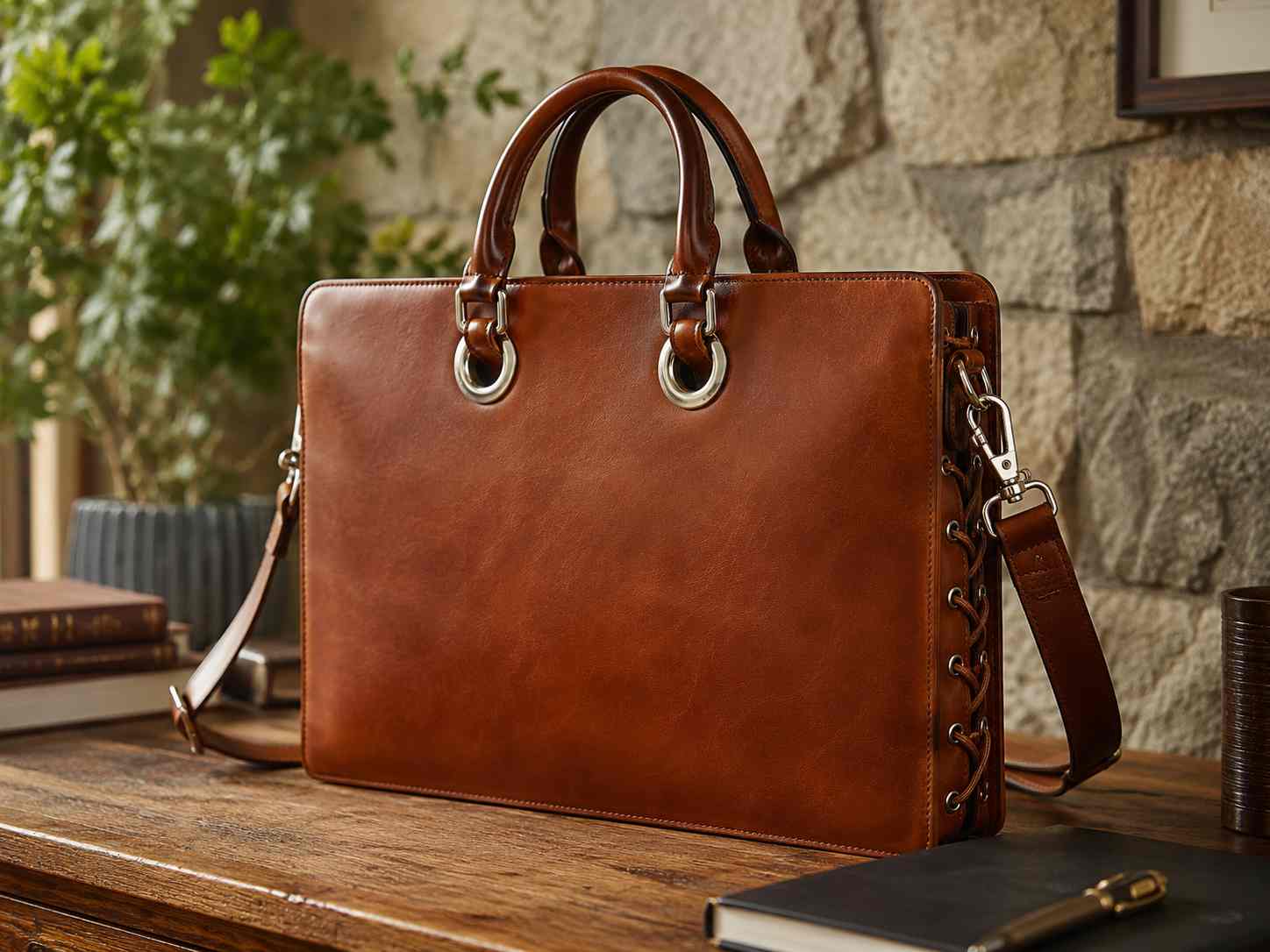
A decorative eyelet may occupy less than one square centimeter of a handbag, yet it can reveal the quality level of the entire product. On premium leather goods, buyers do not judge the component only by how it looks in a tray. They judge whether every visible face is consistent, whether the finish survives setting and use, whether the back is clean, and whether the installed eyelet remains secure without damaging the leather.
1. Start With the Function, Even When the Eyelet Is Decorative
An eyelet may frame a drawcord, reinforce a strap slot, ventilate a compartment, protect a drainage hole or act as a visual signature. A drawcord creates rubbing and directional pull; a strap slot carries intermittent tension; a decorative ring may carry little load but must not rotate, rattle or mark the lining.
Buyers should define the application before selecting the appearance. Large decorative grommets can create a bold focal point, but a wider visible face does not automatically produce stronger retention. The flange, barrel, washer, material stack and setting geometry must work together. If the component is mounted through soft lambskin, a foam-backed panel or several layers of leather and reinforcement, the same eyelet will behave differently in each construction.
State whether the hole is functional, decorative or both; whether a cord moves through it; which sides are visible; its edge distance; and expected load, flexing, moisture and abrasion. These facts determine the shape, bore, flange coverage, barrel, washer and finish.
2. Quality Begins With the Drawing, Not the Color Sample
Before approving color, lock the geometry. The drawing should define the opening, outside barrel diameter, length under flange, flange, metal thickness, corner radii, washer and critical tolerances. For logo parts, define depth, orientation and position on the panel.
| Quality characteristic | Why it matters on premium leather goods | Useful purchasing control |
|---|---|---|
| Flange profile and face flatness | Controls the visible silhouette, contact with leather and reflection of light. | Dimensioned drawing, approved face profile and limit samples for waviness. |
| Inside opening | Affects cord clearance, edge contact and visual centering. | Nominal dimension, tolerance and go/no-go gauge where appropriate. |
| Outside barrel diameter | Must match the prepared hole and setting die without excess clearance. | Part tolerance plus a defined hole-making method. |
| Length under flange | Must pass through the compressed stack and leave enough material for a controlled roll. | Test on production-representative leather, reinforcement, foam and lining. |
| Metal thickness and hardness | Influence forming force, coil shape, splitting and face distortion. | Approved material state and installed cross-section during validation. |
| Washer fit | Controls load distribution and backside neatness. | Matched eyelet-and-washer set; never approve the pieces independently. |
Round components are relatively forgiving because rotational alignment is unimportant. By contrast, square grommets immediately expose skewed installation, unequal corners and inconsistent face-to-panel alignment. Oval eyelets need controlled major and minor axes, while oblong grommets require enough corner radius to avoid stress concentration and visible leather cutting. These shapes normally need dedicated cutting and setting tools plus an orientation control in the workstation.
For a non-round part, request a section view of the barrel transition below the flange. An abrupt transition can crease thin leather; an over-rounded one can leave a gap. Define the reverse-side appearance too, especially inside an unlined pocket.
3. Base Material and Surface Color Are Different Specifications
Terms such as “brass,” “bronze” and “gunmetal” are often used casually to describe color. That is risky in a purchase order. Antique brass eyelets may be made from brass, steel or another suitable metal and then finished to an antique-brass appearance. Likewise, antique brass grommets describe a commercial look unless the base material is separately identified. The buyer should state both the substrate and the finish.
The same rule applies to bronze eyelets and bronze grommets. “Bronze-tone” is not proof of a bronze alloy. This difference affects forming behavior, corrosion response, magnetism, price and finish adhesion. A technically complete specification might read: “brass substrate, satin antique-brass electroplated finish, approved master color, clear protective topcoat,” rather than simply “antique brass.”
Common substrates include formable brass, economical steel, corrosion-oriented stainless steel and low-mass aluminum. Selection must consider setting deformation: hard or thick metal needs more force, while a soft thin wall can distort under excessive pressure.
For applications that require ultra-low magnetic response at a practical cost, BaoCheng can also evaluate components made from its patented JSW20 special austenitic stainless material. JSW20 is supplied as finished stamped hardware rather than raw sheet or coil. Its suitability still needs confirmation against the project’s forming, finish, corrosion and appearance requirements.
4. Premium Finish Quality Is More Than a Color Name
A verbal color description cannot align hardware made by different processes. Gunmetal grommets, for example, can range from cool black nickel to warm smoky gray. Approve a physical master under agreed lighting and define bright, satin, brushed or matte gloss.
A useful finish approval covers four separate attributes:
- Color: hue, lightness and acceptable lot-to-lot difference.
- Gloss: bright, satin, matte or deliberately aged.
- Texture: smooth, brushed, tumbled or patterned.
- Distribution: the visible flange, inside bore, barrel edge and washer should show the intended coverage.
Antique finishes are deliberately uneven. Control them with approved upper and lower limit samples, and define where dark antiquing, inner-wall variation and edge burnishing are acceptable.
Inspect loose and installed parts for pits, blisters, peeling, stains, contact marks, exposed substrate and color drift. The die can scratch a face or break a brittle topcoat, while leather oils, adhesives and packaging can change the finish later. Use actual contact materials in compatibility trials.
5. Decorative Details Must Survive Manufacturing and Use
Embossed logos, cutout motifs, colored infills and stones increase the number of possible defects. Logo edges should be crisp without burrs; the depth should be sufficient to remain readable after plating but not so deep that dirt or heavy antiquing accumulates unpredictably. If logo direction matters, the setting system must prevent rotation between the feeder, die and bag panel.
Rhinestone grommets need more than a visual stone check. The stone should be centered, the setting or adhesive should tolerate the eyelet-installation force, and no prong or edge should snag leather, lining or the user’s hand. Sampling should include stone-retention checks after setting, flexing, rubbing and reasonable temperature exposure. A stone that is secure in a loose component can loosen when the metal face is compressed by an incorrectly profiled die.
Because raised or faceted faces change under light, rotate critical parts during inspection and define the viewing distance, light and orientation.
6. Match the Barrel and Washer to the Real Leather Stack
Nominal leather thickness is only a starting point. The installed stack may include folds, skived edges, backing, board, foam, reinforcement, adhesive and lining. Compressible layers can recover after setting; oily leather may creep, while stiff coated leather can crack around a rough hole.
| Material condition | Typical risk | Design or process response |
|---|---|---|
| Thin, soft leather | Flange sinks in, hole stretches or part pulls through. | Increase bearing area, add discreet reinforcement and control setting pressure. |
| Thick multilayer panel | Barrel is too short to form a complete, secure roll. | Measure the assembled stack and validate a longer barrel with the production die. |
| Highly compressible foam-backed panel | Part feels tight at first, then becomes loose after recovery or creep. | Run conditioned samples and recheck rotation and attachment after dwell time. |
| Coated or patent leather | Surface cracks, dents or shows a pressure halo. | Optimize hole cutting, die face, support and closing force; approve cosmetic limit samples. |
| Oily or waxy leather | Finish staining, adhesion loss or migration. | Conduct contact compatibility trials and review the protective topcoat. |
| Edge-adjacent placement | Leather tears toward the edge under load. | Increase edge distance or reinforce the panel based on installed testing. |
A small hole can scrape the barrel and raise leather around the flange; a large hole reduces support and encourages rotation or pull-out. Control hole diameter, cut quality and punch wear as carefully as the eyelet dimensions.
Washer-backed structures are usually preferred when loads are meaningful, materials are soft or the reverse side needs controlled load distribution. A one-piece structure may be suitable for lower loads or where backside thickness must be minimized. Neither is automatically “premium.” The better design is the one that produces a smooth, complete and repeatable setting on the actual material without exposed sharp edges.
7. Matched Setting Dies Are Part of the Product
A slight part-to-die mismatch can collapse the barrel, split the roll, loosen the setting or mark the face. Treat the eyelet, washer, dies, cutter and machine setting as one validated system; a generic die may contact the wrong flange area or misguide the barrel.
The setup should control:
- Upper and lower die profile, polish and alignment.
- Hole cutter size and condition.
- Closing height, force or machine stroke.
- Eyelet and washer orientation.
- Panel support so soft leather does not distort.
- Cleaning frequency to prevent metal or adhesive debris from marking the face.
For non-round or logo-oriented parts, use a positive locator rather than relying only on the operator’s eye. First-off samples should be checked at the start of a shift, after a die change, after maintenance and whenever the material stack changes. A correct setting has a centered, smooth roll; firm seating without spin; no split metal; no sharp backside; and no unacceptable dent, halo or finish damage on the visible face.
8. Build an Installed-Part Quality Plan
Decisive tests use installed parts. Measure attachment strength with a defined pull method and record the failure mode. Agree the sample construction, load direction, conditioning and threshold; a high force is not a pass if the leather tears prematurely or the decorative face deforms.
| Control stage | Recommended check | Reject or investigate when |
|---|---|---|
| Loose component | Critical dimensions, burrs, face flatness, logo, finish coverage and color/gloss. | Dimensions drift, sharp edges appear, substrate is exposed or appearance leaves the approved limits. |
| First-off setting | Face condition, orientation, backside roll, section cut, rotation and panel distortion. | The roll is split or eccentric, the part spins, the face is marked or leather shows cracking. |
| Mechanical validation | Attachment/pull-out, torque or rotation, repeated cord movement, flex and abrasion as applicable. | The part loosens, pulls out, cuts the cord, damages leather or loses a decorative insert. |
| Finish validation | Rub, artificial perspiration/contact screening, corrosion exposure and post-test appearance as required. | Color transfers, coating peels, corrosion appears or unacceptable discoloration develops. |
| Lot inspection | Sampling to the project’s approved plan, with traceability to forming and finishing lots. | Defect rate exceeds the agreed acceptance level or a critical safety defect is found. |
Classify defects by risk. Sharp edges, cracked barrels or insecure attachment can be critical; visible plating damage, wrong logo orientation and color mismatch are normally major on a luxury-facing surface. Define minor variation with physical limit samples.
The golden sample should be a fully installed assembly. Keep the color master and appearance limits separately, and record the substrate, finish route, lot, die, machine setting and material stack for repeat orders.
9. What Buyers Should Put in an RFQ or Purchase Specification
A clear RFQ reduces sampling cycles and prevents suppliers from making assumptions. Include the following information in a compact technical package:
- Application and annual/order quantity.
- 2D drawing with controlled dimensions and tolerances.
- 3D file where shape or logo geometry is complex.
- Base material and required material state.
- Finish name plus physical color/gloss master.
- Leather type and complete assembled thickness range.
- Hole-making method and target hole dimension.
- One-piece or washer-backed construction.
- Visible sides and cosmetic inspection zones.
- Logo orientation and allowable angular deviation.
- Mechanical, corrosion, chemical and appearance tests.
- Compliance documents required for the exact item.
- Packaging method that prevents face-to-face scratching.
- Matched die, installation machine and trial requirements.
Catalog size names vary by supplier, so the drawing, actual material stack and installed sample must govern. Confirm the finish route as well as the color because plating, electrophoretic coating, paint and other processes differ in appearance, cost and performance.
10. BaoCheng Custom Eyelet Support for Handbag Programs

BaoCheng supports custom metal eyelets and complementary plastic eyelet solutions for handbags and leather goods. Options include the opening, flange, barrel, washer, non-round shape, logo, material, color, electroplating or other surface treatment, and matched setting dies. The objective is a stable installed system, not only a matching loose part.
Before quotation or tooling, customers should provide a dimensioned drawing whenever possible. If no drawing is available, clear photographs and a physical reference sample can help establish the geometry. BaoCheng also recommends sending the real leather and full layer stack, including reinforcement, foam, adhesive and lining. This enables barrel selection, hole trials, die matching and cosmetic evaluation under conditions closer to bulk production.
Where feasible, BaoCheng can provide free sample pieces for evaluation; courier freight is paid by the customer. Samples should be installed and approved on the actual bag material before the bulk order is released. After the customer confirms dimensions, finish, installed appearance and performance, mass production proceeds against the approved sample and agreed specification.
Documentation can be coordinated according to the exact material, finish and project requirement, including relevant nickel-release testing, Intertek reports, OEKO-TEX-related documentation, RoHS/REACH information and the JSW20 patent certificate where applicable. Buyers should verify that any certificate or report matches the ordered substrate, finish, color and production scope rather than assuming that one document covers every eyelet variant.
Focused FAQ
1. Are eyelets and grommets the same in handbag specifications?
The terms overlap in commercial use, so the name alone is not reliable. Control the part by drawing, flange and barrel dimensions, washer structure, material, finish and approved installed sample.
2. What dimensions most strongly affect the visible quality?
Flange outline, face flatness, opening position, corner radii and concentricity dominate appearance. Length under flange, barrel diameter, wall thickness and washer fit determine whether that appearance survives setting.
3. Is a washer-backed eyelet always better for leather?
No. A washer normally improves load distribution on soft or highly loaded stacks, but it adds backside thickness and needs correct barrel length. Validate both structures on the actual panel and select the one that meets appearance and strength requirements.
4. How should barrel length be selected for folded or multilayer leather?
Measure the complete assembled stack at the eyelet location, including compressed layers. Choose enough length to form a smooth, secure roll without excess barrel collapse, then verify it by sectioning and pull testing production-representative samples.
5. How can setting marks on the decorative face be prevented?
Use a matched, polished upper die that supports the intended face area; keep the die clean and aligned; control closing height or force; and support the panel. A protective interface may help only if it does not change die engagement or leave texture.
6. How should antique brass or gunmetal color be specified?
State the base metal and finish route separately, then approve a physical color/gloss master plus upper and lower limit samples. Define lighting, viewing conditions and whether darker antiquing is allowed in recesses or along edges.
7. Which test proves that a decorative eyelet is securely attached?
An installed attachment-strength or pull-out test is the primary evidence. Add rotation, flex, cord-abrasion or repeated-loading tests according to the function. Record both the force and the failure mode.
8. How can corrosion or leather staining be reduced?
Select an appropriate substrate and finish system, control coating coverage, and test contact with the actual leather, adhesives, chemicals and packaging. Corrosion and migration tests should reflect the product’s market and expected exposure.
9. What extra checks are needed for stone-set decorative eyelets?
Inspect stone centering, color and surface condition; verify that prongs or adhesive do not create sharp points; and test retention after eyelet setting, flexing, rubbing and relevant temperature exposure.
10. What should a buyer send BaoCheng to start a custom project?
Send the drawing or a physical reference, target color or hardware master, expected quantity, test and documentation requirements, plus the real leather and complete layer stack. BaoCheng can then assess dimensions, material, finish, washer and matched tooling before sampling.
#DecorativeEyelets, #HandbagHardware, #LeatherGoodsHardware, #CustomEyelets, #MetalEyelets, #BagHardware, #LuxuryLeatherGoods, #EyeletManufacturer, #BaoCheng, #BCNewMaterial