







Adjustable Buttons for Jeans: From Workwear Tack Buttons to No-Sew Waist Solutions
Introduction
For most of denim history, a jeans button had one job: stay attached during hard wear. Today, the category also includes screw-in replacements, removable waist-tightening pins and decorative hardware. Consumers may want to repair a closure, reduce a loose waistband or add a gold accent.
These products can look similar in an online image, but they do not work in the same way. For a denim brand, importer or hardware buyer, treating every button for jeans as interchangeable can lead to fabric damage, poor retention, uncomfortable pressure or inaccurate product descriptions.
The best way to understand the modern market is to follow the jeans button from its permanent workwear origin to today’s adjustable, no-sew and reusable formats.
The Starting Point: Permanent Hardware for American Workwear
Blue jeans emerged from a durability problem. In 1873, a U.S. patent for reinforcing work trousers with metal rivets helped establish the construction associated with modern jeans. Early waist overalls were built for physical labor, and their button fly and metal reinforcement became recognizable denim features.
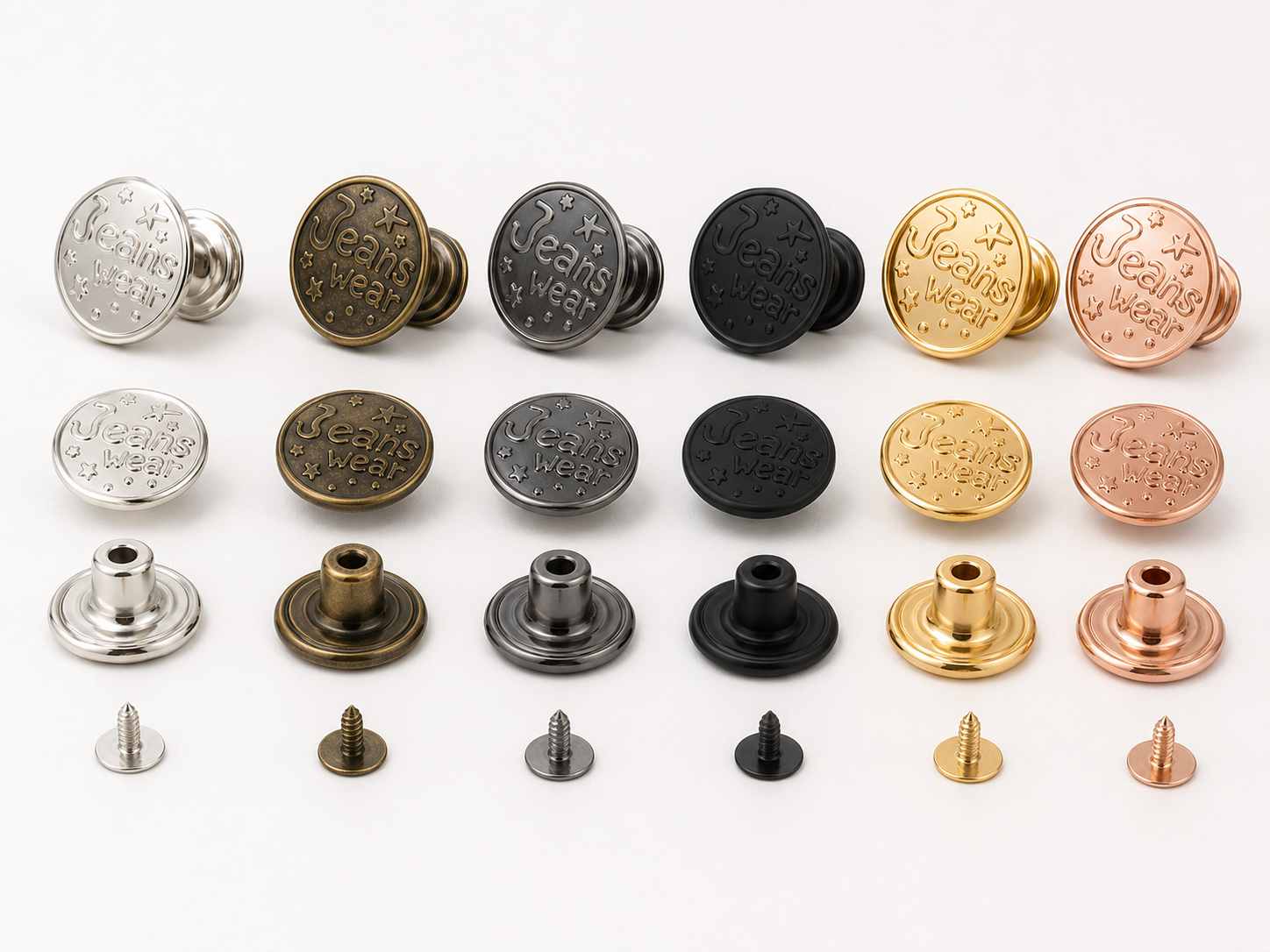
The traditional tack button for jeans follows that strength-first logic. A visible button body locks mechanically to a tack driven through the fabric. The garment opens through a sewn buttonhole; the metal parts do not snap apart during use.
The component also became branding space. Raised lettering, recessed backgrounds, antique brass, copper, gunmetal and matte finishes communicate workwear heritage or premium positioning. Industrial tack buttons remain normal for volume production, but they are no longer the only product consumers call a “jeans button.”
One Search Category, Four Different Fastening Systems
| Product type | How it attaches | Intended role | Reusable? | Typical buyer |
|---|---|---|---|---|
| Permanent tack button | Tack or prong is mechanically set into the button body | Original closure in manufactured jeans | Normally no | Denim brand or garment factory |
| Screw-in replacement button | Threaded front and back parts are tightened through the waistband | Repair or repositioning | Often yes | Repair shop, retailer or consumer |
| Detachable waist-tightener pin | Pin-and-lock or spring mechanism clips onto a new point | Temporary waist reduction | Usually yes | Consumer accessory market |
| Snap fastener | Male and female snap components engage each other | Press-to-close garment fastening | Depends on design | Apparel, western wear or outerwear brand |
“No-sew” describes the absence of needle and thread, not one universal structure. Some non-sew jeans buttons are installed with a hammer tool, pliers or a mounting tool. Others use threaded front and back parts. Buyers must identify the mechanism instead of relying on the no-sew label alone.
1. Permanent tack buttons
A factory-set tack button remains on the garment. Performance depends on the button body, tack geometry, waistband stack and setting process. Industrial versions can be designed for automatic feeding, different logo styles and demanding denim wash conditions.
This is the correct system when a brand needs a dependable original closure, controlled logo orientation and repeatable bulk production. Removal usually damages the tack or leaves a hole, so it should not be marketed as casually repositionable.
2. Screw-in replacement buttons
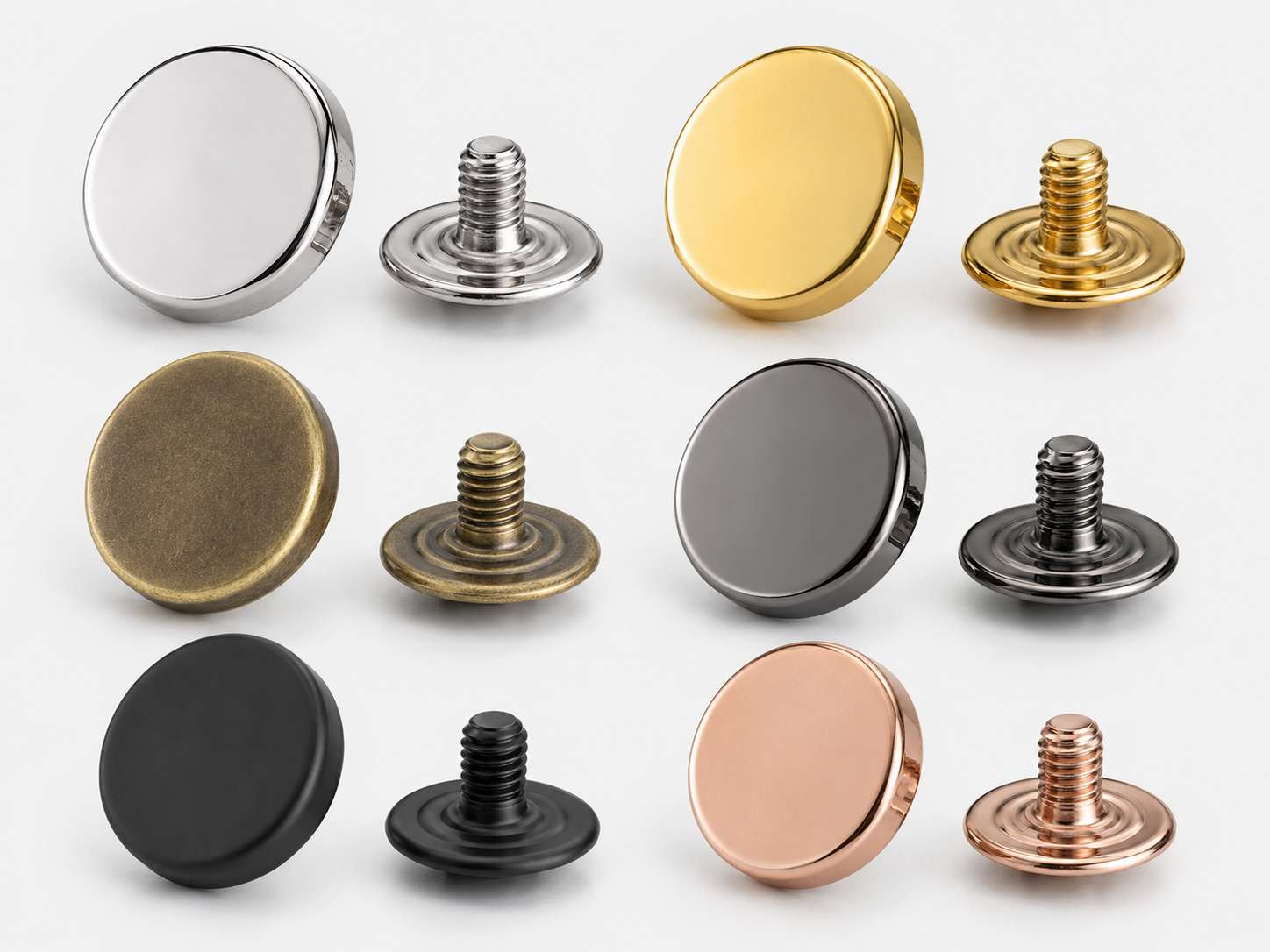
A replacement jeans button with a threaded post can repair a missing closure or create a new position. Its two parts tighten rather than permanently crimp. Reusable versions suit repair kits, rental wardrobes, costume departments and consumers without an attaching press.
Screw-in does not mean suitable for every fabric. Thin, loosely woven or damaged fabric may need reinforcement, while an excessively long post can move or press against the body. Evaluate thread engagement, anti-loosening performance and back-part profile.
3. Detachable waist-tightening buttons

An adjustable jeans button used as a waist tightener is usually placed beside the original button. The wearer closes the existing buttonhole around this new position, reducing the effective waistband circumference without altering the side seams or center back.
This is why adjustable buttons for jeans appeal when jeans fit through the hips but gap at the waist, body measurements are changing or a temporary adjustment is preferred. The accessory can often be moved or removed.
The adjustment range must remain modest. Moving the closure too far can distort the fly, shift the zipper or concentrate load on a small fabric area. A detachable jeans button tightener cannot replace pattern correction when the garment is substantially too large.
4. Snap fasteners are a different category
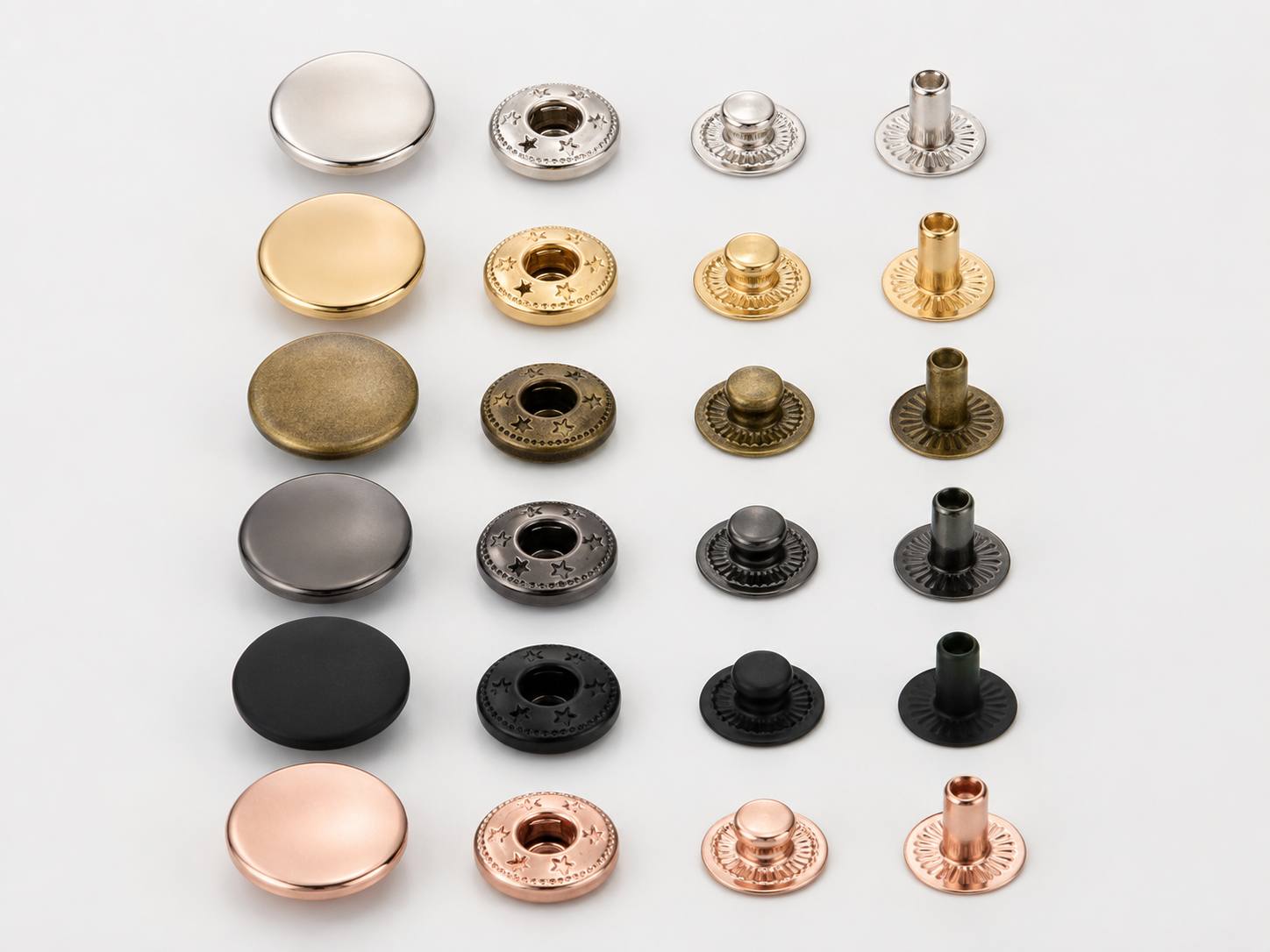
A product described as snap button for jean needs careful checking. In professional terminology, a snap fastener normally consists of mating components that press together and pull apart. A traditional jeans tack button stays attached to its tack and works with a buttonhole.
Both systems may appear on denim garments, but their parts, dies and opening behavior differ. Professional fastener specifications treat tack buttons and snaps as separate product families. A purchase order must identify a tack button with buttonhole or a complete press-fastener set.
Why No-Sew and Adjustable Products Became More Relevant
The original jeans button served manufacturing. Modern adjustable products respond to what happens after the garment reaches the wardrobe.
First, body shape and labeled waist size do not always align. Stretch, rise, waistband construction and waist-to-hip proportion can create a gap even when the seat fits. A removable button offers a quick adjustment.
Second, consumers repair, resell and restyle garments. Jean No-Sew Buttons support home repair without a sewing machine or industrial press. Yet “no-sew” does not mean “no preparation”: some systems require a hole, hand tool or controlled tightening.
Third, weight change, pregnancy transitions, costume fitting and thrifted garments create demand for reversible hardware. Its value is the ability to change fit without immediate permanent tailoring.
Finally, the button has become visible jewelry. Flower shapes, pearls, enamel, rhinestones and polished finishes turn a waist-tightening device into a styling detail rather than something the wearer wants to hide.
Why Gold Buttons Change the Look of Denim
Dark indigo and black denim contrast strongly with warm metal. Styles described as jeans with gold buttons can therefore appear more decorative or fashion-led than styles using antique brass or silver hardware. Gold-colored metal buttons are now used on mass-market jeans, premium fashion denim, skirts, shorts and decorative repair accessories.
For B2B sourcing, “gold” is incomplete. Define shade, gloss, base material, plating or coating, topcoat and acceptable variation. Yellow gold, champagne, satin and aged gold create different impressions. Wash-test because abrasion, bleach and laundering may change the surface.
The logo must also suit the finish. A mirror-bright gold face may reduce the readability of shallow engraving, while an antique or satin finish can make raised and recessed areas more visible.
What After-Sales Feedback Reveals About No-Sew Products
Common after-sales questions reveal both the appeal and the limitations of these products. Consumers may expect a screw-in button to enter the waistband without preparation, only to discover that a small opening is required. Removing a conventional tack button may also expose a noticeable hole or weakened yarns. These predictable situations highlight the need for accurate instructions and fabric-damage warnings.
A credible product page should explain whether a hole is required, what fabric thickness is suitable, whether tools are included, whether the item should be removed before washing and how to release the locking mechanism.
B2B Engineering Checks Behind a Simple Consumer Product
“No-sew” versus “tool-free”
These claims are not synonymous. A hammer-set button needs a tool; a screw-in button may need a screwdriver and prepared opening; a spring-lock pin may be tool-free. Packaging and instructions must use the correct claim.
Fabric compatibility
Test the complete waistband, including shell fabric, interlining, pocketing and seam allowances. A pin suited to medium rigid denim may struggle with a thick waistband or damage lightweight stretch fabric. Repositioning can enlarge holes.
Retention and wearer comfort
The front must stay aligned while the back avoids sharp edges or excessive projection. Evaluate pull-off, rotation, thread loosening, spring fatigue and accidental release, then wear-test while sitting and bending. A mechanism can pass a pull test yet feel uncomfortable.
Washing and chemical exposure
Permanent factory-set buttons should be tested through the garment’s real wash recipe. Removable products need clear care instructions. If a reusable tightener is not intended for laundering, the consumer must be told to remove it. Moisture, detergent, dryer heat and bleach can affect plating, springs, threaded joints or decorative inserts.
Material and finish
Brass, zinc alloy and stainless steel can each support different cost, forming and appearance targets. Multi-part adjustable products may combine several materials, so the complete assembly matters more than the cap material alone. Nickel-release, lead and other restricted-substance requirements should be confirmed according to the destination market and the product’s actual contact conditions.
For apparel programs with needle-detection requirements or strict magnetic-permeability limits, suitable finished components made from BaoCheng’s patented JSW20—austenitic stainless steel with ultra-low magnetic permeability—may be evaluated. JSW20 is also hexavalent-chromium-free. Magnetic performance must be checked on the finished assembly after forming, finishing and final assembly. A cap with ultra-low magnetic permeability does not guarantee that a steel screw, spring or back pin will meet the same target.
Installation control and instructions
Industrial tack buttons require matched dies, setting pressure and first-piece inspection. Consumer repair products require diagrams that identify the front, back, locking direction and release method. Instructions should warn against forcing a part through unsuitable fabric or positioning it too close to a damaged hole or waistband edge.
Different Markets Use Different Product Language
Retail language varies by channel. European sewing brands commonly say “non-sew jeans button” and show pliers, hammer tools or screw systems. North American listings often emphasize “waist tightener,” “instant button,” “replacement button” and “no tools.” Fashion channels highlight pearls, shapes and gold colors.
This can cause sourcing mistakes: an “adjustable button” inquiry may return a screw-in repair button when a spring-lock waist pin was intended. A sectional drawing and operating description are more reliable than wording alone.
The phrase track button also appears in some online product titles, but it is not the normal technical name for a jeans fastening system. In most denim-hardware contexts, the intended term is “tack button.” If “track button” appears in an inquiry, confirm the reference image instead of repeating the term on drawings or purchase orders.
A Selection Path for Brands and Importers
Begin with the consumer problem rather than the appearance:
- For original mass-produced jeans, specify a permanent tack button, matching tack, buttonhole and industrial attaching system.
- For repair kits, compare screw-in and tool-set replacements, then state whether the product is reusable.
- For temporary waist reduction, use a removable pin-and-lock design and define the safe adjustment range.
- For press-to-close denim garments, specify a complete snap-fastener system rather than a jeans tack button.
- For decorative gold hardware, approve physical finish samples before wash testing.
- For every system, document diameter, cap height, back profile, materials, finish, compatible fabric thickness, installation method, care instructions and performance tests.
Samples should undergo installation, pull and rotation checks, repeated operation, applicable wash exposure, fabric inspection and wear evaluation. Test packaging because small screws, backs and release tools can be lost.
How BaoCheng Can Support Custom Development
Established in 2013, JiaShan BaoCheng Clothing Accessories Co., Ltd. (BaoCheng) is a factory-trading integrated supplier of finished and customized metal apparel hardware for B2B projects. Before quotation, we recommend confirming whether the request is for a permanent jeans tack button, a screw-in replacement, a detachable waist-adjustment accessory or a true snap fastener.
Our team can evaluate patented JSW20 for suitable finished components with ultra-low magnetic permeability, 304/316 stainless steel, brass, zinc alloy and other appropriate metals, together with diameter, cap profile, logo, finish, matching back parts, fabric conditions and installation. Development should use finished assemblies and actual denim samples, not the visible cap alone.
For an efficient inquiry, provide a reference photo or drawing, operating method, target market, fabric-stack thickness, wash requirements, expected quantity, branding artwork and applicable compliance requirements.
Conclusion
The jeans button has moved from one permanent workwear solution into several distinct product categories. Tack buttons remain the correct choice for industrial denim production. Screw-in replacements support repair. Detachable pins offer temporary fit adjustment. Snap fasteners serve a different opening system.
Clear terminology protects both product performance and SEO quality. When brands match the keyword to the real mechanism—and validate the complete assembly on the intended garment—the result is easier to source, easier to explain and more reliable for the wearer.
Focused FAQ
1. What is an adjustable jeans button?
It is usually a removable button or pin that creates a new closure point on the waistband. Some products use a spring lock, while others use threaded parts. It can tighten loose jeans temporarily, but it should not be confused with a factory-set tack button.
2. Are no-sew jeans buttons completely tool-free?
Not always. “No-sew” only means that needle and thread are unnecessary. Hammer-set products need an attaching tool, screw-in buttons may need a screwdriver or prepared hole, and some detachable waist pins can be installed without tools.
3. Can an adjustable button permanently resize jeans?
It can reduce the effective waist measurement, but it does not change the garment pattern. A large adjustment may distort the fly, zipper or waistband. For a substantial fit problem, professional alteration is more reliable than moving the closure too far.
4. What is the difference between a jeans tack button and a snap button?
A tack button is locked permanently to a tack and passes through a sewn buttonhole. A snap fastener has mating male and female components that press together and pull apart. Their parts, dies and testing requirements are different.
5. Can a screw-in replacement button be reused?
Many screw-in designs can be removed and reused, but reuse depends on thread condition, locking performance and fabric damage. The supplier should state whether the design is reusable and how many installation cycles it has been evaluated to withstand.
6. Will a no-sew button damage stretch denim?
It can if the pin is too thick, the load area is too small or the button is repeatedly repositioned. Test it on the complete waistband and inspect for enlarged holes, yarn breakage, coating damage and reduced fabric recovery.
7. Should removable jeans buttons stay on during washing?
Only if the supplier specifically approves laundering. Detachable pins may contain springs, screws or decorative parts that react differently to detergent, heat and tumbling. Clear care instructions should tell consumers whether to remove the accessory before washing.
8. Why do brands use gold buttons on jeans?
Gold creates a warm contrast with indigo, black and colored denim and can support a polished or fashion-oriented identity. Buyers still need to define the precise shade, gloss level, protective coating and wash performance rather than specifying only “gold.”
9. Is “track button” the correct industry term?
Usually not for jeans hardware. “Tack button” is the established term for a button mechanically attached with a tack or prong. Because “track button” may be a typo or an unrelated product description, confirm the buyer’s image and mechanism.
10. What should a buyer send when requesting custom no-sew jeans buttons?
Send the desired mechanism, reference image or drawing, cap diameter, fabric-stack thickness, adjustment purpose, material and finish preference, logo, installation method, wash conditions, compliance requirements, order quantity and destination market. A physical garment sample is especially useful.
#AdjustableJeansButtons, #NoSewJeansButtons, #TackButtons, #ReplacementJeansButtons, #JeansWaistTightener, #GoldJeansButtons, #DenimHardware, #GarmentRepair, #ApparelAccessories, #JSW20
