





Buckles, Rings & Adjusters
Custom Metal Buckles, Rings & Adjusters

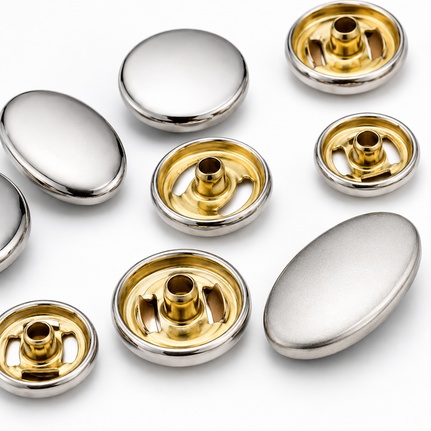
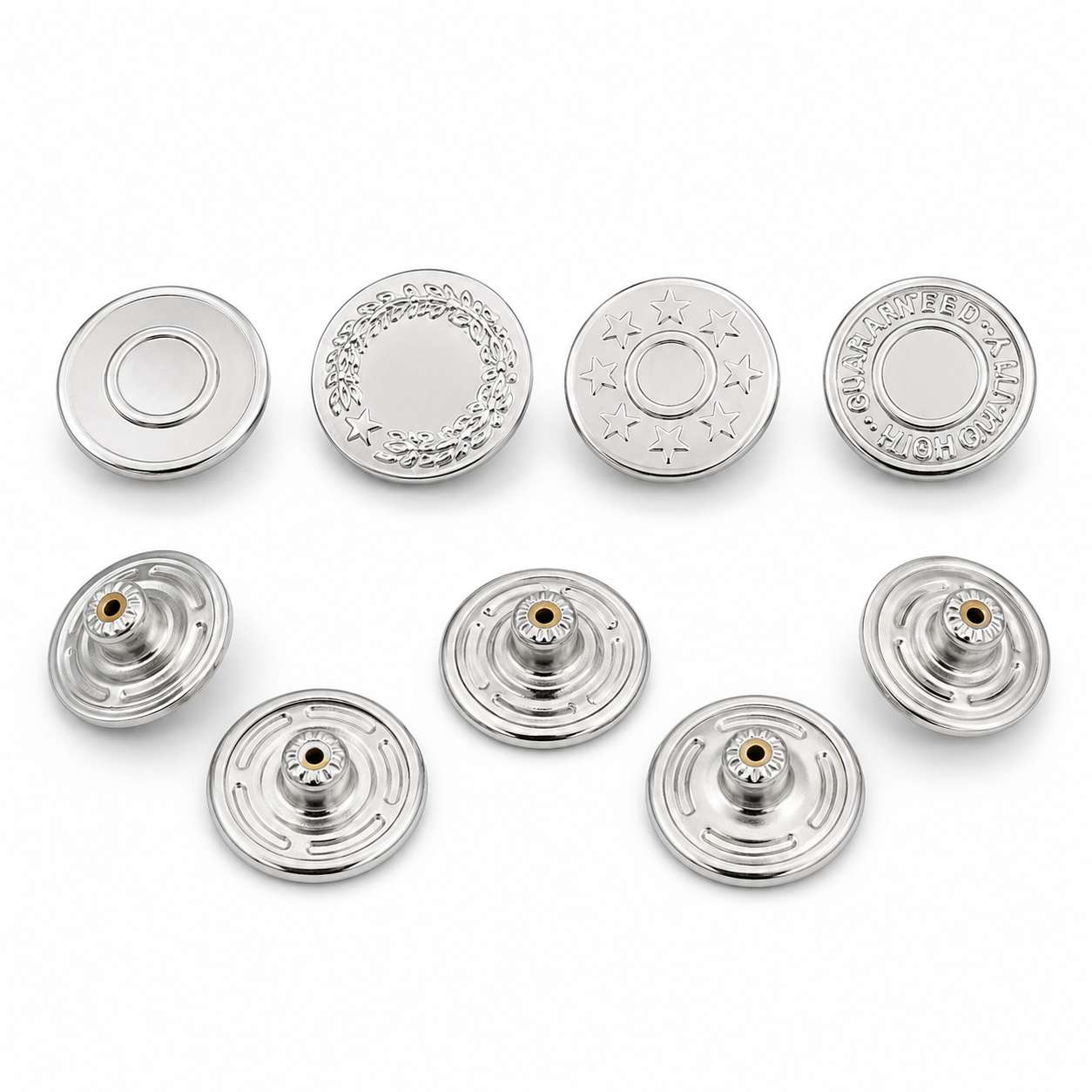
Baocheng manufactures custom metal buckles, rings and strap adjusters for clothing, bags, luggage, belts, leather goods, footwear, workwear and other webbing-based products. Instead of limiting buyers to a fixed catalogue, we develop metal hardware according to drawings, physical samples, strap specifications and assembly requirements.
The Buckles, Rings & Adjusters category covers three related but functionally different groups of components. Buckles are primarily used to fasten or lock a strap. Rings provide a connection, suspension or direction-changing point. Adjusters control strap length, tension or positioning through a defined threading path. These parts are often installed together, but their dimensions, structures and material requirements must be evaluated separately.
Baocheng can manufacture these components in zinc alloy, brass, steel and stainless steel. Product shape, inner width, frame section, slot clearance, surface finish, logo position and matching hardware can all be developed for the buyer’s project.
Product Range
Metal Buckles
Metal buckles are used to connect, secure or position belts, straps and webbing. Depending on the required fastening method, a buckle may use a prong, roller, center bar, side bar, hook, clamp or friction-based structure.
Custom buckle development can include:
- Prong buckles and pin buckles
- Roller buckles
- Center-bar buckles
- Heel-bar and side-bar buckles
- Overall and suspender buckles
- Bag strap buckles
- Decorative garment buckles
- Friction buckles without a prong
- Custom logo buckles
- Multi-part buckle assemblies
A buckle cannot be selected by outer appearance alone. The internal opening must suit the strap width, while the distance between the frame and center bar must accommodate the actual strap thickness. For prong buckles, the prong length, prong angle and belt-hole arrangement must also work together.
Metal Rings and Loops
Metal rings and loops create attachment points between straps, panels, hooks, handles and other hardware. Their function may involve suspension, redirection, limited rotation, decorative connection or load transfer between two parts of an assembly.
Available development directions include:
- D-rings and dee rings
- O-rings and round rings
- Square rings
- Rectangular rings and loops
- Triangle rings
- Oval rings
- Double rings
- Rings with a center bar
- Open rings and split rings
- Welded closed rings
- Cast decorative rings
- Custom-shaped connection loops
The shape of a ring affects how the connected strap moves. A D-ring has a relatively stable straight mounting side, while an O-ring allows a greater degree of rotation. Rectangular and square rings are often selected when the buyer wants the strap to remain aligned with the hardware.
For custom ring production, Baocheng evaluates the internal width, internal height, wire diameter or frame section, seam position, welding method, edge radius and surface condition. These details influence strap fit, visual proportion and resistance to deformation.
Strap Adjusters and Sliders
Metal strap adjusters control the usable length of webbing, fabric straps or leather straps. Most adjusters work by guiding the strap around one or more bars. The resulting contact angle and friction help the strap remain in the selected position.
Custom adjuster options include:
- Tri-glide adjusters
- Three-bar sliders
- Double-loop sliders
- Rectangular strap adjusters
- Suspender adjusters
- Bag strap sliders
- Webbing keepers
- Adjusters with a textured center bar
- Adjusters with decorative profiles
- Custom multi-slot adjusters
An adjuster must be designed around the complete strap system. If the slot is too narrow, the strap may be difficult to thread or adjust. If the opening is too large, the hardware may not generate sufficient friction and the strap may gradually slip. Strap thickness, surface texture, softness, coating and number of folded layers should therefore be confirmed before tooling.
Size Definition and Reference Measurements
For buckles, rings and adjusters, the quoted size normally refers to a functional internal dimension rather than the total outside dimension. However, different suppliers and product structures may use different measurement methods. Baocheng confirms the dimension definition on the drawing before sampling and production.
| Product Group | Critical Dimensions | Why They Matter |
|---|---|---|
| Metal Buckles | Inner width, inner height, frame section, center-bar position, prong length and overall dimensions | Determines strap fit, buckle movement, belt-hole engagement and final visual proportion |
| D-rings and O-rings | Internal width, internal height, wire diameter, seam position and overall dimensions | Controls strap clearance, rotation, connection stability and resistance to distortion |
| Square and Rectangle Rings | Clear opening, corner radius, frame section and joint location | Helps keep straps aligned and reduces unwanted twisting during use |
| Strap Adjusters | Inner width, slot height, center-bar width, bar spacing and overall length | Controls threading, adjustment force, friction and strap retention |
| Overall and Suspender Buckles | Strap channel, moving-part clearance, hook position and assembly dimensions | Influences assembly movement, locking action and compatibility with the garment structure |
Standard-looking hardware can still require different dimensions for thin woven tape, thick webbing, coated straps or multi-layer leather. Buyers are therefore encouraged to provide an actual strap sample or detailed strap specification together with the hardware drawing.
Strap and Webbing Compatibility
Correct hardware selection begins with the strap rather than the metal part. Two straps with the same nominal width may have very different thickness, compressibility, stiffness and surface friction.
Baocheng can evaluate the following factors during product development:
- Nominal strap or webbing width
- Actual measured width and thickness
- Single-layer or folded-layer construction
- Woven, knitted, coated or laminated surface
- Natural leather, synthetic leather or textile strap
- Edge binding and stitched seam thickness
- Required adjustment frequency
- Acceptable sliding force
- Required resistance to accidental loosening
- Clearance for sewing and final assembly
The hardware opening should provide enough clearance for assembly without allowing excessive sideways movement. Sharp corners, rough welds or unsuitable slot dimensions may increase abrasion on the strap. For this reason, functional dimensions and edge conditions are reviewed together rather than treated as separate cosmetic features.
Material Options

Zinc Alloy
Zinc alloy is suitable for buckles, rings and adjusters with complex three-dimensional shapes, decorative surfaces, integrated logos or detailed profiles. Die casting can produce forms that would be difficult to achieve through simple wire bending or sheet stamping.
It is frequently considered for fashion buckles, bag hardware, logo hardware and decorative adjusters. Wall thickness, corner transitions, ejector positions and plating allowance must be considered during mould development. Zinc alloy selection should be based on the required structure and application rather than appearance alone.
Brass
Brass provides a distinctive metal feel and is widely used for premium garment hardware, leather goods, belts, bags and accessories. Depending on the geometry, brass components may be stamped, formed, cast, machined or assembled from multiple parts.
Brass is suitable for polished, brushed, antique and plated finishes. Because material color and surface oxidation can influence the final appearance, the required finish should be confirmed with an approved physical sample.
Steel
Steel is commonly used for stamped frames, wire-formed rings, welded loops and functional adjusters. It offers an economical route for many high-volume hardware structures and can provide good rigidity when the section size and forming process are properly designed.
Since untreated steel requires surface protection for many apparel and bag applications, the coating system, plating thickness, edge coverage and corrosion requirement should be defined according to the intended environment.
Stainless Steel
Stainless steel is selected when corrosion resistance, clean metallic appearance or reduced dependence on decorative plating is important. It can be used for stamped adjusters, formed rings, buckle frames and other custom metal hardware, subject to grade, thickness and structural feasibility.
Stainless steel springback, forming direction, weld condition and polishing requirements must be considered during development. The final material grade should be selected according to the required appearance, environment, forming process and performance target.
| Material | Typical Manufacturing Direction | Suitable Product Characteristics |
|---|---|---|
| Zinc Alloy | Die casting, polishing, plating and secondary finishing | Complex shapes, raised logos, decorative profiles and integrated structures |
| Brass | Stamping, forming, casting, machining and polishing | Premium appearance, leather goods hardware and decorative metal parts |
| Steel | Stamping, wire forming, bending, welding and surface coating | Functional frames, rings, sliders and volume production |
| Stainless Steel | Stamping, forming, welding, polishing and brushing | Corrosion-resistant hardware and clean exposed-metal designs |
Material availability and manufacturing route are evaluated according to the drawing, order quantity, finish, structural complexity and performance requirements.
Manufacturing and Structural Options
Although buckles, rings and adjusters are often grouped together in a catalogue, they may require very different manufacturing processes. Baocheng selects the production route according to the geometry and intended function of each component.
Stamping and Forming
Sheet-metal stamping is suitable for flat or formed adjusters, buckle frames, strap keepers and multi-slot components. Progressive tooling or individual forming dies may be evaluated according to volume, tolerance and structural complexity.
Wire Forming and Bending
Wire forming is commonly used for D-rings, O-rings, rectangular loops and simple buckle frames. The wire diameter, corner radius and forming sequence must be controlled to maintain consistent internal dimensions.
Welding and Joint Control
Closed rings and multi-part frames may require welding. Joint location should be selected to reduce interference with the strap and maintain the required appearance. Weld penetration, weld size, polishing and joint smoothness can be defined according to the project.
Die Casting
Die casting is suitable for zinc alloy components with three-dimensional shapes, decorative faces, integrated bars or raised branding. Draft angles, parting lines, wall transitions and polishing access are reviewed before mould production.
Secondary Processing
Depending on the design, secondary processing may include trimming, deburring, drilling, tapping, riveting, pin assembly, roller assembly, polishing, brushing, blasting, plating, coating and laser marking.
Custom Shape, Logo and Surface Finish
Baocheng supports custom hardware development based on brand design, product style and assembly requirements. A logo can be integrated into the buckle frame, decorative face, center bar or separate metal plate, depending on the available area and manufacturing process.
Possible branding methods include:
- Raised die-cast logos
- Recessed logos
- Stamped symbols or lettering
- Laser-engraved logos
- Custom textures and border patterns
- Separate branded plates or decorative inserts
Logo clarity depends on the component size, line width, relief depth, material flow, polishing process and final coating. Very fine lettering may need to be simplified to remain readable after plating or mass production.
Surface finish options can be evaluated according to the selected base material and product structure. Possible directions include polished metal, brushed metal, nickel color, black nickel, gunmetal, gold tone, antique brass, antique copper, matte finishes, electrophoretic coating and selected PVD finishes.
Color names alone are not sufficient for production approval because appearance can change with base material, polishing level, coating thickness and lighting. A physical finish sample or approved color reference is recommended before mass production.
Application Areas
Clothing and Fashion Accessories
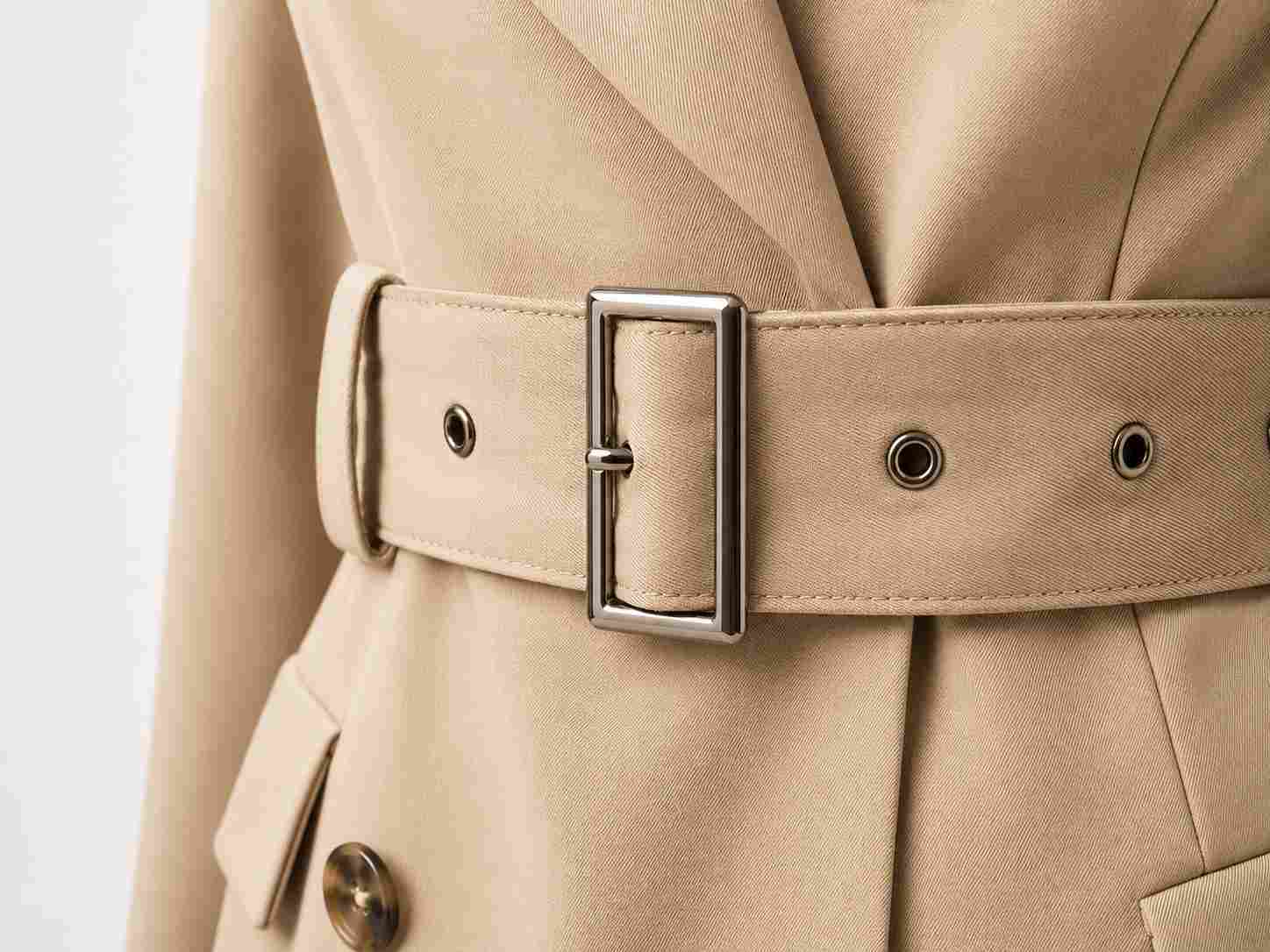
Metal buckles, rings and adjusters can be used on coats, dresses, skirts, waist belts, garment straps, suspenders, overalls and decorative clothing panels. Hardware dimensions should be coordinated with fabric thickness, reinforcement layers and sewing space.
Bags and Luggage
D-rings, rectangular rings, strap sliders and bag buckles are commonly used in shoulder straps, handles, detachable strap systems and bag-body connection points. Surface durability and strap abrasion are important considerations for parts that move frequently.
Belts and Leather Goods
Prong buckles, roller buckles, keepers and decorative rings can be developed for leather belts, synthetic leather straps, wallets, harness-style accessories and handcrafted leather products. Strap thickness and folded-edge construction must be considered when setting the frame clearance.
Footwear
Small buckles, rings and adjusters can be used on boots, sandals, fashion shoes and decorative shoe straps. Product weight, edge smoothness, plating quality and repeated opening requirements should be reviewed during development.
Workwear and Utility Products
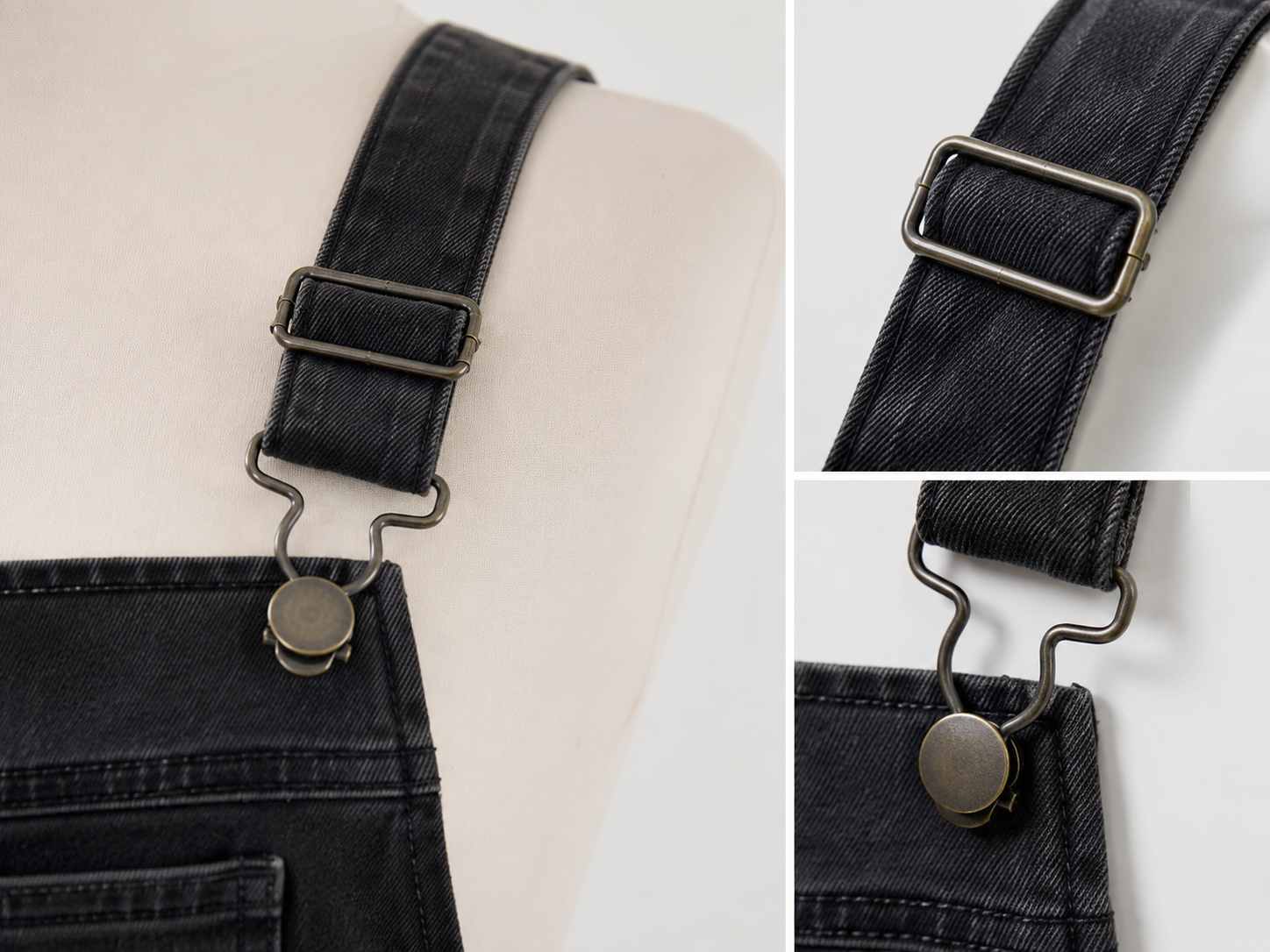
Overall buckles, suspenders, strap adjusters and connection loops may be used on workwear, aprons, tool bags and non-safety utility products. Where a defined load or performance requirement applies, the corresponding test method and acceptance criteria should be agreed before production.
Pet and Outdoor Accessories
Metal rings and adjusters may also be developed for pet collars, leads, harnesses and selected outdoor accessories. Products intended for load-critical, protective or safety-related use require separate structural evaluation and project-specific testing.
Prototype and Sampling Support
Baocheng supports drawing-based development, sample replication and prototype evaluation. The sampling route depends on whether the project can use an existing structure, requires modified tooling or needs a completely new mould.
A typical development process includes:
- Review of drawings, samples and intended application
- Confirmation of material and manufacturing route
- Definition of critical dimensions and tolerances
- Evaluation of strap or webbing compatibility
- Tooling or prototype preparation
- Structural sample production
- Surface finish sample preparation
- Buyer review and dimensional confirmation
- Revision where required
- Mass-production approval
For projects involving a complete hardware set, the buckle, ring and adjuster can be reviewed together to improve dimensional compatibility and finish consistency.
Quality Control Considerations
Inspection requirements are determined by the product structure and agreed specification. Baocheng can establish control points for incoming material, forming, welding, polishing, surface finishing, assembly and final inspection.
Inspection items may include:
- Inner width and functional opening
- Overall dimensions and frame symmetry
- Wire diameter, sheet thickness or section thickness
- Center-bar position and slot clearance
- Prong, roller or moving-part operation
- Weld location and joint condition
- Burrs, sharp edges and surface roughness
- Plating color and visual consistency
- Coating coverage and exposed base material
- Fit with the approved strap or webbing
- Packaging protection between metal parts
When buyers require pull testing, strap-slip testing, corrosion testing, coating testing or other project-specific verification, the test method, sample condition and acceptance value should be confirmed in advance. Ordinary fashion hardware should not automatically be treated as safety-rated hardware without an agreed validation programme.
About Baocheng

Baocheng is a B2B manufacturer and supplier of metal garment hardware and custom metal components. We support customers from initial product definition through drawing review, material selection, prototype development, tooling, surface finishing, inspection and production.
Our development approach focuses on how the hardware works in the finished product. For Buckles, Rings & Adjusters projects, we review not only the metal component drawing but also the strap width, strap thickness, threading direction, sewing structure, adjoining hardware and expected movement during use.
Customers can submit a 2D drawing, 3D model, physical sample, reference image or complete assembly specification. Where information is incomplete, our team can help identify the dimensions and structural details that must be confirmed before quotation and sampling.
Baocheng can coordinate zinc alloy, brass, steel and stainless steel manufacturing routes according to the required geometry. Available processes may include die casting, stamping, wire forming, bending, welding, polishing, plating, coating and component assembly.
For relevant projects and materials, documentation such as OEKO-TEX, RoHS, REACH or third-party test reports can be discussed according to the actual product scope. Certification or test coverage should be confirmed for the specific material, finish and production project rather than assumed to apply to every product.
Information Required for a Custom Quotation
To prepare an accurate quotation and development plan, buyers should provide as much of the following information as possible:
- 2D drawing or 3D model
- Physical reference sample
- Product type and intended application
- Required base material
- Strap or webbing width
- Strap thickness and number of folded layers
- Critical internal and external dimensions
- Required surface finish and color reference
- Logo artwork and branding method
- Expected order quantity
- Assembly method
- Required testing or compliance documents
- Packaging requirements
Providing the actual strap, webbing or leather sample can reduce dimensional uncertainty and help verify the functional fit before mass production.
Focused FAQ
1. What does the stated size of a buckle, ring or adjuster mean?
The stated size usually refers to a functional internal width, such as the clear opening for a strap. It does not always represent the total outside width. Baocheng marks the measurement definition on the drawing before production.
2. Can Baocheng manufacture according to our drawing or physical sample?
Yes. We support development from 2D drawings, 3D files, physical samples, reference products and complete assembly specifications. A sample can also be measured and converted into a production drawing for confirmation.
3. Which materials are available?
Baocheng can develop metal buckles, rings and adjusters in zinc alloy, brass, steel and stainless steel. The appropriate material depends on the shape, production process, finish, application and required performance.
4. Can the same adjuster be used for different strap thicknesses?
Not necessarily. Two straps may have the same width but different thickness, stiffness and friction. Slot height and bar spacing should be checked using the actual strap construction.
5. Can we customize the logo and surface color?
Yes. Depending on the product structure, logos may be cast, stamped, recessed, raised or laser engraved. Surface colors and finishes can also be developed according to the base material and approved sample.
6. How can strap abrasion be reduced?
Strap abrasion can be reduced by controlling edge radius, weld smoothness, burr removal, slot clearance and surface finish. The hardware should also be correctly matched to the strap width and movement direction.
7. Can metal rings be supplied as open, welded or closed structures?
Yes. Open, split, welded and one-piece structures can be evaluated. The correct option depends on the assembly method, appearance, deformation requirement and intended use.
8. Are the buckles and rings supplied with a guaranteed load rating?
A load rating should only be stated when the product has been manufactured and tested to an agreed specification. Buyers requiring pull force, deformation or strap-slip performance should provide the required test method and acceptance value.
9. Can Baocheng produce matching buckles, rings and adjusters as one hardware set?
Yes. Matching components can be developed together so that the strap width, metal proportions, surface color and assembly relationship remain consistent across the finished product.
10. What information is most important before making a sample?
The most important information includes the drawing, intended application, base material, strap width, strap thickness, functional dimensions, finish requirement and any required testing. An actual strap or assembly sample is particularly useful for confirming fit.

RELATED NEWS
MESSAGE ONLINE
CONTACT US
No. 68, Dashun Shangwang Road, Jiashan County, Jiaxing City, Zhejiang Province, China

+86 13706836444

+86 13706836444

jack-shen@longyao-sh.com


Premium Engineered Wood Products for Global Excellence
Crafted with precision and certified to meet international standards, our engineered wood solutions deliver unmatched quality and reliability for diverse applications worldwide.
Internationally Recognized Certifications
KEY RESPONSIBILITIES
Identify, develop and manage all business opportunities. Map by identifying all buyers and influencers to create a constant string of revenues, achieving/exceeding the targets. Establish long term relationship with the senior exec staff and get support from ADI senior management in leveraging that constant relationship.
In collaboration with marketing, build a specific value proposition for the account.
Maintain accurate monthly forecast and sales opportunity pipeline Creation and execution of detailed sales plan to achieve revenue objectives.
Duties and responsibilities include developing and executing business partnership strategies
Responsibilities will cover all facets of strategic key account business development, identifying new market opportunities for partnerships, identifying partners, initiating conversations, enumerating requirements, negotiating terms, closing deals and support account receivables collection.
Focus on the development of national accounts with annual purchases of $....
Develop and maintain close working relationships with appropriate internal and external resources and partners.
Participate in account planning and strategy activity Understand and appropriately leverage sales and support resources
Maintain high level of knowledge of our product offerings, roadmaps, competition, pricing, market share, and key product differentiation
Work to increase awareness and interest in our products and solutions
Superior Material & Advanced Manufacturing
KEY RESPONSIBILITIES
Identify, develop and manage all business opportunities. Map by identifying all buyers and influencers to create a constant string of revenues, achieving/exceeding the targets. Establish long term relationship with the senior exec staff and get support from ADI senior management in leveraging that constant relationship.
In collaboration with marketing, build a specific value proposition for the account.
Maintain accurate monthly forecast and sales opportunity pipeline Creation and execution of detailed sales plan to achieve revenue objectives.
Duties and responsibilities include developing and executing business partnership strategies
Responsibilities will cover all facets of strategic key account business development, identifying new market opportunities for partnerships, identifying partners, initiating conversations, enumerating requirements, negotiating terms, closing deals and support account receivables collection.
Focus on the development of national accounts with annual purchases of $....
Develop and maintain close working relationships with appropriate internal and external resources and partners.
Participate in account planning and strategy activity Understand and appropriately leverage sales and support resources
Maintain high level of knowledge of our product offerings, roadmaps, competition, pricing, market share, and key product differentiation
Work to increase awareness and interest in our products and solutions
Versatile Applications Across Industries
KEY RESPONSIBILITIES
Identify, develop and manage all business opportunities. Map by identifying all buyers and influencers to create a constant string of revenues, achieving/exceeding the targets. Establish long term relationship with the senior exec staff and get support from ADI senior management in leveraging that constant relationship.
In collaboration with marketing, build a specific value proposition for the account.
Maintain accurate monthly forecast and sales opportunity pipeline Creation and execution of detailed sales plan to achieve revenue objectives.
Duties and responsibilities include developing and executing business partnership strategies
Responsibilities will cover all facets of strategic key account business development, identifying new market opportunities for partnerships, identifying partners, initiating conversations, enumerating requirements, negotiating terms, closing deals and support account receivables collection.
Focus on the development of national accounts with annual purchases of $....
Develop and maintain close working relationships with appropriate internal and external resources and partners.
Participate in account planning and strategy activity Understand and appropriately leverage sales and support resources
Maintain high level of knowledge of our product offerings, roadmaps, competition, pricing, market share, and key product differentiation
Work to increase awareness and interest in our products and solutions
Customization & Competitive Logistics
KEY RESPONSIBILITIES
Identify, develop and manage all business opportunities. Map by identifying all buyers and influencers to create a constant string of revenues, achieving/exceeding the targets. Establish long term relationship with the senior exec staff and get support from ADI senior management in leveraging that constant relationship.
In collaboration with marketing, build a specific value proposition for the account.
Maintain accurate monthly forecast and sales opportunity pipeline Creation and execution of detailed sales plan to achieve revenue objectives.
Duties and responsibilities include developing and executing business partnership strategies
Responsibilities will cover all facets of strategic key account business development, identifying new market opportunities for partnerships, identifying partners, initiating conversations, enumerating requirements, negotiating terms, closing deals and support account receivables collection.
Focus on the development of national accounts with annual purchases of $....
Develop and maintain close working relationships with appropriate internal and external resources and partners.
Participate in account planning and strategy activity Understand and appropriately leverage sales and support resources
Maintain high level of knowledge of our product offerings, roadmaps, competition, pricing, market share, and key product differentiation
Work to increase awareness and interest in our products and solutions